JSTOR Global Plants Home
  • Home
  • Browse
  • About
  • Access
  • Account
    • Saved Items
    • Profile
  • Log in

Global Plants

Skip to Main Content
  • JSTOR Global Plants Home
  • Global Plants

    • Browse
    • About
    • Access
    • Account
      • Saved Items
      • Profile
Log in
  • Browse
  • About
  • Access
  • Account
    • Saved Items
    • Profile
Advanced Search

Compilation
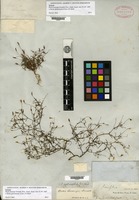
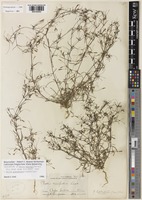
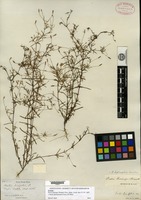
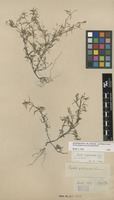
Pectis leptocephala

19 Images see all

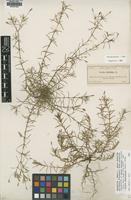
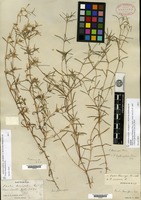
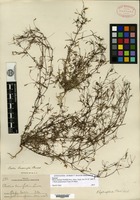
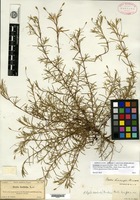
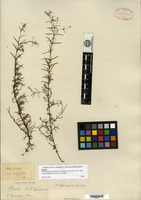
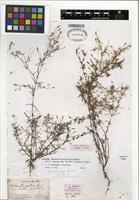
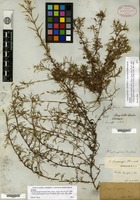
Isolectotype of Pectis lessingii Fernald [family ASTERACEAE]
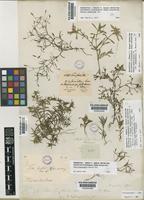
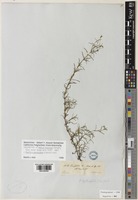
Pectis brevipedunculata Sch.Bip. [family COMPOSITAE]
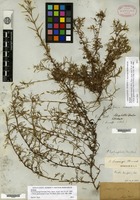
Syntype of Pectis lessingii Fernald [family ASTERACEAE]
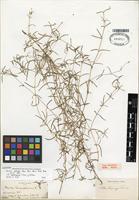
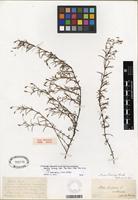
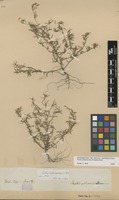
Isosyntype of Pectis leptocephala (Cass.) Urb. [family ASTERACEAE]
Syntype of Pectis lessingii Fernald [family ASTERACEAE]
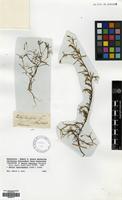
Isosyntype of Pectis lessingii Fernald [family ASTERACEAE]
Isosyntype of Pectis leptocephala (Cass.) Urb. [family ASTERACEAE]
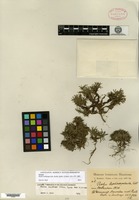
Isotype of Pectis multiceps Urban [family ASTERACEAE]
Syntype of Pectis lessingii Fernald [family ASTERACEAE]
Isosyntype of Pectis lessingii Fernald [family ASTERACEAE]
Syntype of Pectis lessingii Fernald [family ASTERACEAE]
Filed as Pectis glaucescens (Cass.) D.J.Keil [family ASTERACEAE]
Syntype of Pectis lessingii Fernald [family ASTERACEAE]
Lectotype of Pectis lessingii Fernald [family ASTERACEAE]
Syntype of Pectis lessingii Fernald [family ASTERACEAE]
Isosyntype of Pectis leptocephala (Cass.) Urb. [family ASTERACEAE]
Syntype of Pectis lessingii Fernald [family ASTERACEAE]
Filed as Pectis glaucescens (Cass.) D.J.Keil [family ASTERACEAE]
Isosyntype of Pectis lessingii Fernald [family COMPOSITAE]
Previous
Next

Name

Identification
Pectis leptocephala (Cass.) Urb. [family ASTERACEAE ] (stored under name); Verified by David John Keil, Pectis lessingii Fernald [family ASTERACEAE ] Verified by David John Keil, Pectis linifolia L. [family ASTERACEAE ]
Related name
  • Pectis leptocephala
  • Pectis linifolia
  • Pectis glaucescens
  • Pectis brevipedunculata
  • Pectis prostrata
  • Pectis lessingii
Common name
  • Sand dune chinchweed, Flora of North America Vol. 21

Flora

Entry for Pectis glaucescens (Cassini) D. J. Keil [family COMPOSITAE]
Herbarium
Flora of North America (FNA)
Collection
Flora of North America
Resource Type
Reference Sources
Entry From
Flora of North America, Vol 21,
Names
Pectis glaucescens (Cassini) D. J. Keil [family COMPOSITAE], Sida, 11: 386. 1986
Chthonia glaucescens Cassini [family ], in F. Cuvier, Dict. Sci. Nat. ed., 2, 9: 173. 1817
Pectis leptocephala (Cassini) Urban [family COMPOSITAE]
Pectis lessingii Fernald [family COMPOSITAE]
Treatment Author(s)
David J. Keil
Information
Annuals or perennials, 2–50 cm (across or high); herbage spicy-scented. Stems prostrate to erect, usually sparsely to densely puberulent (sometimes in decurrent lines), sometimes glabrate. Leaves narrowly linear, 10–35 × 0.2–1.8 mm, margins with 1–5 pairs of setae 1–2 mm, faces glabrous (abaxial submarginally dotted with broadly elliptic to circular oil-glands 0.2–0.3 mm, sometimes with additional, scattered oil-glands). Heads borne singly or in diffuse, cymiform arrays. Peduncles filiform, (3–)7–35(–54) mm. Involucres cylindric. Phyllaries distinct, linear-oblanceolate, 4–5 × 0.8–1 mm (dotted with 1–2 elliptic, subapical oil-glands 0.2–0.3 mm, sometimes with additional, smaller submarginal or scattered oil-glands). Ray florets 5; corollas 3.5–5 mm. Disc florets 3–7; corollas 2–3 mm (2-lipped). Cypselae 2.5–3 mm, strigillose; pappi of 0–5, antrorsely scabrid bristles or slender scales 1–2 mm plus 0–5 entire or irregularly lacerate scales 0.2–0.7 mm. 2n = 48.
Phenology
year round
Altitude range
0–50 m;
Distribution
West Indies (Bahamas).West Indies (Hispaniola).West Indies (Jamaica).USA Fla.
Discussion
Pectis glaucescens is widespread in southern Florida and the Bahamas. Human disturbances, especially road constructions, have created habitats suitable for it. It grows most commonly on limestone soils in open, grassy sites. Occasionally, it is a lawn weed.

Related Materials

  • Terms and Conditions
  • Privacy Policy
  • Cookie Policy
  • Cookie Settings
  • Accessibility
  • Help
  • Contact Us
  • Facebook
  • Twitter
ITHAKA

JSTOR is part of ITHAKA, a not-for-profit organization helping the academic community use digital technologies to preserve the scholarly record and to advance research and teaching in sustainable ways.

©2000-2026 ITHAKA. All Rights Reserved. JSTOR®, the JSTOR logo, JPASS®, Aluka®, and ITHAKA® are registered trademarks of ITHAKA.

╳