JSTOR Global Plants Home
  • Home
  • Browse
  • About
  • Access
  • Account
    • Saved Items
    • Profile
  • Log in

Global Plants

Skip to Main Content
  • JSTOR Global Plants Home
  • Global Plants

    • Browse
    • About
    • Access
    • Account
      • Saved Items
      • Profile
Log in
  • Browse
  • About
  • Access
  • Account
    • Saved Items
    • Profile
Advanced Search

Compilation
Pectis cylindrica

8 Images see all

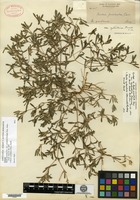
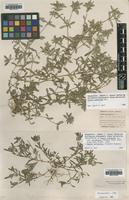
Syntype of Pectis prostrata Cavanilles var. cylindrica Fernald [family ASTERACEAE]
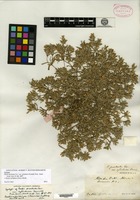
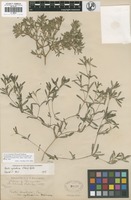
Isolectotype of Pectis prostrata Fernald var. cylindrica [family ASTERACEAE]
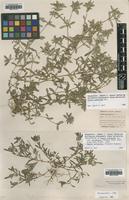
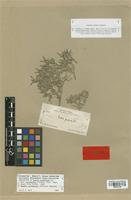
Isosyntype of Pectis cylindrica (Fernald) Rydb. [family ASTERACEAE]
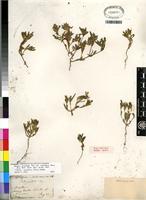
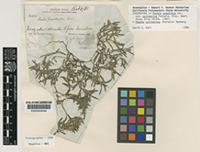
Isolectotype of Pectis prostrata Fernald var. cylindrica [family ASTERACEAE]
Isosyntype of Pectis prostrata Fernald variety cylindrica [family ASTERACEAE]
Isosyntype of Pectis prostrata Cav. var. cylindrica Fernald [family COMPOSITAE]
Previous
Next

Name

Identification
Pectis cylindrica (Fernald) Rydb. [family ASTERACEAE ] (stored under name); Verified by David John Keil, Pectis prostrata Fernald [family ASTERACEAE ] Verified by David John Keil,
Related name
  • Pectis cylindrica
  • Pectis prostrata
Common name
  • Three-rayed or Sonoran chinchweed, Flora of North America Vol. 21

Flora

Entry for Pectis cylindrica (Fernald) Rydberg [family COMPOSITAE]
Herbarium
Flora of North America (FNA)
Collection
Flora of North America
Resource Type
Reference Sources
Entry From
Flora of North America, Vol 21,
Names
Pectis cylindrica (Fernald) Rydberg [family COMPOSITAE], in N. L. Britton et al., N. Amer. Fl., 34: 198. 1916
Pectis prostrata Cavanilles var. cylindrica Fernald [family COMPOSITAE], Proc. Amer. Acad. Arts, 33: 68. 1897
Treatment Author(s)
David J. Keil
Information
Annuals, 1–20 cm (across or high); herbage not scented. Stems prostrate to ascending (often mat-forming, densely leafy distally), puberulent (in decurrent lines or throughout) or glabrate. Leaves (bluish green) linear to linear-oblanceolate or narrowly oblong, 10–30 × 1.5–4 mm, margins with 2–5 pairs of setae 1–2 mm, faces glabrous (abaxial densely dotted with scattered, circular oil-glands 0.05–0.2 mm). Heads borne singly or in congested, (leafy) cymiform arrays. Peduncles 1–5 mm. Involucres cylindric. Phyllaries coherent (falling together), oblong to oblong-obovate, 6–10 × 2–3 mm (dotted with scattered, elliptic oil-glands 0.05–0.15 mm). Ray florets 3(–4); corollas 3–4 mm (scarcely surpassing phyllaries). Disc florets (3–)7–14; corollas 2.2–2.6 mm (2-lipped). Cypselae 4–5.5 mm, puberulent (distally glandular-puberulent); pappi of 2 (ray) and 5 (disc) lanceolate scales 1.5–3.5 mm. 2n = 48.
Phenology
jul-aug (summer), sep-nov (fall)
Altitude range
700–1500 m;
Distribution
Mexico (Baja California Sur).Mexico (Chihuahua).Mexico (Coahuila).Mexico (Durango).Mexico (Nuevo León).Mexico (Sinaloa).Mexico (Sonora).USA Ariz.USA N.Mex.USA Tex.
Discussion
Pectis cylindrica (2n = 48) is similar to P. prostrata (2n = 24); the two occasionally grow together (D. J. Keil 1975b). Some herbaria contain mixed collections of the two. No evidence is available of hybrids between the two.

Related Materials

  • Terms and Conditions
  • Privacy Policy
  • Cookie Policy
  • Cookie Settings
  • Accessibility
  • Help
  • Contact Us
  • Facebook
  • Twitter
ITHAKA

JSTOR is part of ITHAKA, a not-for-profit organization helping the academic community use digital technologies to preserve the scholarly record and to advance research and teaching in sustainable ways.

©2000-2026 ITHAKA. All Rights Reserved. JSTOR®, the JSTOR logo, JPASS®, Aluka®, and ITHAKA® are registered trademarks of ITHAKA.

╳