JSTOR Global Plants Home
  • Home
  • Browse
  • About
  • Access
  • Account
    • Saved Items
    • Profile
  • Log in

Global Plants

Skip to Main Content
  • JSTOR Global Plants Home
  • Global Plants

    • Browse
    • About
    • Access
    • Account
      • Saved Items
      • Profile
Log in
  • Browse
  • About
  • Access
  • Account
    • Saved Items
    • Profile
Advanced Search

Compilation
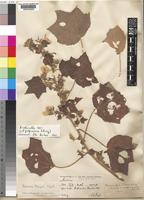
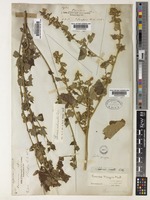
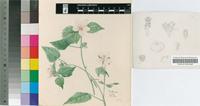
Pavonia meyeri

3 Images see all

Pavonia columella Cav. [family MALVACEAE]
Pavonia meyeri Mast.
Previous
Next

Name

Identification
Pavonia meyeri Mast. [family MALVACEAE ]
Related name
  • Pavonia meyeri

Flora

Entry for PAVONIA Meyeri Mast. [family MALVACEAE]
Herbarium
Royal Botanic Gardens, Kew (K)
Collection
Flora of Tropical Africa
Resource Type
Reference Sources
Entry From
Flora of Tropical Africa, Vol 1, page 175, (1868) Author: (by Dr. Maxwell T. Masters).
Names
PAVONIA Meyeri Mast. [family MALVACEAE]
PAVONIA mollis E. Mey. [family MALVACEAE], Harv. and Sond. Fl. Cap. i. 169; nec H. B. K. Nov. Gen. v. 283.
Information
A much-branched, downy, herbaceous plant. Leaves on long stalks, roundish-subcordate, sub-3-cuspidate or even more deeply divided, crenate-dentate, downy on both surfaces, 5–7-nerved. Peduncles solitary, axillary, remote or crowded at the ends of the branches, shorter than the petioles, not jointed. Epicalyx of 5–6 ligulate bracts, shorter than the cup-shaped 5-parted calyx, whose lance-shaped segments are traversed by three prominent green nerves. Corolla pink. Fruit of 5 coherent, oblong, obtuse, 3-sided, woody carpels.
Distribution
Mozamb. Dist. Manganya hills, Dr. Meller!
Distribution (external)
Frequent in some parts of the Cape
Natal

Related Materials

  • Terms and Conditions
  • Privacy Policy
  • Cookie Policy
  • Cookie Settings
  • Accessibility
  • Help
  • Contact Us
  • Facebook
  • Twitter
ITHAKA

JSTOR is part of ITHAKA, a not-for-profit organization helping the academic community use digital technologies to preserve the scholarly record and to advance research and teaching in sustainable ways.

©2000-2026 ITHAKA. All Rights Reserved. JSTOR®, the JSTOR logo, JPASS®, Aluka®, and ITHAKA® are registered trademarks of ITHAKA.

╳