JSTOR Global Plants Home
  • Home
  • Browse
  • About
  • Access
  • Account
    • Saved Items
    • Profile
  • Log in

Global Plants

Skip to Main Content
  • JSTOR Global Plants Home
  • Global Plants

    • Browse
    • About
    • Access
    • Account
      • Saved Items
      • Profile
Log in
  • Browse
  • About
  • Access
  • Account
    • Saved Items
    • Profile
Advanced Search

Compilation
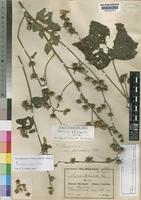
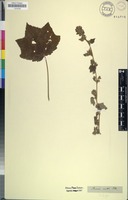
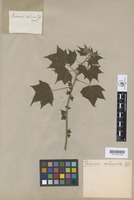
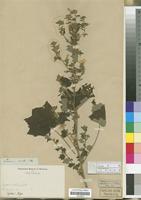
Pavonia columella

22 Images see all

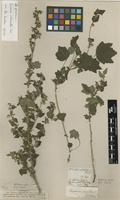
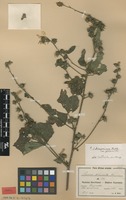
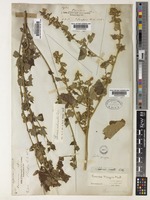
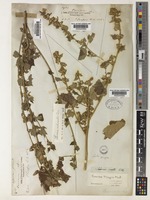
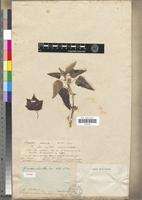
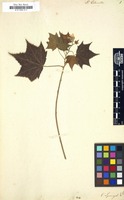
Type of Pavonia mollis E.Mey. ex Harv. [family MALVACEAE]
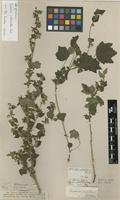
Filed as Pavonia columella Cav. [family MALVACEAE]
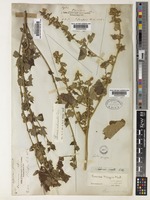
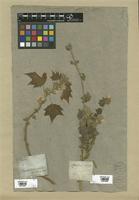
Pavonia columella Cav.
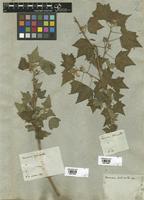
Filed as Pavonia columella Cav. [family MALVACEAE]
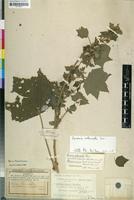
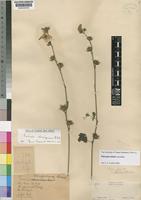
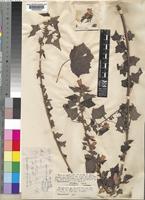
Syntype of Pavonia schimperiana Hochst. ex A.Rich. var. glabrescens Ulbr. [family MALVACEAE]
Pavonia columella Cav. [family MALVACEAE]
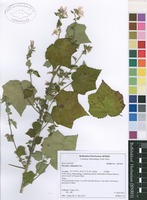
Isosyntype of Pavonia schimperiana Hochst. ex A.Rich. var. glabrescens Ulbr. [family MALVACEAE]
Filed as Pavonia columella Cav. [family MALVACEAE]
Pavonia columella Cav. [family MALVACEAE]
Filed as Pavonia columella Cav. [family MALVACEAE]
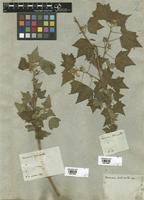
Type of Pavonia columella Cav. [family MALVACEAE]
Filed as Pavonia mollis E.Mey. ex Harv. [family MALVACEAE]
Filed as Pavonia columella Cav. [family MALVACEAE]
Syntype of Pavonia schimperiana Hochst. ex A.Rich. var. glabrescens Ulbr. [family MALVACEAE]
Type? of Pavonia mollis E.Mey. ex Harv. [family MALVACEAE]
Type of Pavonia columella Cav. [family MALVACEAE]
Filed as Pavonia columella Cav. [family MALVACEAE]
Filed as Pavonia columella [family MALVACEAE]
Pavonia columella Cav. [family MALVACEAE]
Previous
Next

Name

Identification
Pavonia columella Cav. [family MALVACEAE ]
Related name
  • Pavonia columella

Flora

Entry for Pavonia columella Cav. [family MALVACEAE]
Herbarium
Royal Botanic Gardens, Kew (K)
Collection
Flora Zambesiaca
Resource Type
Reference Sources
Entry From
FZ, Vol 1, Part 2, page 420, (1961) Author: A. W. Exell
Names
Pavonia galpiniana Schinz [family MALVACEAE], in Bull. Herb. Boiss. 4: 43 (1896). Type from the Transvaal.
Pavonia meyeri Mast. [family MALVACEAE], in Oliv., F.T.A. 1: 191 (1868). — Eyles, loc. cit. — Phillips in Fl. Pl. S. Afr. 9: t. 334 (1929). — R. A. Dyer in Kew Bull. 1932: 153 (1932). — Burtt Davy, F.P.F.T. 2: 278 (1932). — Arwidss. apud Norlindh & Weim. in Bot. Notis. 1934: 96 (1934). — Martineau, Rhod. Wild Fl.: 49, t. 17 fig. 1 (1954). Type as for P. mollis.
Pavonia mollis E. Mey. ex Harv. [family MALVACEAE], in Harv. & Sond., F.C. 1: 169 (1860) non Kunth(1822). Type from Cape Prov.
Pavonia columella Cav. [family MALVACEAE], Diss. 3: 138, t. 48 fig. 3 (1787). — Bak. f. in Journ. Linn. Soc., Bot. 40: 27 (1911). — Eyles in Trans. Roy. Soc. S. Afr. 5: 414 (1916). — Ulbr. in Engl., Bot. Jahrb. 57: 135 (1920). — Brenan in Mem. N.Y. Bot. Gard. 8, 3: 224 (1953). — Hochr., Fl. Madag., Malvac.: 155 (1955). TAB. 96. Type from Réunion.
Information
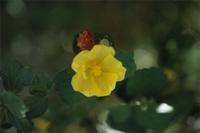
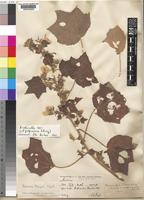
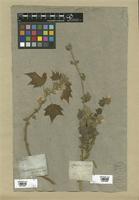
Erect or somewhat spreading biennial or perennial soft-stemmed suffrutex or shrub, 1–2 m. tall, usually densely and rather shortly pubescent to subvelutinous (but both very hairy and sparsely pubescent extremes occur); stems rather stout, terete, with greyish or brownish pubescence, glabrescent. Leaf-lamina variable in dimensions, 2·5–12 × 2–15 cm., but usually of fairly uniform size on one specimen, usually broadly ovate to suborbicular in outline, usually 3–5-lobed almost to the middle, central lobe always the largest with usually gradually acute somewhat acuminate apex, the other lobes usually acute, base ± cordate, both surfaces usually finely pubescent or subhispid mainly on the veins and on the lower surface, the latter not infrequently subtomentose; petiole usually 1 -8–6 cm. long (that of lower leaves occasionally much longer), pubescent to velutinous; stipules minute, filiform, pubescent, usually caducous. Flowers mauve, pink or rose, solitary in the upper axils and on short lateral branches, often forming a terminal narrow leafy pseudo-panicle; pedicels usually under 9 mm. long, slender, tomentose and with additional long soft hairs. Epicalyx of 5 bracts; bracts 5–8 mm. long, linear or narrowly lanceolate, pubescent, nearly free. Calyx about as long as or a little longer than the epicalyx, cupuliform-campanulate, pubescent and ciliate, lobed to about the middle or a little beyond; lobes triangular, acute to apiculate, conspicuously 3-nerved. Petals 2–2·5 cm. long. Staminal tube glabrous. Mericarps c. 3 mm. long, muticous, glabrous or nearly so, dorsally reticulate with slightly raised ridges. Seeds 3–3·5 × 2–2·5 mm., reniform, glabrous.
Habitat
Typical of moister and generally frost-free habitats, hence in the Transvaal and S. Rhodesia usually in the mountains and in sheltered river-valleys with a dense vegetation; in moister cooler climates (Natal, E. Cape) also at lower altitudes, but almost invariably in forest edges and clearings, riverine bush etc.; usually in soil or soil pockets rich in humus. The distribution clearly reflects this plant’s ecological requirements.
Range
Also from the Transvaal, Swaziland and Natal to Eastern Cape Prov., extending into Tanganyika and Uganda
Distribution
Mozambique MS Gorongosa, Gogogo, Mendonça 2404 (LISC).Mozambique T Angonia, Monte Dómuè, Torre 6056 (LISC).Mozambique Z highest part of Serra Guruè, Mendonça 2103 (LISC; SRGH).Malawi S Cholo Mt., fl. & fr. 22.ix.1946, Brass 17740 (K; PRE; SRGH); Limbe, 1220 m., fl. & fr. 1.viii.1948, Goodwin 143 (BM).Zimbabwe S Belingwe East, fl. & fr. 7.vii.1953, Wild 4129 (BM; PRE; SRGH).Zimbabwe E Inyanga, fl. & fr. i.1958. Miller 4944a (PRE; SRGH).Zimbabwe C Makoni, fl. & fr. vi.1917, Eyles 799 (K).Mozambique N Maniamba, Serra Geci, Pedro & Pedrógão 4075 (EA; LMJ).Malawi N Nyika Plateau, fl. 1.ix.1935, Lawrence 179 (K).Zambia C Chilanga Distr., Quien Sabe, fl. & fr. 9.xi.1929, Sandwith 157 (K).Zimbabwe N Mazoe, fl. & fr. iv.1906, Eyles 355 (BM; BOL; PRE; SRGH).
Distribution (external)
Reunion
Madagascar

Related Materials

  • Terms and Conditions
  • Privacy Policy
  • Cookie Policy
  • Cookie Settings
  • Accessibility
  • Help
  • Contact Us
  • Facebook
  • Twitter
ITHAKA

JSTOR is part of ITHAKA, a not-for-profit organization helping the academic community use digital technologies to preserve the scholarly record and to advance research and teaching in sustainable ways.

©2000-2026 ITHAKA. All Rights Reserved. JSTOR®, the JSTOR logo, JPASS®, Aluka®, and ITHAKA® are registered trademarks of ITHAKA.

╳