JSTOR Global Plants Home
  • Home
  • Browse
  • About
  • Access
  • Account
    • Saved Items
    • Profile
  • Log in

Global Plants

Skip to Main Content
  • JSTOR Global Plants Home
  • Global Plants

    • Browse
    • About
    • Access
    • Account
      • Saved Items
      • Profile
Log in
  • Browse
  • About
  • Access
  • Account
    • Saved Items
    • Profile
Advanced Search

Compilation
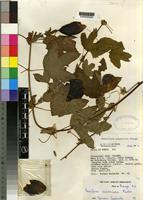
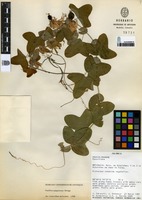
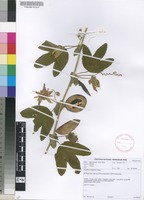
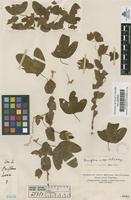
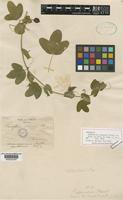
Passiflora subpeltata

13 Images see all

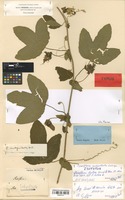
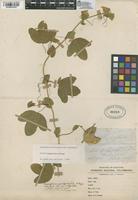
Filed as Passiflora subpeltata Ortega [family PASSIFLORACEAE]
[family ]
[family ]
Filed as Passiflora subpeltata Ortega [family PASSIFLORACEAE]
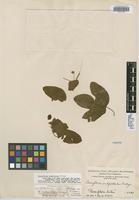
Passiflora calcarata Mast. [family PASSIFLORACEAE]
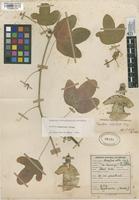
Filed as Passiflora subpeltata Ortega [family PASSIFLORACEAE]
Passiflora subpeltata Ortega [family PASSIFLORACEAE]
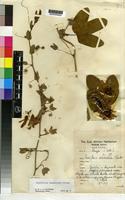
Filed as Passiflora subpeltata (Rendle) Schweick. [family PASSIFLORACEAE]
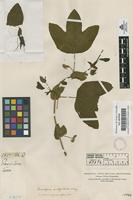
Filed as Passiflora subpeltata Ortega [family PASSIFLORACEAE]
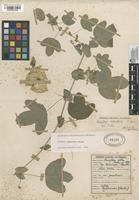
Holotype of Passiflora atomaria Planch. ex Mast. [family PASSIFLORACEAE]
Isotype of Passiflora lutea Sessé & Moc. [family PASSIFLORACEAE]
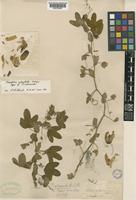
Isotype of Passiflora subpeltata Ortega [family PASSIFLORACEAE]
Previous
Next

Name

Identification
Passiflora subpeltata Ortega [family PASSIFLORACEAE ] Verified by Killip,E. P., 1937 Passiflora not on sheet Not On Sheet [family PASSIFLORACEAE ] Verified by Not On Sheet, Passiflora subpeltata Ortega [family PASSIFLORACEAE ] (stored under name); Verified by Albert de Escobar,Linda, 1989
Related name
  • Passiflora lutea
  • Passiflora alba
  • Passiflora subpeltata
  • `
  • Passiflora calcarata
  • Passiflora not on sheet
  • Passiflora atomaria

Flora

Entry for Passiflora subpeltata [family PASSIFLORACEAE]
Herbarium
South African National Biodiversity Institute, Compton Herbarium, Cape Town (SAM)
Collection
Flora of Southern Africa
Resource Type
Reference Sources
Entry From
Flora of South Africa, (2003) Author: Dr J.P. Roux
Names
Passiflora subpeltata [family PASSIFLORACEAE]
Information
Herbaceous creeper or climber to 5 m, perennial, essentially glabrous throughout; stem terete. Leaves 3-lobed to about half-way, sub­orbicular in outline, 4—10 X 4—11 cm, (3-) 5-plinerved, herbaceous, base rounded, truncate or cordate, subpeltate; lobes elliptic to oblong, up to 5 cm, apex obtuse or acutish, c. 1 mm mucronate; margin entire except for a few gland-teeth in or near the lobe-sinuses; petiole 3-6 cm; glands on petiole 2-5, scattered or ± paired at about the middle, slender, up to 1 mm long; blade-glands absent. Stipules ovate-oblong, straight, 1,5-4 cm long, entire or with a few minute gland-teeth, apex mucronulate. Inflorescences 1-flowered, the straight peduncle 3-6 cm, inserted besides a simple tendril 4—12 cm; bracts and bracteoles (broadly) ovate 1-1,5 cm, acute, entire or with a few minute gland-teeth at base, forming an involucre. Flowers 4-5,5 cm diam., white; hypanthium broadly cup-shaped, 7-10 mm wide; sepals oblong, 2-2,5 cm, obtuse, with a subapical horn 0,5-1 cm; petals oblong, 1,5-2 cm, acutish; corona composed of 4 or 5 series of threads, those of the outer 2 series 1 (-1,5) cm long, those of inner series 2-6 mm; operculum subplicate, fimbriate-laciniate for about half or less, and with a fringe of inward curved dentiform pro­cesses; disc annular; limen with lobulate edge, erect or ± reflexed at the top, closely surround­ing androgynophore. Androgynophore 10-12 mm; filaments 5-6 mm, dilated; anthers 5-7 mm; ovary ellipsoid, c. 4 mm, glabrous; styles 8-10 mm. Fruit ± leathery, ellipsoid or sub-globose, excluding the 1,5-2 cm long gynophore 3,5-4,5 cm long, greenish turning yellow; seeds many, ellipsoid, 4-5 mm.
Habitat
Killip, in 1947, named the identical material in the East African Herbarium as the related and similar species P. eichlerana Mast. (1872). This species, according to Killip (1938), differs from true P. subpeltata mainly by the operculum, which in P. eichlerana is laciniate for about half or more, and by the presence of inward curved dentiform processes; in P. subpehata the operculum is fringed only at the margin, with the entire portion much longer than the teeth or fringes. All the abundant material now available from East Africa, as well as similar material from India, Malesia, Australia, Hawaii, etc., is doubtlessly conspecific. The operculum in all these alien specimens is dissected up to about half-way or less, thus rendering the distinction between P. eichlerana and P. subpeltata for these specimens difficult. As both species are related in their original country, the introduced plants are possibly a deviat­ing form of one or the other, or a hybrid. As P. subpeltata is the older name, I have chosen to accept it over P. eichlerana.
Use
4. Passiflora subpeltata Ortega, Nov. Rar. PI. Hort. Madrit. 6:78 (1798); Killip in Field Mus. Nat. Hist. Chicago Bot. 19: 436 (1938). Type: Mexico (specimen in Herb. Madrid, fide Killip).
Range
Originating from tropical America and cultivated as an ornamental; sometimes profusely escaped, e.g. in aban­doned plantations, on forest edges, etc.; up to 1 000 m, in the tropics up to 2 500 m.

Related Materials

  • Terms and Conditions
  • Privacy Policy
  • Cookie Policy
  • Cookie Settings
  • Accessibility
  • Help
  • Contact Us
  • Facebook
  • Twitter
ITHAKA

JSTOR is part of ITHAKA, a not-for-profit organization helping the academic community use digital technologies to preserve the scholarly record and to advance research and teaching in sustainable ways.

©2000-2026 ITHAKA. All Rights Reserved. JSTOR®, the JSTOR logo, JPASS®, Aluka®, and ITHAKA® are registered trademarks of ITHAKA.

╳