JSTOR Global Plants Home
  • Home
  • Browse
  • About
  • Access
  • Account
    • Saved Items
    • Profile
  • Log in

Global Plants

Skip to Main Content
  • JSTOR Global Plants Home
  • Global Plants

    • Browse
    • About
    • Access
    • Account
      • Saved Items
      • Profile
Log in
  • Browse
  • About
  • Access
  • Account
    • Saved Items
    • Profile
Advanced Search

Compilation
Parinari verdickii

4 Images see all

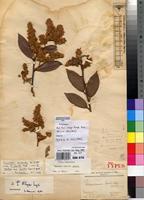
Holotype of Parinari verdickii De Wild. [family CHRYSOBALANACEAE]
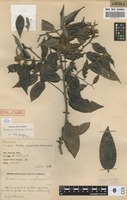
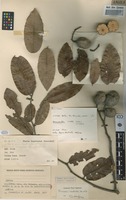
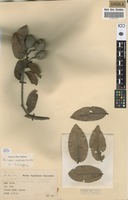
Filed as Parinari verdickii De Wild. [family CHRYSOBALANACEAE]
Previous
Next

Name

Identification
Parinari verdickii De Wild. [family CHRYSOBALANACEAE ] Verified by Not on sheet, Parinari excelsa Sabine [family CHRYSOBALANACEAE ] (stored under name); Verified by White F., 1974
Related name
  • Parinari excelsa
  • Parinari verdickii

Flora

Entry for Parinari excelsa Sabine [family CHRYSOBALANACEAE]
Herbarium
Royal Botanic Gardens, Kew (K)
Collection
Flora Zambesiaca
Resource Type
Reference Sources
Entry From
FZ, Vol 4, Part 0, page 33, (1978) Author: F. White
Names
Parinari excelsa Sabine [family CHRYSOBALANACEAE], in Trans. Roy. Hort. Soc. 5: 451 (1824).—R. A. Grah. in Kew Bull. 1957: 229 (1957); in F.T.E.A., Rosaceae: 49 (1960)—Keay in F.W.T.A. ed. 2, 1: 429, t. 141 (1958).—F. White, F.F.N.R.: 70 (1962).—Chapman & White, Evergr. For. Malawi: 40, photogr. 38 (1970). TAB. 10 fig. B. Type from Sierra Leone.
Parinari salicifolia Engl. [family CHRYSOBALANACEAE], Pflanzenw. Ost-Afr. C: 191 (1895) non (Presl) Miq. (1855), now. illegit. Type from Tanzania.
Parinari holstii Engl. [family CHRYSOBALANACEAE], tom. cit.: 191, 423 (1895).—Hauman in F.C.B. 3: 59 (1952).—Williamson, Useful Pl. Nyasal.: 90(1955). Type as above.
Parinari whytei Engl. [family CHRYSOBALANACEAE], Bot. Jahrb. 26: 378 (1899).—Hauman, tom. cit.: 61 (1952). Type: Malawi, Mt. Malosa, fl. xi-xii.1896, Whyte s.n. (B+, holotype; K, isotype).
Parinari verdickii De Wild. [family CHRYSOBALANACEAE], in Ann. Mus. Congo Beige, Bot. Ser. 4, 1: 182 (1903).— Mendes in C.F.A. 4: 11 (1970). Type from Zaire.
Parinari mildbraedii Engl. [family CHRYSOBALANACEAE], in Mildbr., Wiss. Ergebn. Deutsch. Zentr.-Afr. Exped. 1907–1908, 2: 227, t. 23 (1911). Type from Rwanda.
Parinari riparia R.E.Fr. [family CHRYSOBALANACEAE], in Fedde, Repert. 12: 539 (1913); Wiss. Ergebn. Schwed. Rhod.-Kongo-Exped. 1: 61(1914). Type: Zambia, Lake Bangweulu near Kasomo, fl. 20.ix.1911, Fries 665 (UPS, holotype).
Parinari nalaensis De Wild. [family CHRYSOBALANACEAE], Pl. Bequaert. 3: 289 (1931). Type from Zaire.
Parinari excelsa subsp. holstii Engl. R. A. Grah. [family CHRYSOBALANACEAE], loc. cit.; tom. cit.: 50 (1960). Type as for P. holstii.
Information
Large evergreen tree up to 35 m. tall. Crown rounded, dense, dark green. Bark fairly smooth or with deep longitudinal fissures. Leaf-lamina up to 10 x 3·5 cm., narrowly elliptic or lanceolate-elliptic, apex usually acuminate or subacuminate, very rarely acute, base usually acute, sometimes rounded, never subcordate, lateral nerves in 22–24 pairs; petiole 0·5–1 cm. long; stipules up to 2 x 0·2 cm., papery, caducous. Inflorescence terminal and axillary, up to 12 x 9 cm., lax or congested; inflorescence-axes and outside of flowers fulvous- or grey-tomentose. Receptacle-tube 0·2–0·3 cm. long. Sepals and petals 0·25 cm. long. Stamens 8; filaments 0·2 cm. long; staminodes 7–8, 0·02–0·1 cm. long. Style 0·25–0·35 cm. long. Drupe ellipsoid c. 4 x 2·5 cm.
Habitat
In our area it is one of the most characteristic trees of Afromontane rain forest, dry evergreen forest (mateshi) and certain types of well-drained fringing forest. Sometimes it persists in grassland after the destruction of forest, as on the Vipya Plateau, and then acts as foci for the re-establishment of the latter.
Range
Widespread in tropical Africa from Senegal to Uganda and Tanzania (but absent from Kenya) and southwards to Angola, Zambia, Malawi and Mozambique. According to Prance (Fl. Neotrop. 9, Chrysobal.: 185, 1972) it is also widely distributed in S. America.
Distribution
Malawi S Zomba Distr., Mlungusi, fl., Clements 562 (FHO).Malawi C Dowa Distr., Nchisi Mt., st. 3.v.1961, Chapman 1260 (FHO).Zambia W 112 km. S. of Mwinilunga, fr. 8.xi.1932, Duff 37 (FHO).Zambia N Abercorn Distr., Chizisi, fl. 19.ix.1961, Lawton 783 (FHO).Mozambique Z near Nhamarroe, fl. 25.ix.1941, Torre 3508 (LISC).Malawi N Misuku Hills, Mugesse Forest, fr.ix.1953, Chapman 137(FHO; K).Zambia B Balovale Distr., Chavuma, fl. 13.x.1952, White 3503 (FHO; K).
Notes
The fruit is edible but not as tasty as that of P. curatellifolia.P. excelsa is one of the most widespread forest trees in Africa. Not surprisingly it shows a certain amount of variation which is partly correlated with geography. This, at least in part, accounts for its extensive synonomy. Plants from lowland rainforest in W. Africa tend to have silvery indumentum, a lax inflorescence and smaller flowers. Those from upland rainforest and fringing forest in E. and S. tropical Africa tend to have fulvous indumentum, a more congested inflorescence and larger flowers (not smaller as stated by Graham (in F.T.E.A., Rosaceae: 50, I960)). They belong to subsp. holstii of Graham. The overall pattern, however, is too diffuse to justify the formal recognition of subspecies. Several specimens from W. Africa typologically are subsp. holstii and several from E. Africa are inseparable from subsp. excelsa or are intermediate. This would not matter if the anomalous specimens were few in number and if the differences between the subspecies were greater. Not only are the subspecies weakly defined, but most of the specimens from the Congo basin are intermediate in character. Within our area, the range of P. excelsa lies entirely within that of P. curatellifolia, but the ecology of the two species is very different. P. excelsa is a species of various types of evergreen forest, in which it is often dominant or co-dominant. P. curatellifolia is a plant of woodland and tree savanna. In some situations, especially where P. curatellifolia has invaded secondary grassland on sites formerly occupied by forest, the two species may occur in close proximity. Notwithstanding this, and their great similarity in virtually all structural features other than habit and leaf shape, I have seen no intermediates other than the two specimens mentioned below. This suggests that the species are either reproductively isolated or that no niche is available for any hybrids they may produce. The intermediates are both from Mozambique, where P. excelsa is only known from a small area centred on the Gúruè Mts., and were collected at localities quite close to or a short distance S. of the area where P. excelsa occurs. It is possible that these intermediates are of hybrid origin, and that it is only at the southern limit of the range of P. excelsa that habitats suitable for colonization by the hybrids are found. Careful observations in the field are needed to test this hypothesis. The specimens are: Gomes e Sousa 865 (K) from the Ribáuè Mts. (14· 50’ S, 38· 20’ E) at 900 m., where the plant is said to be common in xerophilous forest on granite, and Gomes e Sousa 4256 (K) from Inhaminga.

Related Materials

  • Terms and Conditions
  • Privacy Policy
  • Cookie Policy
  • Cookie Settings
  • Accessibility
  • Help
  • Contact Us
  • Facebook
  • Twitter
ITHAKA

JSTOR is part of ITHAKA, a not-for-profit organization helping the academic community use digital technologies to preserve the scholarly record and to advance research and teaching in sustainable ways.

©2000-2026 ITHAKA. All Rights Reserved. JSTOR®, the JSTOR logo, JPASS®, Aluka®, and ITHAKA® are registered trademarks of ITHAKA.

╳