JSTOR Global Plants Home
  • Home
  • Browse
  • About
  • Access
  • Account
    • Saved Items
    • Profile
  • Log in

Global Plants

Skip to Main Content
  • JSTOR Global Plants Home
  • Global Plants

    • Browse
    • About
    • Access
    • Account
      • Saved Items
      • Profile
Log in
  • Browse
  • About
  • Access
  • Account
    • Saved Items
    • Profile
Advanced Search

Compilation
Parinari salicifolia

6 Images see all

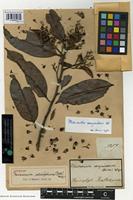
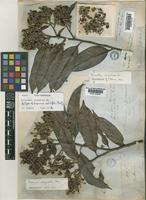
Type of Grymania salicifolia C. Presl [family CHRYSOBALANACEAE]
Type of Parinari salicifolia Miq. [family CHRYSOBALANACEAE]
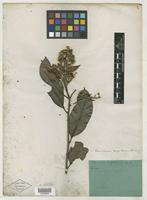
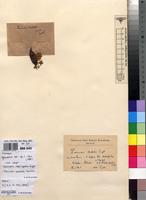
Isotype of Grymania salicifolia C.Presl [family CHRYSOBALANACEAE]
Isotype of Grymania salicifolia C. Presl. [family ROSACEAE]
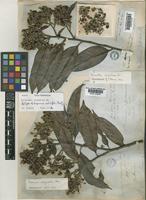
Maranthes corymbosa Blume [family CHRYSOBALANACEAE]
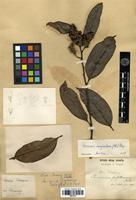
Type of Parinari salicifolia Engl. [family CHRYSOBALANACEAE]
Previous
Next

Name

Identification
Parinari salicifolia Engl. [family CHRYSOBALANACEAE ] Verified by Not on sheet, Parinari excelsa Sabine [family CHRYSOBALANACEAE ] (stored under name); Verified by Not on sheet,
Related name
  • Parinari salicifolia
  • Parinari excelsa

Flora

Entry for PARINARI excelsa (Engl.) R. Grah. subsp. holstii [family CHRYSOBALANACEAE]
Herbarium
Royal Botanic Gardens, Kew (K)
Collection
Flora of Tropical East Africa
Resource Type
Reference Sources
Entry From
Flora of Tropical East Africa, page 1, (1960) Author: R. A. GRAHAM
Names
PARINARI excelsa (Engl.) R. Grah. subsp. holstii [family CHRYSOBALANACEAE], in K.B. 1957: 229 (1957). Type: Tanganyika, Lushoto District, Mlalo, Holst 2425 (K, isolecto.!)
PARINARI holstii Engl. [family CHRYSOBALANACEAE], P.O.A. C: 423, 191 (1895); Hauman & Balle in B.J.B.B. 21: 191 (1951); I.T.U., ed. 2: 333 (1952); F.C.B. 3: 59 (1952) excl. syn. P. tenuifolia.
PARINARI salicifolia Engl. [family CHRYSOBALANACEAE], P.O.A. C.: 191 (1895), non (Presl) Miq. (1855), nom illegit. Type: as P. excelsa subsp. holstii.
PARINARI mildbraedii Engl. [family CHRYSOBALANACEAE], in Z.A.E.: 227, t. 23 (1911). Type: Ruanda-Urundi, W. Rugege Forest, Engler 1036 (B, holo.†)
PARINARI excelsa Engl. var. fulvescens [family CHRYSOBALANACEAE], in Z.A.E.: 227 (1911). Types: Belgian Congo, between Beni and Irumu, Mildbraed 2808 (B, syn.†) & between Mawambi and Awakubu, Mildbraed 3232 (B, syn.†, BR, fragment, isosyn.!) & Spanish Guinea, Ikonangi, Tessmann 893 (B, syn.†)
PARINARI excelsa [family CHRYSOBALANACEAE], [sensu T.T.C.L.: 476 (1949); I.T.U. ed. 2: 334, fig. 70d (1952) & sensu F.W.T.A., ed. 2, 1: 429 (1958), pro parte; non Sabine]
Information
Indumentum of the inflorescence brown or fulvous. Flowers 4–5 mm. long. Calyx-lobes 1.75–2(–2.5) mm. long. Filaments (1.75–)2–2.5 mm. long; staminodes not more than 0.75 mm. long. Style (2.5–)3–3.5 mm. long.
Range
DISTR. U1, 2, 4; T1, 3, 4, 6–8 Belgian Congo, Nyasaland, Northern Rhodesia, ?Angola; certain examples from Ghana and Ivory Coast appear to be this subspecies
Distribution
TANGANYIKA Bukoba District Rubare, July 1931, Eggeling 6236!;TANGANYIKA Lushoto District W. Usambara Mts., Baga-Bumbuli road, 2.5 km. NE. of Sakarani, May 1953, Drummond & Hemsley 2405!TANGANYIKA Njombe, Aug. 1933, Greenway 3511!UGANDA Bunyoro District Budongo Forest, June 1932, Harris in Brasnett 841!;UGANDA Kigezi District Ishasha Gorge, Nov. 1946, Purseglove 2269!;UGANDA Masaka District Bugala Is., Sept. 1950, Philip 385!
Notes
P. whytei Engl. in E.J. 26: 378 (1899); T.T.C.L.: 477 (1949). Type: Nyasaland, Mt. Malosa, Whyte (K, holo.!). This appears to be a form of subsp. holstii differing in having slightly larger flowers. Specimens seen from our area which have been so named are however normal subsp. holstii. Subsp. excelsa, which replaces subsp. holstii in West Africa, differs in its larger flowers (6–8 mm. long), longer filaments (2.5–3 mm. long), staminodes (1.75–2 mm.) and styles (4–5 mm.), and in its indumentum which is silvery, not brown or fulvous.

Related Materials

  • Terms and Conditions
  • Privacy Policy
  • Cookie Policy
  • Cookie Settings
  • Accessibility
  • Help
  • Contact Us
  • Facebook
  • Twitter
ITHAKA

JSTOR is part of ITHAKA, a not-for-profit organization helping the academic community use digital technologies to preserve the scholarly record and to advance research and teaching in sustainable ways.

©2000-2026 ITHAKA. All Rights Reserved. JSTOR®, the JSTOR logo, JPASS®, Aluka®, and ITHAKA® are registered trademarks of ITHAKA.

╳