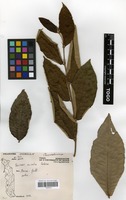
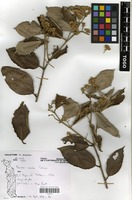
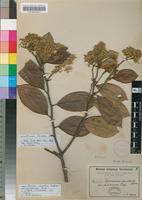
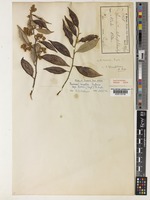
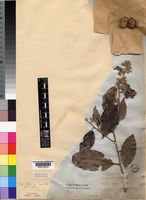
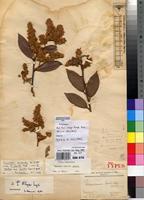
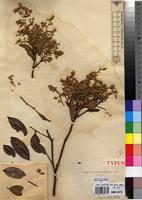
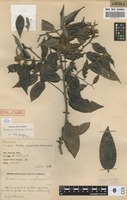
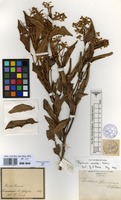
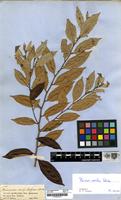
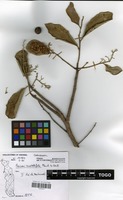
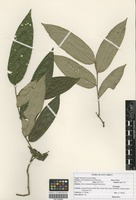
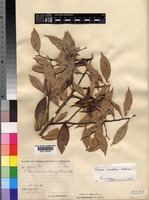
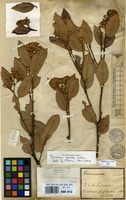
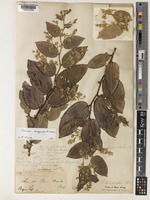
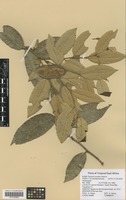
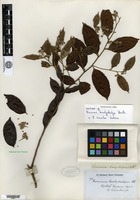
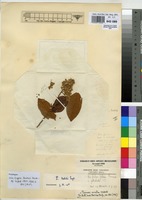
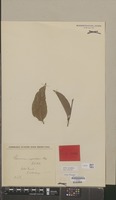
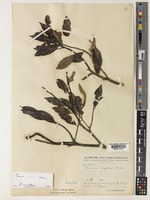
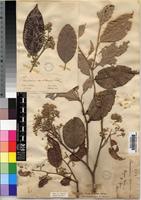
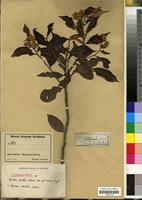
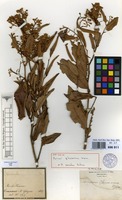
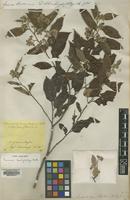
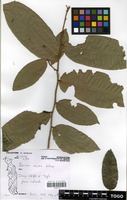
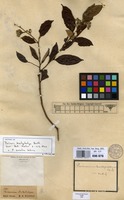
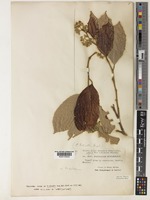
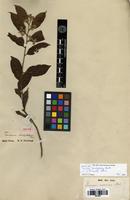
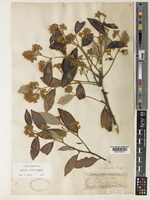
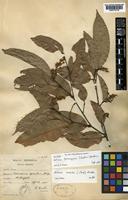
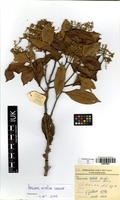
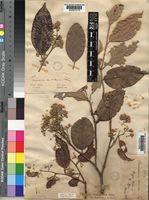
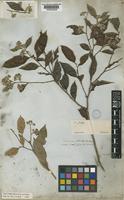
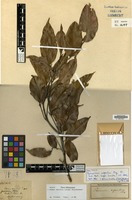
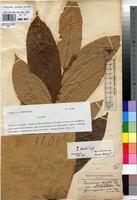
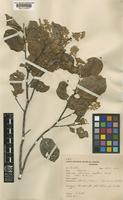
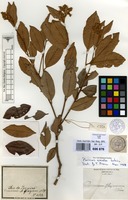
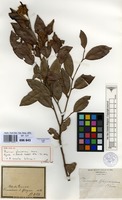
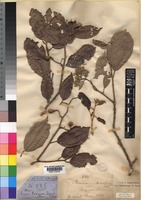
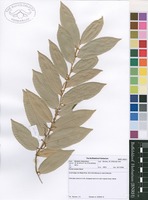
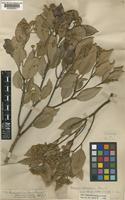
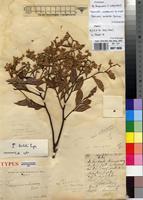
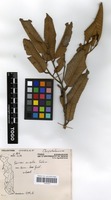
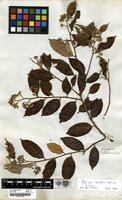
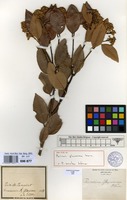
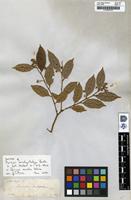
A large evergreen tree up to 45 m. tall, with a thick rounded or flatly-spreading crown; with or without basal buttresses up to 3 m. high. Bark grey-brown, rough, finely and often long-fissured. Leaves petiolate, lanceolate, elliptic, ovate-elliptic, lanceolate- or oblanceolate-elliptic, 5.5–12 (–15) × 1.5–3.5(–5) cm., long, narrowed to an acute or obtuse apex, sometimes acuminate, similarly or more shortly narrowed to the base (or there rounded to cordate on sterile branches); primary nerves up to 24 “pairs,” irregularly parallel, very prominent below; dark green and glabrous and sometimes shining above, buff and usually with ± appressed fulvous hairs on the midrib below and sometimes on the primary nerves, with the intervening tissues variably glabrous to densely hirsute with appressed hairs. Inflorescence paniculate, terminal or axillary, much-branched, shortly but thickly hairy to shaggy with irregularly spreading or ascending silky or brown hairs. Flowers in (usually) triflorous cymes, 4–8 mm. long. Calyx cup-shaped, basally abruptly gibbous, the lobes triangular, 1.75–3.5 mm. long, acute, rather spreading, hairy as the bracts. Petals white, ovate, readily caducous, of approximately the same length as the calyx-lobes. Filaments of antheriferous stamens 1.75–3 mm. long; staminodes reduced to very small teeth not exceeding 0.75 to 2 mm. long. Ovary shaggy with long hairs; style 2.5–5 mm. long, the stigma flatly capitate. Drupe ovoid to obliquely ellipsoid, up to 5 × 3.2 cm. when mature and dried, sometimes suborbicular, covered with small, thin patches of cork.