JSTOR Global Plants Home
  • Home
  • Browse
  • About
  • Access
  • Account
    • Saved Items
    • Profile
  • Log in

Global Plants

Skip to Main Content
  • JSTOR Global Plants Home
  • Global Plants

    • Browse
    • About
    • Access
    • Account
      • Saved Items
      • Profile
Log in
  • Browse
  • About
  • Access
  • Account
    • Saved Items
    • Profile
Advanced Search

Compilation
Parietaria obtusa

5 Images see all

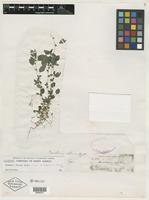
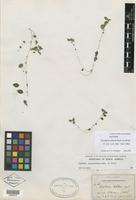
Holotype of Parietaria obtusa Rydb. ex Small [family URTICACEAE]
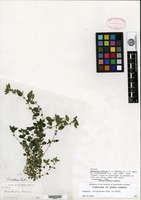
Isotype of Parietaria obtusa Rydberg ex Small [family URTICACEAE]
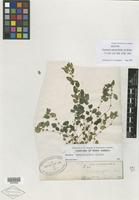
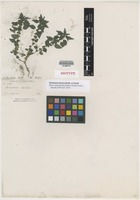
Isotype of Parietaria obtusa Rydb. ex Small [family URTICACEAE]
Previous
Next

Name

Identification
Parietaria obtusa Rydb. ex Small [family URTICACEAE ] (stored under name); Verified by Not on sheet,
Related name
  • Parietaria obtusa

Flora

Entry for Parietaria pensylvanica Muhlenberg ex Willdenow [family URTICACEAE]
Herbarium
Flora of North America (FNA)
Collection
Flora of North America
Resource Type
Reference Sources
Entry From
Flora of North America, Vol 3,
Names
Parietaria pensylvanica Muhlenberg ex Willdenow [family URTICACEAE], Sp. Pl., 4(2): 955. 1806
Parietaria obtusa Rydberg ex Small [family URTICACEAE]
Parietaria occidentalis Rydberg [family URTICACEAE]
Parietaria pensylvanica var. obtusa (Rydberg ex Small) Shinners [family URTICACEAE]
Information
Herbs, annual, 0.4-6 dm. Stems simple or freely branched, decumbent, ascending, or erect. Leaf blades narrowly to broadly elliptic, lanceolate, oblong, or ovate, (1-)2-9 × 0.4-3 cm, base narrowly cuneate, apex acuminate to long-attenuate or obtuse to rounded; proximal pair of lateral veins arising above junction of blade and petiole. Flowers: involucral bracts 1.8-5 mm, usually less than 2 times length of achene; tepals 1.5-2 mm, shorter than bracts. Achenes light brown, symmetric, 0.9-1.2 × 0.6-0.9 mm, apex obtuse, mucro apical; stipe straight, short-cylindric, centered, basally dilated. 2n=14, 16.
Phenology
Flowering spring-late fall
Altitude range
0-2400 m
Distribution
Mexico.USA Ala.USA Ariz.USA Ark.USA Calif.USA Colo.USA Conn.USA D.C.USA Fla.USA Ga.USA IdahoUSA Ill.USA Ind.USA IowaUSA Kans.USA Ky.USA La.USA MaineUSA Md.USA Mass.USA Mich.USA Minn.USA Miss.USA Mo.USA Mont.USA Nebr.USA Nev.USA N.H.USA N.J.USA N.Mex.USA N.Y.USA N.C.USA N.Dak.USA OhioUSA Okla.USA Oreg.USA Pa.USA S.C.USA S.Dak.USA Tenn.USA Tex.USA UtahUSA Vt.USA Va.USA Wash.USA W.Va.USA Wis.USA Wyo.Canada Alta.Canada B.C.Canada Man.Canada Ont.Canada Que.Canada Sask.Canada Yukon
Discussion
Some extremes of Parietaria pensylvanica with short, oblong or ovate leaf blades strongly resemble P. hespera var. hespera. Parietaria hespera is usually more delicate and has thinner leaves with the proximal pair of lateral veins arising at the junction of blade and petiole. Leaf shape and texture tend to overlap in the two species, but in P. pensylvanica the proximal pair of lateral veins clearly arise above the junction of blade and petiole. The extremes of P. pensylvanica frequently are found where the ranges of the two species approach or overlap. Examples of these intermediates are from Gila, Mohave, and Yuma counties, Arizona. A mixed collection from Rock Springs, Gila County, Arizona, suggests that the two species occasionally grow together.

Related Materials

  • Terms and Conditions
  • Privacy Policy
  • Cookie Policy
  • Cookie Settings
  • Accessibility
  • Help
  • Contact Us
  • Facebook
  • Twitter
ITHAKA

JSTOR is part of ITHAKA, a not-for-profit organization helping the academic community use digital technologies to preserve the scholarly record and to advance research and teaching in sustainable ways.

©2000-2026 ITHAKA. All Rights Reserved. JSTOR®, the JSTOR logo, JPASS®, Aluka®, and ITHAKA® are registered trademarks of ITHAKA.

╳