JSTOR Global Plants Home
  • Home
  • Browse
  • About
  • Access
  • Account
    • Saved Items
    • Profile
  • Log in

Global Plants

Skip to Main Content
  • JSTOR Global Plants Home
  • Global Plants

    • Browse
    • About
    • Access
    • Account
      • Saved Items
      • Profile
Log in
  • Browse
  • About
  • Access
  • Account
    • Saved Items
    • Profile
Advanced Search

Compilation
Paranecepsia alchorneifolia

8 Images see all

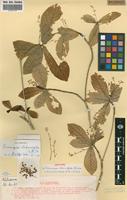
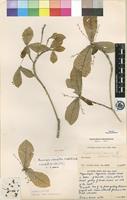
Isotype of Paranecepsia alchorneifolia Radcl.-Sm. [family EUPHORBIACEAE]
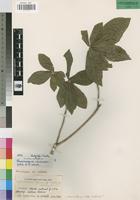
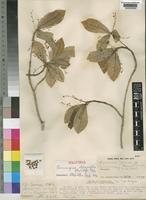
Paratype of Paranecepsia alchorneifolia Radcl.-Sm. [family EUPHORBIACEAE]
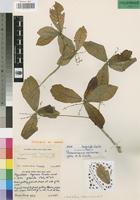
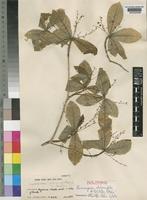
Isotype of Paranecepsia alchorneifolia Radcl.-Sm. [family EUPHORBIACEAE]
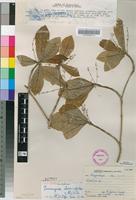
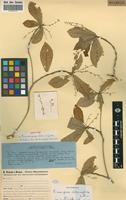
Holotype of Paranecepsia alchorneifolia Radcl.-Sm. [family EUPHORBIACEAE]
Isotype of Paranecepsia alchorneifolia Radcl.-Sm. [family EUPHORBIACEAE]
Previous
Next

Name

Identification
Isotype of Paranecepsia alchorneifolia Radcl.-Sm. [family EUPHORBIACEAE ] (stored under name); Verified by Radcliffe-Smith, Alan, 1985 Alchornea not on sheet Not on sheet [family EUPHORBIACEAE ] Verified by s.det.,
Related name
  • Paranecepsia alchorneifolia
  • Alchornea not on sheet

Flora

Entry for Paranecepsia alchorneifolia Radcl.-Sm. [family EUPHORBIACEAE]
Herbarium
Royal Botanic Gardens, Kew (K)
Collection
Flora Zambesiaca
Resource Type
Reference Sources
Entry From
FZ, Vol 9, Part 4, (1996) Author: A. Radcliffe-Smith
Names
Paranecepsia alchorneifolia Radcl.-Sm. [family EUPHORBIACEAE], in Kew Bull. 30: 684 (1976); in F.T.E.A., Euphorb. 1: 220 (1987). Type: Mozambique, Niassa Province, 30 km north of Chomba, male fl. 11.xi.1959, Gomes e Sousa 4514 (K, holotype; COI; EA; PRE; SRGH).
Information
A much-branched shrub or small tree to 7 m high (with Terminalia branching).Bark ± smooth, light grey.Wood soft, white.Internodes variable in length.Leaves interspersed with bract-like scales in the terminal clusters.Petioles 2–5 mm long.Leaf blade 4–18(25) × 1.5–7(10) cm, oblanceolate, obtuse at the apex, narrowed to a rounded or cordulate base, shallowly glandular-serrate or crenate-serrate on the margins, glabrous on upper surface, pubescent at first on the midrib and with domatial hair tufts beneath; lateral nerves in 10–16 pairs.Scales 3 × 2 mm, triangular, acute, densely pubescent without, sparingly so within.Stipules 5–7 mm long, linear-lanceolate, pubescent.Stipels 3–4 mm long, setaceous, glabrous.Male inflorescences up to 7 cm long; axis ± glabrous; bracts 2–3 mm long, triangular-lanceolate, pubescent.Male flowers: pedicels 0.5–1 cm long; buds 1.5 mm in diameter, subglobose, whitish; calyx lobes 1.5 mm long, ovate-lanceolate, pale yellow; stamens 1.5–2 mm long, filaments purple, anthers 0.5 mm long, purplish-tinged; disk glands numerous, dark purple.Female inflorescences up to 11 cm long, 2–6-flowered, otherwise as in the male.Female flowers: pedicels 2–3 cm long, geniculate; sepals in the fruiting stage 2–6 × 1–4 mm, broadly elliptic to elliptic-ovate, obtuse, strongly triplinerved, ± glabrous; staminodes minute; disk 1.5 mm in diameter, thin; ovary size not known; styles 1 mm long, pubescent at the base.Fruit 5–6 × 10 mm, strongly 3-lobed, minutely tuberculate, sparingly or evenly pubescent, grey-green.Seeds 4 mm in diameter, smooth, purplish-brown.
Habitat
Locally common in riverine forest fringing seasonal watercourses
Altitude range
15–300 m.
300
15
Distribution
Mozambique N Negomano–Mueda road, c. 30 km north of Chomba, st. 4.iv.1960, Gomes e Sousa 4514/A (COI; K; SRGH); 30 km Chomba–Negomano, st. 13.iv.64, Torre & Paiva 11880 (LISC); Ridi R., west of Pemba (Porto Amélia), st. 1.x.1964, Gomes e Sousa 4831 (COI; K; PRE).
Distribution (external)
Tanzania
Notes
Because of the absence of female and fruiting material in specimens from Mozambique, Tanzanian material was used in drawing up the above description. In Tanzania, this species occurs up to 450 m in altitude.

Related Materials

  • Terms and Conditions
  • Privacy Policy
  • Cookie Policy
  • Cookie Settings
  • Accessibility
  • Help
  • Contact Us
  • Facebook
  • Twitter
ITHAKA

JSTOR is part of ITHAKA, a not-for-profit organization helping the academic community use digital technologies to preserve the scholarly record and to advance research and teaching in sustainable ways.

©2000-2026 ITHAKA. All Rights Reserved. JSTOR®, the JSTOR logo, JPASS®, Aluka®, and ITHAKA® are registered trademarks of ITHAKA.

╳