JSTOR Global Plants Home
  • Home
  • Browse
  • About
  • Access
  • Account
    • Saved Items
    • Profile
  • Log in

Global Plants

Skip to Main Content
  • JSTOR Global Plants Home
  • Global Plants

    • Browse
    • About
    • Access
    • Account
      • Saved Items
      • Profile
Log in
  • Browse
  • About
  • Access
  • Account
    • Saved Items
    • Profile
Advanced Search

Compilation
Pappophorum elegans

13 Images see all

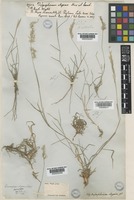
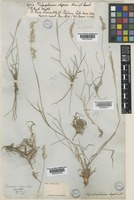
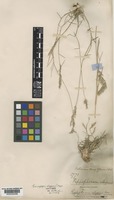
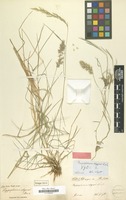
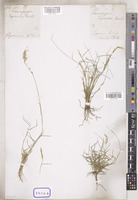
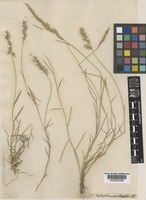
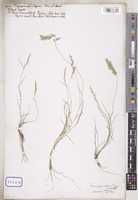
Type of Pappophorum elegans Nees ex Steud. [family POACEAE]
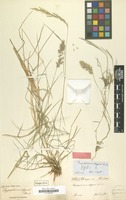
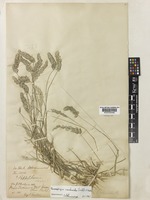
Type of Pappophorum elegans Nees ex Steud. [family GRAMINEAE]
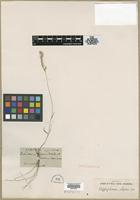
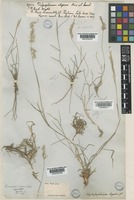
Filed as Pappophorum elegans Nees ex Steud. [family POACEAE]
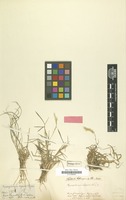
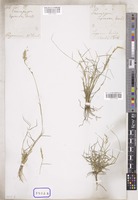
Type of Pappophorum elegans Nees ex Steud. [family GRAMINEAE]
Isotype of Pappophorum elegans Nees ex Steud. [family POACEAE]
Type of Pappophorum elegans Nees ex Steud. [family GRAMINEAE]
Pappophorum elegans Nees [family POACEAE]
Isotype of Pappophorum elegans Nees ex Steud. [family POACEAE]
Type of Pappophorum robustum Hook.f. [family POACEAE]
Enneapogon persicus Boiss. [family POACEAE]
Pappophorum elegans Nees [family POACEAE]
Previous
Next

Name

Identification
Pappophorum elegans Nees ex Steud. [family POACEAE ] (stored under name); Verified by Not on sheet, Galatteria eligans W. & Arnolt [family POACEAE ] Verified by Unknown, Pappophorum elegans Nees ex Steud. [family POACEAE ] Verified by Unknown,
Related name
  • Galatteria eligans
  • Pappophorum elegans

Flora

Entry for ENNEAPOGON schimperanus (A. Rich.) Renv. [family POACEAE]
Herbarium
Royal Botanic Gardens, Kew (K)
Collection
Flora of Tropical East Africa
Resource Type
Reference Sources
Entry From
Flora of Tropical East Africa, Part (Part 1), page 1, (1970) Author: W. D. Clayton
Names
ENNEAPOGON schimperanus (A. Rich.) Renv. [family POACEAE], in K.B. 22: 400 (1968). Type: Ethiopia, Tigre, near Adua, Schimper 323 (B, holo.! K, iso.!)
Pappophorum schimperanum A. Rich. [family POACEAE], Tent. Fl. Abyss. 2: 403 (1851)
Pappophorum elegans Steud. [family POACEAE], Syn. Pl. Glum. 1: 199 (1854). Type: India, Wight 1771 (K, iso.!)
Pappophorum glumosum Hochst. [family POACEAE], in Flora 38: 203 (1855). Type: Ethiopia, Tigre, Tacazze valley, Schimper 1297 in Herb. Buchinger (P, iso.!)
Enneapogon elegans (Steud.) Stapf [family POACEAE], in K.B. 1907: 224 (1907); F.P.S. 3: 448 (1956); R.K.G.: 16 (1958); G.T.: 21 (1965)
Enneapogon glumosus (Hochst.) Maire & Weiller [family POACEAE], Fl. Afr. Nord. 2: 193 (1953)
Information
Tufted perennial; culms wiry below, up to 70 cm. high, usually shortly hairy for a short distance below the inflorescence. Leaf-blades up to 12 cm. long, involute, rarely flat and then up to 4 mm. wide. Inflorescence a spike-like panicle up to 10 cm. long. Glumes both 5–9-nerved, the lower 4–5.9 mm. long, the upper 5.5–8.7 mm. long; lowest lemma 1.5–2.4 mm. long, its awns 5–7 mm. long and ciliate for much of their length; second lemma smaller, usually ♂; third lemma comparatively large, 4–7 mm. long including the well-developed awns; anthers 0.6–1.3 mm. long.
Range
DISTR. U1; K1–7; T1–3, 5 northwards to Egypt and eastwards through Arabia to India and Burma
Altitude range
450–2100 m.
Distribution
KENYA Northern Frontier Province Dandu, 16 May 1952, Gillett 13206!KENYA Laikipia plateau 40 km. W. of Nanyuki, 16 Mar. 1956, Bogdan 4150!KENYA Naivasha District 5 km. N. of Gilgil, 10 July 1957, Trapnell 2335!TANGANYIKA Musoma, Emson 303! & Seronera Dam paddock, 19 Apr. 1961, Greenway 10071!TANGANYIKA Mbulu District edge of Mangati [Mgati] plains on slopes of Jebogo hill, 28 Apr. 1929, B. D. Burtt 2569!UGANDA Karamoja District Lodoketeminit, 15 Apr. 1959, Kerfoot 1007 (in part)!
Notes
E. schimperanus intergrades with E. cenchroïdes in many respects but can easily be separated by the size of the uppermost floret. Also E. schimperanus is a perennial with wiry stems and divergent leaf-blades, whereas E. cenchroïdes has leaf-blades less rigid, longer, wider and ascending close to the stem.

Related Materials

  • Terms and Conditions
  • Privacy Policy
  • Cookie Policy
  • Cookie Settings
  • Accessibility
  • Help
  • Contact Us
  • Facebook
  • Twitter
ITHAKA

JSTOR is part of ITHAKA, a not-for-profit organization helping the academic community use digital technologies to preserve the scholarly record and to advance research and teaching in sustainable ways.

©2000-2026 ITHAKA. All Rights Reserved. JSTOR®, the JSTOR logo, JPASS®, Aluka®, and ITHAKA® are registered trademarks of ITHAKA.

╳