JSTOR Global Plants Home
  • Home
  • Browse
  • About
  • Access
  • Account
    • Saved Items
    • Profile
  • Log in

Global Plants

Skip to Main Content
  • JSTOR Global Plants Home
  • Global Plants

    • Browse
    • About
    • Access
    • Account
      • Saved Items
      • Profile
Log in
  • Browse
  • About
  • Access
  • Account
    • Saved Items
    • Profile
Advanced Search

Compilation
Pappea radlkoferi

11 Images see all

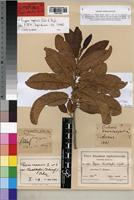
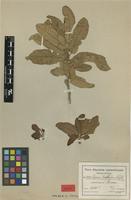
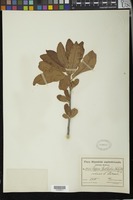
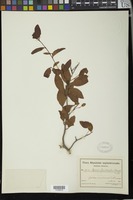
Syntype of Pappea radlkoferi Schweinf. [family SAPINDACEAE]
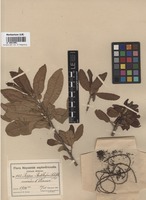
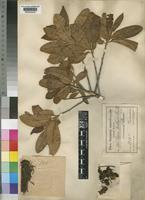
Original material of Pappea radlkoferi Schweinf. [family SAPINDACEAE]
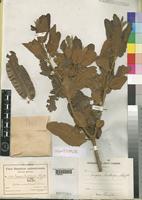
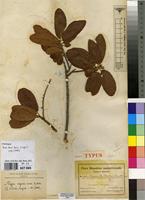
Type? of Pappea radlkoferi Schweinf. [family SAPINDACEAE]
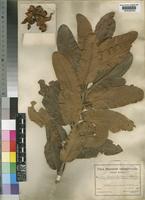
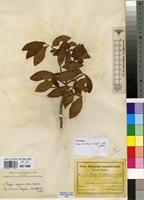
Isosyntype of Pappea radlkoferi Schweinf. [family SAPINDACEAE]
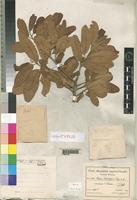
Pappea radlkoferi Schweinf. [family SAPINDACEAE]
Pappea capensis Eckl. & Zeyh. [family SAPINDACEAE]
Syntype of Pappea radlkoferi Schweinf. [family SAPINDACEAE]
Pappea radlkoferi Schweinf. [family SAPINDACEAE]
Type? of Pappea radlkoferi Schweinf. [family SAPINDACEAE]
Pappea capensis Eckl. & Zeyh. [family SAPINDACEAE]
Isosyntype of Pappea radlkoferi Schweinf. [family SAPINDACEAE]
Previous
Next

Name

Identification
Pappea radlkoferi Schweinf. [family SAPINDACEAE ] Verified by Not on sheet, Pappea capensis Eckl. & Zeyh. [family SAPINDACEAE ] (stored under name); Verified by Not on sheet,
Related name
  • Pappea capensis
  • Pappea radlkoferi

Flora

Entry for PAPPEA capensis Eckl. & Zeyh. [family SAPINDACEAE]
Herbarium
Royal Botanic Gardens, Kew (K)
Collection
Flora of Tropical East Africa
Resource Type
Reference Sources
Entry From
Flora of Tropical East Africa, page 1, (1998) Author: DAVIES & B. VERDCOURT
Names
PAPPEA capensis Eckl. & Zeyh. [family SAPINDACEAE], Enum. Pl. Afr. Austr.: 53 (1834); Radlk. in E.P. IV, 165: 1013, fig. 26 (1933); K.T.S.: 516, fig. 94 (1961); F.F.N.R.: 225 (1962); Exell in F.Z. 2: 540, t. 116 (1966); Troupin, Fl. Rwanda 2: 308, fig. 96/1 (1983); Blundell, Wild Fl. E. Afr.: 137, t. 347 (1987); Noad & Birnie, Trees of Kenya: 265, fig. on 266 (1989); Vollesen in Fl. Ethiopia 3: 508, fig. 125.13 (1990); Beentje, K.T.S.L.: 422, fig., map (1994). Lectotype, chosen here: South Africa, W. Cape Province, Fish R., Zeyher 151 (K!, lecto.)
PAPPEA schumanniana Schinz [family SAPINDACEAE], in Abh. Bot. Ver. Prov. Brandenb. 30: 156 (1888). Type: Namibia, Great Namaqualand, Schenck & Schinz (Z, holo.)
PAPPEA radlkoferi Schweinf. [family SAPINDACEAE], in Bull. Herb. Boiss. 7, app. 2: 338 (1899); Penzig in Atti. Congr. Bot. Int.: 27 (1892), nom. semi-nud .; Radlk. in E.P. IV, 165: 1015 (1933). Types: Ethiopia, Gheleb, Schweinfurth & Riva 1068 (ubi?, syn.) & 1080 (ubi?, syn.) & 1123 (ubi?, syn.) & Acrour, Schweinfurth & Riva 1041 (FT!, K!, P!, isosyn.) & near Aidereso, Galata, Schweinfurth & Riva 1617 (FT!, K!, isosyn.)
PAPPEA ugandensis Baker f. [family SAPINDACEAE], in J.L.S. 37: 138 (1905); Radlk. in E.P. IV, 165: 1014 (1933); T.T.C.L.: 560 (1949); I.T.U., ed. 2: 382, fig. 76 (1952); Hauman in F.C.B. 9: 381 (1960). Type: Uganda, Ankole District, Mulema, Bagshawe 369 (BM!, holo.)
PAPPEA capensis (Schweinf.) Schinz var. radlkoferi [family SAPINDACEAE], in Viert. Nat. Ges. Zürich 53: 490 (1908)
PAPPEA fulva Conrath [family SAPINDACEAE], in K.B. 1908: 221 (1908). Type: South Africa, Gauteng [Transvaal], Modderfontein, Conrath 295 (K!, holo.)
PAPPEA radlkoferi Schltr. var. angolensis [family SAPINDACEAE], in E.J. 50, suppl.: 422 (1914); C.F.A. 2: 91 (1954). Type: Angola, Gambos, Antunes 184 (B†, holo., ?P, iso.)
PAPPEA radlkoferi (Baker f.) Schltr. var. ugandensis [family SAPINDACEAE], in E.J. 50, suppl.: 422 (1914)
Information
Much-branched shrub or tree to 15 m. tall; crown thick and rounded; bark dark grey, reticulate, rough or smooth save for small tesselations, variable according to fire regime; twigs tawny-pubescent when young, knobbly with raised leaf-scars, soon glabrescent, dark grey. Petiole 0.3–1.7 cm. long, pubescent; petioles 0.7–1.8 cm. long; leaf-blades yellow-green, oblong or broadly or narrowly elliptic or obovate or occasionally oblong-lanceolate, 3–18 cm. long, 1.3–8 cm. wide, apex obtuse or emarginate or shortly acuminate, rarely acute, base asymmetric, truncate or rounded or cordate on one side, entire and undulate or rather rarely sharply serrate, the teeth 1–2.5 mm. deep, glabrous above apart from hairs on the larger veins, the lower surface softly hairy and glandular; lateral nerves in 12–20 pairs, strongly branched, venation closely reticulate. Inflorescences spicate, in leaf-axils on short lateral shoots; axes 3–15(–25) cm. long, with dense subsessile clusters of white, yellow-green or yellow flowers; pedicels 1–5 mm. long. Calyx 0.6–0.8 mm. long, densely whitish pubescent; petals 5, claw 0.6 mm. long, limb triangular, 0.4 mm. long, long-white ciliate, scale 0.2 mm. long; disk said to be glandular. Stamens much exserted; filaments eventually 4 mm. long, pilose in the lower part; anthers triangular-ovate, with scattered hairs, the apex of the connective inflated; staminodes with 2 mm. long filaments and slightly smaller anthers. Ovary rudiment a small cushion of hairs. Fruit green-velvety when young, brown when mature, spherical, 8–12 mm. diameter, with a longitudinal ridge along which dehiscence occurs; interior of the valves glabrous. Seed 6–9 mm. across. Fig. 11.
Range
DISTR. U 1, 2, 4; K 1–7; T 1–3, 5, 7, 8 Zaire, Rwanda, Ethiopia, N. Somalia, south to South Africa
Altitude range
900–2000 m.
Distribution
KENYA W. Suk District 19 km. N. of Kapenguria on Lodwar road, 14 Sept. 1970, Aggundey 5!KENYA Machakos District Lukenya Hill, 22 Aug. 1953, Bally 9055!KENYA Masai District W. Ngong Hills, 3 Sept. 1965, Kokwaro, Kanuri & Mathenge 313!TANZANIA Musoma District Mugango, 2 June 1959, Tanner 4305!TANZANIA Masai District Loliondo, near Iyasi, Mulubani, 5 July 1956, G.R. Williams 683!TANZANIA Songea District S. of Songea, Matagoro Hills, 22 Feb. 1956, Milne-Redhead & Taylor 8862!UGANDA Acholi District Paimol, Dec. 1935, Eggeling 2346! & 2358!UGANDA Ankole District Sanga Rest Camp, Oct. 1932, Eggeling 612!UGANDA Masaka District W. Masaka hills, 64 km. on Mbarara road, Oct. 1952, Philip 521!
Notes
Working at Kew in 1948 I hesitated to accept that P. ugandensis was entirely synonymous with P. capensis which has on average much smaller leaves; it is possible that subspecies could be recognised. True ugandensis extends to the Transvaal. [B.V.]The red fleshy aril is edible but the seed contains a somewhat purgative oil. The leaf-margin is occasionally sharply subspinous-serrate both in the Cape and more northern populations. The crushed bark makes a bright red drink used by the Masai.

Related Materials

  • Terms and Conditions
  • Privacy Policy
  • Cookie Policy
  • Cookie Settings
  • Accessibility
  • Help
  • Contact Us
  • Facebook
  • Twitter
ITHAKA

JSTOR is part of ITHAKA, a not-for-profit organization helping the academic community use digital technologies to preserve the scholarly record and to advance research and teaching in sustainable ways.

©2000-2026 ITHAKA. All Rights Reserved. JSTOR®, the JSTOR logo, JPASS®, Aluka®, and ITHAKA® are registered trademarks of ITHAKA.

╳