JSTOR Global Plants Home
  • Home
  • Browse
  • About
  • Access
  • Account
    • Saved Items
    • Profile
  • Log in

Global Plants

Skip to Main Content
  • JSTOR Global Plants Home
  • Global Plants

    • Browse
    • About
    • Access
    • Account
      • Saved Items
      • Profile
Log in
  • Browse
  • About
  • Access
  • Account
    • Saved Items
    • Profile
Advanced Search

Compilation
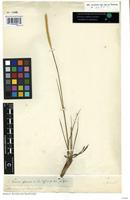
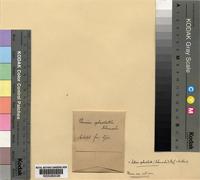
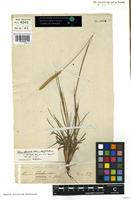
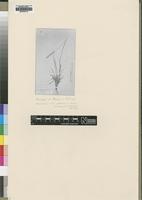
Panicum sphacelatum

5 Images see all

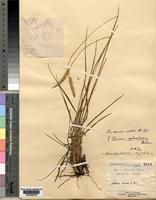
Holotype of Panicum sphacelatum Schumach. [family POACEAE]
Filed as Setaria sphacelata (Schumach.) Stapf and C.E. Hubbard [family POACEAE]
Setaria sphacelata (Schumach.) Stapf & C.E.Hubb. ex M.B.Moss [family POACEAE]
Holotype of Panicum sphacelatum Schumach. [family POACEAE]
Setaria sphacelata (Schumach.) Stapf & C.E.Hubb. ex M.B.Moss [family POACEAE]
Previous
Next

Name

Identification
Panicum sphacelatum Schumach. [family POACEAE ] (stored under name);
Related name
  • Setaria aurea
  • Setaria gracilis
  • Panicum glaucum
  • Panicum sphacelatum
  • Setaria sphacelata

Flora

Entry for TRICHOLÆNA rosea Nees [family ]
Herbarium
Royal Botanic Gardens, Kew (K)
Collection
Flora Capensis
Resource Type
Reference Sources
Entry From
Flora Capensis, Vol 7, page 310, (1900) Author: (By O. STAPF.)
Names
TRICHOLÆNA rosea Nees [family ], Cat. Sem. Hort. Vratisl. 1835, and in Linnæa, xi. Lit. Ber. 129, in part;—Nees, Fl. Afr. Austr. 17 (in part); Durand & Schinz, Consp. Fl. Afr. v. 770; K. Schum. in Engl. Pfl. Ost-Afr. C. 104; Hack. in Bull. Herb. Boiss. iv. App. iii. 15.
TRICHOLÆNA tonsa Nees [family ], l.c. 6; Durand & Schinz, l.c.
TRICHOLÆNA fragilis A. Braun [family ], in Flora, 1841, 275 (name only); Durand & Schinz, l.c. 769.
TRICHOLÆNA sphacelata Benth. [family ], in Hook. Niger Fl. 559; Durand & Schinz, l.c. 770.
TRICHOLÆNA grandiflora Hochst. [family ], in Flora, 1841, i. Intell. 19 (name only); A. Rich. Tent. Fl. Abyss. ii. 445; Engl. Hochgebirgsfl. Trop. Afr. 121; Hack. in Engl. Jahrb. xi. 400, and in Bull. Herb. Boiss. iv. App. iii. 15; Durand & Schinz, l.c. 769.
TRICHOLÆNA dregeana Durand & Schinz [family ], l.c.; Hack. in Bull. Herb. Boiss. l.c.
TRICHOLÆNA ruficoma Durand & Schinz [family ], l.c. 770; Hack. in Bull. Herb. Boiss. l.c.
Rhynchelythrum dregeanum Nees [family POACEAE], Fl. Afr. Austr. 64.
Rhynchelythrum ruficoma Hochst. ex Steud. [family POACEAE], Syn. Pl. Glum. i. 120.
Saccharum grandiflorum Walp. [family POACEAE], Ann. iii. 792, 793.
Saccharum sphacelatum Walp. [family POACEAE], Ann. iii. 792, 793.
Panicum tonsum Steud. [family POACEAE], l.c. 92.
Panicum roseum Steud. [family POACEAE], l.c. 92.
Panicum sphacelatum Steud. [family POACEAE], l.c. 92.
Panicum insigne Steud. [family POACEAE], l.c. 92.
Panicum Braunii Steud. [family POACEAE], l.c. 93; Oliv. in Trans. Linn. Soc. xxix. 170.
Monachyron roseum Parl. [family POACEAE], Fl. Ital. i. 131, in obs.
Monachyron tonsum Parl. [family POACEAE], Fl. Ital. i. 131, in obs.
Information
perennial or annual; culms laxly fascicled, rarely densely tufted, usually geniculate, 1–1 1/2 ft. long, simple or scantily branched below, terete, glabrous or sometimes hirsute from tubercled-based hairs, 3–4-noded; sheaths terete or the lower slightly compressed, glabrous except at the villous nodes or hirsute from usually tubercled-based hairs; blades linear, long tapering to a subsetaceous point, 2–8 in. by 1–4 lin., rarely broader or narrower, flat, often spreading and rather flaccid, rarely convolute, glabrous or sometimes scantily hairy, rough above; panicle oblong to ovoid, lax or contracted, 3–6 in. long, straight or flexuous; rhachis slender, finely scaberulous; branches fascicled or 2-nate, finely filiform, undivided below or laxly branched almost from the base; branchlets and pedicels finely capillary, flexuous, glabrous or more or less hairy, scaberulous, tips thickened with long fine hairs (up to 2 lin. long); spikelets oblong, about 2 lin. long, villous from shining white or purple hairs, shortly bearded at the base; lower glume oblong, obtuse, about 1/2 lin. long, hyaline, almost hidden by hairs; upper equalling the spikelet, semi-ovate, more or less gibbous below the middle and slightly narrowed into an oblong beak, obtusely 2-lobed or emarginate, with or without a mucro or a short fine awn from the sinus, subchartaceous, often olive-brown, villous with the hairs increasing in length from the base to beyond the middle, then glabrous except the ciliate margins; hairs often springing from minute or sometimes coarse and partly confluent tubercles, adpressed or sometimes spreading, usually exceeding the tips of the glume; lower floret ♂ or barren; valve equal and very similar to the upper glume; pale more or less hairy; hermaphrodite floret 1 3/4 lin. long, elliptic-oblong, obtuse, glabrous; valve emarginate, faintly 5-nerved, membranous; anthers over 3/4 lin. long; grain obovoid, brown, 3/4 lin. long. null
Range
Throughout tropical Africa, in Madagascar and South Arabia.
Distribution
CENTRAL REGION Graaff Reinet Div.; hillsides near Graaff Reinet, 4000 ft., Bolus, 251! Albert Div.; near Aliwal North, Cooper, 1388!COAST REGION Albany Div.; without precise locality, Williamson, 114!EASTERN REGION Griqualand East; near Clydesdale, Tyson, 3103! Natal; near Durban, Plant, 98! Draakensberge, Rehmann, 7175! near Umpumulo and Reit Vlei, common, Buchanan, 298 in part! and without precise localities, Gerrard, 461! Buchanan, 122! Delagoa Bay, Scott!KALAHARI REGION Griqualand West; Herbert Div.; near Douglas, Orpen, 251! Hay Div.; Asbestos Mountains, Burchell, 2047/1! Klip Fontein, Burchell, 2150! Orange Free State; Seven Fonteins, Burke! Caledon River, Burke, 198! Bechuanaland; Maadji Mountain, Burchell, 2363! banks of the Moshowa River between Takun and Molito, Burchell, 2314! at Kosi Fontein, 2564! 2578! near Kuruman, Burchell, 2184! stony plains near Groot Kuil, Marloth, 998! Transvaal; Houtbosch, Rehmann, 5723! near Lydenburg, Wilms, 1674a!SOUTH AFRICA without precise locality, Drège, 4319! 4320! 4321!WESTERN REGION Great Namaqualand; Amhub, Schinz, 628. Keetmanshoop, Fenchel, 4.
Notes
An extremely variable plant. Nees confounded two different plants under T. rosea. I have maintained the name for the species having generally flat leaves, laxer panicles, very fine capillary branchlets and long hairs at the tips of the pedicels, as this is the species of which he distributed seeds from the Breslau Botanic Garden. It is also represented by Drège, 4319 and 4321, which numbers he quotes under T. rosea. His T. tonsa was supposed to differ in the shorter hairs of the spikelets, weaker culms and more glaucous leaves. These characters are very little marked in Drège, 4320 (which is the type), and fail entirely when tested by the ample material at Kew. The broad-leaved state which is represented by specimens grown in various European gardens, seems to occur spontaneously on road-sides and in cultivation, and is probably truly annual, while another extreme, which seems to form small, dense tufts and has slender culms, and narrow, sometimes convolute leaves, appears to be characteristic of dry and hard ground. According to Nees, the area of T. rosea extends towards the south-west as far as “Swellendam.” I have not seen any specimens from there nor from various other localities which he quotes. They may be either T. rosea or T. setifolia.

Related Materials

  • Terms and Conditions
  • Privacy Policy
  • Cookie Policy
  • Cookie Settings
  • Accessibility
  • Help
  • Contact Us
  • Facebook
  • Twitter
ITHAKA

JSTOR is part of ITHAKA, a not-for-profit organization helping the academic community use digital technologies to preserve the scholarly record and to advance research and teaching in sustainable ways.

©2000-2026 ITHAKA. All Rights Reserved. JSTOR®, the JSTOR logo, JPASS®, Aluka®, and ITHAKA® are registered trademarks of ITHAKA.

╳