JSTOR Global Plants Home
  • Home
  • Browse
  • About
  • Access
  • Account
    • Saved Items
    • Profile
  • Log in

Global Plants

Skip to Main Content
  • JSTOR Global Plants Home
  • Global Plants

    • Browse
    • About
    • Access
    • Account
      • Saved Items
      • Profile
Log in
  • Browse
  • About
  • Access
  • Account
    • Saved Items
    • Profile
Advanced Search

Compilation
Panicum scabrum

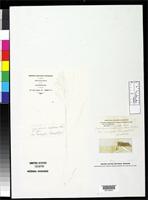
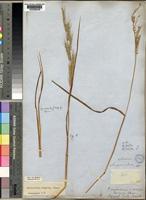
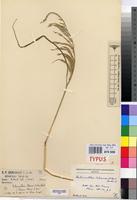
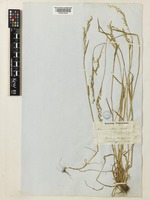
4 Images see all

Filed as Panicum scabrum Lamarck, J.B.P. 1791 [family POACEAE]
Isotype of Panicum scabrum unrecorded subsp. oryzetorum Chevalier [family POACEAE]
Type of Panicum scabrum Lam. subsp. lelievrei A. Chev. [family POACEAE]
Milium vernale M.Bieb. [family POACEAE]
Previous
Next

Name

Identification
Panicum scabrum Lam. [family POACEAE ] Verified by Not on sheet, Echinochloa stagina (Retz.) P.Beauv. [family POACEAE ] (stored under name); Verified by Not on sheet,
Related name
  • Echinochloa stagina
  • Echinochloa stagnina
  • Panicum scabrum

Flora

Entry for PANICUM stagninum Koenig [family POACEAE]
Herbarium
Royal Botanic Gardens, Kew (K)
Collection
Flora Capensis
Resource Type
Reference Sources
Entry From
Flora Capensis, Vol 7, page 310, (1900) Author: (By O. STAPF.)
Names
PANICUM stagninum Koenig [family POACEAE], Naturf. xxiii. 201;—Retz. Obs. v. 17; Roxburgh, Fl. Ind. i. 298; Nees, Agrost. Bras. 261; Trin. Pan. Gen. 128, and in Mém. Acad. Pétersb. sér. vi. iii. 216; Steud. Syn. Pl. Glum. i. 47.
PANICUM Galli Thunb. [family POACEAE], Prod. 18; Fl. Cap. ed. i. 389; ed Schult. 103.
PANICUM Crus-galli Hack. ex Durand & Schinz var. stagninum [family POACEAE], Consp. Fl. Afr. v. 745.
PANICUM scabrum Lam. [family POACEAE], Illustr. i. 171, and Encycl. iv. 744; Nees, l.c.; Steud. l.c.; Durand & Schinz, l.c. 764.
PANICUM pictum Nees [family POACEAE], Fl. Afr. Austr. 59, not Agrost. Bras., nor Koen.
Echinochloa stagnina Beauv. [family POACEAE], Agrost. 161.
Echinochloa scabra Roem. & Schult. [family POACEAE], Syst. ii. 479.
Orthopogon stagninus Spreng. [family POACEAE], Syst. i. 307.
Oplismenus stagninus Kunth [family POACEAE], Rév. Gram. i. 44; Enum. i. 144 (in part).
Oplismenus scaber Kunth [family POACEAE], Rév. Gram. i. 44; Enum. i. 145.
Information
annual or perennial; culms erect from a geniculate or prostrate base, terete or subterete, up to 6 ft. high, in tall specimens to more than 3 lin. thick below, often rooting from the lower nodes, sheathed all along or some of the internodes at length exserted, often branched in the lower part; sheaths finely striate, smooth, terete or subcarinate above, quite glabrous, rarely pubescent at the lowest nodes; ligule a fringe of rather long stiff hairs, or sometimes 0 in the uppermost leaves; blades linear from a scarcely narrowed usually not decurrent base, long-tapering to a fine point, 1/2 to more than 1 1/2 ft. by 2 1/2–7 lin., flat, rigid or flaccid, glabrous, light green or glaucous, smooth above, scabrid below, particularly in the upper part, margins cartilaginous, scabrid to spinulous; panicle erect or nodding, 4–10 in. long, secund; axis slender, more or less flexuous, convex or flat on the back, usually hispidulous with scattered bristles, rarely glabrous except on the scabrid angles; branches few to many, distant or rather crowded, alternate, suberect or nodding, 1–2 in. long, forming often stout dense 2–4-ranked simple secund sessile false spikes; rhachis like the axis, but more slender; pedicels 4–2-nate, extremely short, tips discoid; spikelets crowded, ovate-oblong to lanceolate-ovate, 2–3 lin. long, rarely less, pallid, hispid; glumes thin, lower ovate, acuminate or mucronate, about 1/2 the length of the spikelet, 3- to sub-5-nerved, upper oblong, equalling the spikelet, concave, caudate-acuminate or produced into a short, scabrid, compressed awn, 5-nerved or 7-nerved at the tips, pubescent between the hispidulous nerves; lower floret ♂ or sometimes barren; valve similar to the upper glume, but flat or depressed on the back, subhyaline except the herbaceous sides, awn 2–12 lin. long; pale oblong, keels scabrid; anthers, when present, 1 lin. long; hermaphrodite floret oblong to lanceolate-oblong, mucronate-acuminate, 1 1/2–2 1/2 lin. long excluding the scabrid mucro, straw-coloured, smooth, shining; valve 5-nerved. null
Range
Through tropical Africa, from the Senegal to Abyssinia, in Madagascar and India.
Distribution
COAST REGION Alexandria Div.; near Enon, below 500 ft., Drège! Komgha Div.; sandy banks of Kei River, Flanagan, 950!EASTERN REGION Transkei Div.; near Gekau (Gcua or Geuu) River, Drège, 4238! Delagoa Bay, Forbes!SOUTH AFRICA without precise locality, Thunberg!
Notes
The few South African specimens, which I have seen, represent a state with somewhat smaller spikelets than is usual in this species. Nees' description of P. pictum in Fl. Afr. Austr. 59, is copied from Agrost. Bras. 260, and fits very well the Indian plant so named by Koenig, but not Drège's South African specimens, referred by Nees to P. pictum. However, P. pictum, Koenig, is scarcely specifically distinct from P. stagninum, being rather a variety of it distinguished by its broader, turgid spikelets. It seems to be much more common in India than the type.

Related Materials

  • Terms and Conditions
  • Privacy Policy
  • Cookie Policy
  • Cookie Settings
  • Accessibility
  • Help
  • Contact Us
  • Facebook
  • Twitter
ITHAKA

JSTOR is part of ITHAKA, a not-for-profit organization helping the academic community use digital technologies to preserve the scholarly record and to advance research and teaching in sustainable ways.

©2000-2026 ITHAKA. All Rights Reserved. JSTOR®, the JSTOR logo, JPASS®, Aluka®, and ITHAKA® are registered trademarks of ITHAKA.

╳