JSTOR Global Plants Home
  • Home
  • Browse
  • About
  • Access
  • Account
    • Saved Items
    • Profile
  • Log in

Global Plants

Skip to Main Content
  • JSTOR Global Plants Home
  • Global Plants

    • Browse
    • About
    • Access
    • Account
      • Saved Items
      • Profile
Log in
  • Browse
  • About
  • Access
  • Account
    • Saved Items
    • Profile
Advanced Search

Compilation
Panicum respiciens

9 Images see all

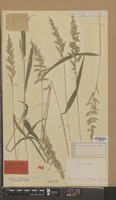
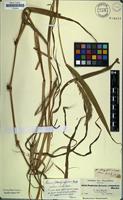
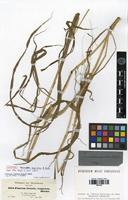
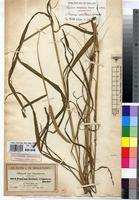
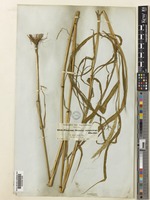
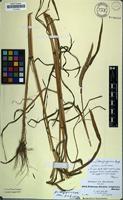
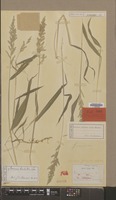
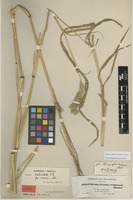
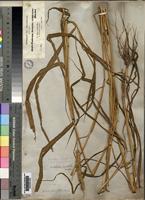
Syntype of Panicum respiciens Hochst. ex Steud. var. spicatopaniculatum Boerl. [family GRAMINEAE]
Isosyntype of Panicum respiciens Hochst. ex A.Rich. [family POACEAE]
Syntype of Pennisetum respiciens A.Rich. [family POACEAE]
Isosyntype of Panicum respiciens A.Rich. [family POACEAE]
Syntype of Pennisetum respiciens A.Rich. [family POACEAE]
Lectotype of Panicum respiciens Hochst. ex Steud. var. spicatopaniculatum Boerl. [family GRAMINEAE]
Syntype of Pennisetum respiciens A.Rich. [family POACEAE]
Previous
Next

Name

Identification
Panicum respiciens Hochst. ex A.Rich. [family POACEAE ] Verified by Not on sheet, Setaria verticullata (L.) P.Beauv. [family POACEAE ] (stored under name); Verified by Not on sheet,
Related name
  • Setaria verticillata
  • Panicum respiciens
  • Pennisetum respiciens
  • Setaria verticullata

Flora

Entry for SETARIA verticillata Beauv. [family POACEAE]
Herbarium
Royal Botanic Gardens, Kew (K)
Collection
Flora Capensis
Resource Type
Reference Sources
Entry From
Flora Capensis, Vol 7, page 310, (1900) Author: (By O. STAPF.)
Names
SETARIA verticillata Beauv. [family POACEAE], Agrost. 51;—Kunth, Enum. i. 152; Reichb. Ic. Fl. Germ. i. t. 47, fig. 1465; Eng. Bot. ed. iii. t. 1694; Sowerb. Brit. Grass. 63, t. 52; Durand & Schinz, Consp. Fl. Afr. v. 774; Hack. in Bull. Herb. Boiss. iv. App. iii. 16; Hook. f. Fl. Brit. Ind. vii. 80.
SETARIA Rottleri Spreng. [family POACEAE], Syst. Veg. i. 304; Kunth, l.c. 153.
SETARIA nubica Link [family POACEAE], Hort. Berol. i. 220; Kunth, l.c.
SETARIA respiciens Miq. [family POACEAE], Fl. Ind. Bat. iii. 467.
Panicum verticillatum Linn. [family POACEAE], Sp. Pl. ed. ii. 82; Eng. Bot t. 874; Host, Gram. Austr. ii. t. 13; Nees, Fl. Afr. Austr. 53; Trin. Sp. Gram. Ic. t. 202; Pan. Gen. 137, and in Mém. Acad. Pétersb. sér. vi. iii. 225; Steud. Syn. Pl. i. 52.
Panicum adhærens Forsk. [family POACEAE], Fl. Aegypt.-Arab. 20; A. Braun, Ind. Sem. Hort. Berol. 1871, App. 5.
Panicum respiciens Hochst. ex A. Rich. [family POACEAE], Tent. Fl. Abyss. ii. 379; Steud. l.c.
Panicum Aparine Steud. [family POACEAE], l.c.
Information
annual; culms erect or ascending from a geniculate base, 1/2–5 ft. long, usually compressed below, more or less branched, glabrous, smooth, or scabrid below the panicle, 4–9-noded, internodes mostly at length exserted; sheaths thin, rather lax, usually compressed, striate, glabrous or finely hairy upwards; ligules short, truncate, densely ciliate; blades linear or lanceolate-linear from a broad and rounded, or from a narrow base, long tapering to an acute or subsetaceous point, 2–12 in. by 2–6 (rarely up to 12) lin., thin, flat, flaccid, scaberulous, usually finely and scantily hairy; panicle erect or curved, spike-like, cylindric or oblong, dense or rather lax, 1–5 in. long, coarsely bristly; axis scabrid and often pubescent; branches spirally arranged, close, in robust specimens the lower up to 4 lin. long with a distinct scabrid angular rhachis and 2-nate spikelets, otherwise very short or reduced to sessile clusters, each spikelet subtended by a coarse reversely scabrid bristle 2–7 lin. long; spikelets ellipsoid, obtuse, about 1 lin. long, light green, glabrous; lower glume hyaline, broad, ovate, acute, 1- to sub-3-nerved, 1/3– 2/5 as long as the spikelet, upper membranous, elliptic, concave, 5–7-nerved, equal to the spikelet or almost so; lower floret barren; valve similar to the upper glume, dorsally flattened, 5–7-nerved; pale hyaline, more or less arrested or 0; hermaphrodite floret elliptic-oblong, plano-convex, subapiculate or obtuse, almost 1 lin. long, greenish or straw-coloured; valve subcoriaceous, very obscurely wrinkled, 5-nerved; anthers 3/8 lin. long; grain broadly ellipsoid, over 3/4 lin. long, white, subtranslucent. null
Range
Throughout Africa and India to Malaya, elsewhere (Europe, Australia, America) only as a weed.
Distribution
CENTRAL REGION Graaff Reinet Div.; in cultivated ground near Graaff Reinet, 2500 ft., Bolus, 723! Aliwal North Div.; at the junction of Stormberg Spruit and the Orange River, 4200 ft., Drège!COAST REGION Uitenhage Div.; Zwartkops River, Ecklon. Albany Div.; cultivated ground near Grahamstown, 2000 ft., MacOwan, 1318! Komgha Div.; banks of Key River, below 500 ft., Drège!EASTERN REGION Tembuland; cultivated land near Bazeia, 2000 ft., Baur, 454! Natal; Durban Flat, Buchanan, 11! near Durban, Williamson, 14! Umpumulo and near the coast, Buchanan, 165! and without precise locality, Gerrard, 682!KALAHARI REGION Transvaal; near Lydenburg, Wilms, 1670! Atherstone! Zoutpans Berg, Nelson, 16!SOUTH AFRICA without precise locality, Cooper, 3367!WESTERN REGION Little Namaqualand; near Verleptpram on the Orange River, Drège!
Notes
A. Braun, l.c., distinguishes several subspecies and a considerable number of varieties of this grass. I cannot follow him. There is, however, this remarkable fact that the plant is very uniform where it occurs exclusively as a weed, but very variable in the remainder of its area. The species was originally described by Linnæus from the European plant which thus represents the type. Nearly all the other forms (including some of the South African specimens) come under A. Braun's subspecies Aparine.

Related Materials

  • Terms and Conditions
  • Privacy Policy
  • Cookie Policy
  • Cookie Settings
  • Accessibility
  • Help
  • Contact Us
  • Facebook
  • Twitter
ITHAKA

JSTOR is part of ITHAKA, a not-for-profit organization helping the academic community use digital technologies to preserve the scholarly record and to advance research and teaching in sustainable ways.

©2000-2026 ITHAKA. All Rights Reserved. JSTOR®, the JSTOR logo, JPASS®, Aluka®, and ITHAKA® are registered trademarks of ITHAKA.

╳