JSTOR Global Plants Home
  • Home
  • Browse
  • About
  • Access
  • Account
    • Saved Items
    • Profile
  • Log in

Global Plants

Skip to Main Content
  • JSTOR Global Plants Home
  • Global Plants

    • Browse
    • About
    • Access
    • Account
      • Saved Items
      • Profile
Log in
  • Browse
  • About
  • Access
  • Account
    • Saved Items
    • Profile
Advanced Search

Compilation
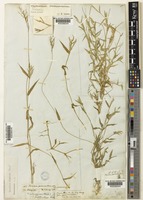
Panicum procumbens

5 Images see all

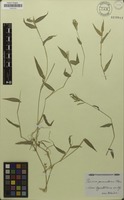
Filed as Panicum procumbens Nees; nom. inval. [family POACEAE]
Type of Panicum calaccanzense Steud. [family POACEAE]
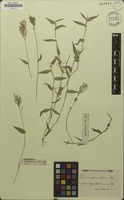
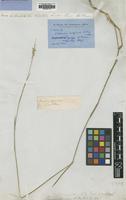
Syntype of Panicum marginatum R.Br. [family POACEAE]
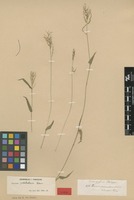
Filed as Panicum procumbens Nees; nom. inval. [family POACEAE]
Isotype of Panicum calaccanzense Steud. [family POACEAE]
Previous
Next

Name

Identification
Entolasia marginata (R.Br.) Hughes [family POACEAE ] (stored under name); Panicum marginatum R.Br. [family POACEAE ] Panicum procumbens Lam. ex Nees [family POACEAE ]
Related name
  • Panicum marginatum
  • Entolasia marginata
  • Panicum procumbens

Flora

Entry for UROCHLOA reptans Stapf [family POACEAE]
Herbarium
Royal Botanic Gardens, Kew (K)
Collection
Flora of Tropical Africa
Resource Type
Reference Sources
Entry From
Flora of Tropical Africa, Vol 9, page 1, (1917) Author: (By O. STAPF.)
Names
UROCHLOA reptans Stapf [family POACEAE]
Panicum reptans Linn. [family POACEAE], Syst. Nat. ed. x. 870; Hitchcock in Contr. U.S. Nat. Herb. xii. 119 and 225; Hitchc. & Chase in Contrib. U.S. Nat. Herb. xv. 36, fig. 17, excl. P. grossarium.
Panicum repens N. L. Burm. [family POACEAE], Fl. Ind. 26, t. 11, f. 1 (mala); Rottl. in Neue Schrift. iv. 182; Roxb. Fl. Ind. i. 302; Boj. Hort. Maur. 364; not of Linn.
Panicum prostratum Lam. [family POACEAE], Ill. i. 171; Delile, Fl. Ægypt. Illustr. 51; Trin. Diss. ii. 150, Pan. Gen. 158, and Sp. Gram. Ic. t. 184, 185; Kunth, Enum. i. 89; Suppl. 68; Steud. Syn. Pl. Glum. i. 62; Miq. Fl. Ind. Bat. iii. 446; Griseb. Fl. Brit. W. Ind. 546; Schweinf. Beitr. Fl. Aethiop. 301, and in Bull. Herb. Boiss. ii. App. ii. 20; Balansa in Bull. Soc. Bot. France, xix. 325; Baker, Fl. Maurit. 435; (?) Benth. Fl. Austral. vii. 476; Duthie, List Grass. N.-W. Ind. 6; Ill. Indig. Fodd. Gr. t. 45; Fodd. Grass. N. Ind. 11; Boiss. Fl. Or. v. 438; Durand & Schinz, Consp. Fl. Afr. v. 760 (excl. some syn.); Aschers. & Schweinf. Ill. Fl. Égypte, 160; K. Schum. in Engl. Pfl. Ost-Afr. C. 102; Cordem. Fl. Reun. 116; Hook. f. Fl. Brit. Ind. vii. 33; Rendle in Journ. Linn. Soc., Bot., xxxvi. 332; Merrill in Philipp. Journ. Sc. i. 355.
Panicum barbatum Lam. [family POACEAE], l.c.
Panicum cæspitosum Sw. [family POACEAE], Fl. Ind. Occ. i. 146.
Panicum Sieberi Link [family POACEAE], Hort. Berol. i. 207.
Panicum procumbens Nees var. [family POACEAE], Agrost. Bras. 109.
Panicum crispum Llanos [family POACEAE], Fragm. 42.
Panicum insularum Steud. [family POACEAE], Syn. Pl. Glum. i. 61.
Panicum calaccanzense Steud. [family POACEAE], l.c. 65; Vidal, Pl. Phan. Cuming. 157, and Rev. Pl. Vasc. Filip. 287.
Panicum aurelianum Hale [family POACEAE], in Wood, Classbook, ed. iii. 787.
Panicum viaticum Salzm. ex Doell [family POACEAE], in Mart. Fl. Bras. ii. ii. 155.
Panicum marginatum Vahl ex Hook. f. [family POACEAE], Fl. Brit. Ind. vii. 33.
Brachiaria prostrata Griseb. [family POACEAE], in Abh. Ges. Wiss. Goett. vii. 263.
Information
Annual or subperennial (?), usually prostrate or creeping, throwing up secondary culms from the rooting nodes of the often long-decumbent base, the lower secondary culms frequently behaving like the primary, or sometimes the culms gathered into more contracted tufts, from 1/2 to 1 1/2 ft. high, internodes slender to very slender, numerous, those of the decumbent base frequently angular or compressed and bare, of the erect or ascending portions of the culms terete and except the uppermost more or less sheathed, all glabrous. Leaf-sheaths loose or the upper somewhat tight, quite glabrous and smooth except at the densely ciliate margins and frequently pubescent nodes, or occasionally sparingly hairy; ligules reduced to a shortly ciliate rim; blades lanceolate to ovate- or linear-lanceolate, 1/2–2 1/2 in. by 2 1/2–8 lin., rounded to subcordate at the base, attenuated from low down to an acute point, flat or wavy, frequently somewhat rigid, green, quite glabrous or more frequently ciliate downwards, with long stiff hairs or sometimes also pubescent or softly hirsute, margins cartilaginous, scabrid, midrib very slender, lateral nerves numerous, close, very fine, the primary hardly differentiated. Inflorescence at length usually long-exserted, ovate to obovate-oblong in outline, from 1 to over 3 in. long, of few to over 12 obliquely erect or spreading slender secund spiciform racemes; common axis slender, semiterete and adaxially channelled below, angular upwards, scaberulous along the angles. Racemes solitary, upwards gradually approximate or irregularly crowded into false whorls, 6–15 lin. long, sessile or subsessile, simple or subcomposite at the base with very short secondary racemes, 2- or irregularly pluriseriate, dense to somewhat loose; rhachis slender, slightly wavy, triquetrous, 1/7– 1/5 lin. wide, pubescent or villosulous at the base, scabrid along the angles, internodes 1/2–1 lin. long; pedicels paired (or the lower in clusters of 3), unequal, the longer up to 1/2 lin. long, slender, angular, the other very short to rudimentary, or solitary, usually with some long spreading white hairs and small discoid tips. Spikelets or their pairs or clusters subcontiguous or discontiguous or crowded downwards, elliptic-oblong, acute, up to 1 lin. long, glabrous or greyish-pubescent, greenish, rarely tinged with purple. Glumes very dissimilar; lower reduced to a small rounded or truncate and sometimes apiculate nerveless scale, 1/6– 1/5 lin. long, upper corresponding in size and outline to the spikelet, distinctly 7-nerved, glabrous or densely pubescent. Lower floret barren, with or without rudimentary stamens; valve very similar to the upper glume, 5-nerved; valvule oblong, subacute, shorter than the valve. Upper floret hermaphrodite, elliptic, pale, finely transversely rugulose, over 3/4 lin. long; valve with a minute mucro. Anthers 3/5 lin. long.
Range
Widely distributed throughout the Indo-Malayan region and tropical and subtropical America; also in tropical Arabia and the Mascarenes.
Distribution
Zanzibar Mozamb. Dist. Last !
Notes
The state with pubescent spikelets is rare and appears to have been collected in India only. Considered in India to be good fodder for cattle.

Related Materials

  • Terms and Conditions
  • Privacy Policy
  • Cookie Policy
  • Cookie Settings
  • Accessibility
  • Help
  • Contact Us
  • Facebook
  • Twitter
ITHAKA

JSTOR is part of ITHAKA, a not-for-profit organization helping the academic community use digital technologies to preserve the scholarly record and to advance research and teaching in sustainable ways.

©2000-2026 ITHAKA. All Rights Reserved. JSTOR®, the JSTOR logo, JPASS®, Aluka®, and ITHAKA® are registered trademarks of ITHAKA.

╳