JSTOR Global Plants Home
  • Home
  • Browse
  • About
  • Access
  • Account
    • Saved Items
    • Profile
  • Log in

Global Plants

Skip to Main Content
  • JSTOR Global Plants Home
  • Global Plants

    • Browse
    • About
    • Access
    • Account
      • Saved Items
      • Profile
Log in
  • Browse
  • About
  • Access
  • Account
    • Saved Items
    • Profile
Advanced Search

Compilation
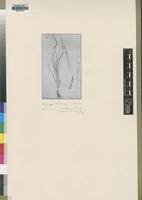
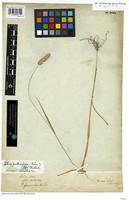
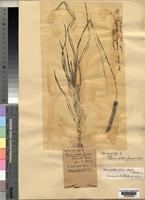
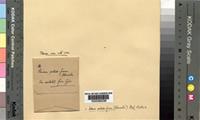
Panicum pallide-fuscum

8 Images see all

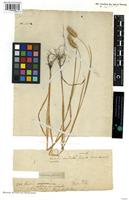
Syntype of Panicum pallide-fuscum Schumach. [family POACEAE]
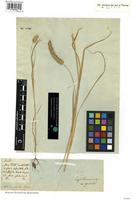
Holotype of Panicum pallide-fuscum Schumach. [family POACEAE]
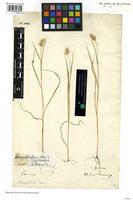
Syntype of Panicum pallide-fuscum Schumach. [family POACEAE]
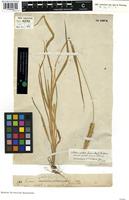
kleptotype of Panicum pallide-fuscum Schumacker [family POACEAE]
Previous
Next

Name

Identification
Panicum pallide-fuscum Schumach. [family POACEAE ] Setaria pallide-fusca (Schumach.) Stapf & C.E.Hubb. [family POACEAE ] Setaria pumila (Poir.) Roem. & Schult. [family POACEAE ] (stored under name);
Related name
  • Panicum helvolum
  • Setaria pallidifusca
  • Panicum pallidum
  • Setaria glauca
  • Panicum glaucum
  • Panicum pallide-fuscum
  • Setaria pallide-fusca
  • Setaria pumila

Flora

Entry for SETARIA pumila (Poir.) Roem. & Schult. [family POACEAE]
Herbarium
Royal Botanic Gardens, Kew (K)
Collection
Flora of Tropical East Africa
Resource Type
Reference Sources
Entry From
Flora of Tropical East Africa, page 451, (1982) Author: W. D. CLAYTON and S.A. RENVOIZE
Names
SETARIA pumila (Poir.) Roem. & Schult. [family POACEAE], Syst. Veg. 2: 891 (1817); Rauschert in F.R. 83: 661 (1973); Clayton in K.B. 33: 501–503 (1979). Type: Locality unknown, but probably France or N. Africa, Desfontaines (? P, holo.)
Panicum pumilum Poir. [family POACEAE], Encycl. Méth. Bot., Suppl. 4: 273 (1816)
Panicum pallide-fuscum Schumach. [family POACEAE], Beskr. Guin. Pl.: 58 (1827). Type: Ghana, Thonning (C, holo.!)
Panicum rubiginosum Steud. [family POACEAE], Syn. Pl. Glum. 1: 50 (1854). Type Philippine Is., Cuming 551 (K, iso.!)
Setaria rubiginosa (Steud.) Miq. [family POACEAE], Fl. Ned. Ind. 3: 467 (1857); E.A. Pasture Plants 2: 28 (1927)
Setaria glauca Chiov. var. breviseta [family POACEAE], in Ann. Ist. Bot. Roma 8: 36 (1903). Types: Ethiopia, Eritrea, Assoarta, Pappi 3069 (FI, syn.!) & Amasen, Terracciano & Pappi 124 (FI, syn.!) & Mensa, Terracciano & Pappi 1774 & 2065 (both FI, syn.) & Oculé Cusai, Pappi 4084 (FI, syn.!)
Setaria erythraeae Mattei [family POACEAE], in Bol. Ort. Bot. Palermo 9: 49 (1910). Type: Ethiopia, Eritrea, Dembesan, Senni 715 (PAL, holo.)
Setaria pallide-fusca (Schumach.) Stapf & Hubbard [family POACEAE], in K.B. 1930: 259 (1930) & in F.T.A. 9: 815 (1930); Fl. Agrost. Congo Belge 2: 270 (1934); Ann. list grasses Ug.: 42 (1947); Imp. Grassl. Pl. Kenya: 52 (1951); F.P.N.A. 3: 114 (1955); F.P.S. 3: 535 (1956); R.K.G.: 40 (1958); Ann. list Nyasaland grasses: 59 (1958); I.G.U.: 53 (1960); G.T.: 84 (1965); Clayton in F.W.T.A., ed. 2, 3: 423 (1972)
Setaria glauca [family POACEAE], [sensu F.T.A. 9: 814 (1930), non (L.) P. Beauv.]
Setaria aurea (Steud.) Peter var. rubiginosa [family POACEAE], F.D.O.-A. 1: 233 (1931)
Setaria ustilata de Wit [family POACEAE], in Bull. Bot. Gard. Buitenz., sér. 3, 17: 59 (1941). Type: South Africa, Barberton, Mathews 13 (PRE, holo.!)
Setaria pallide-fusca de Wit var. sericea [family POACEAE], in Bull. Bot. Gard. Buitenz., sér. 3, 17: 62 (1941), sine descr. lat. Type: Namibia, Waterberg, Volk 114 (private herb., holo.)
Setaria glauca (Schumach.) Koyama var. pallide-fusca [family POACEAE], in Journ. Jap. Bot. 37: 237 (1962)
Information
Loosely tufted annual; culms 5–130 cm. high, ascending, the nodes glabrous. Leaf-blades linear, 3–30 cm. long, 2–10 mm. wide. Panicle spiciform, cylindrical, 1–10(–20) cm. long, the rhachis tomentellous; bristles 3–12 mm. long, 6–8 per spikelet, slender, commonly fulvous. Spikelets ovate, 1.5–3.5 mm. long (1.5–2.5 mm. in E. Africa); both glumes 1/3–2/3 as long as the spikelet; lower floret ♂ or sterile, its palea almost as long as the lemma; upper lemma rugose to corrugate, rarely almost smooth.
Range
DISTR. U1–4; K1–7; T1–8 tropical and warm temperate regions of the Old World; introduced to N. America
Altitude range
0–3100 m.
Distribution
KENYA Northern Frontier Province Marsabit National Reserve, 15 Jan. 1972, Bally & A.R. Smith 14847!KENYA Fort Hall/Kiambu District Thika, 17 Jan. 1947, Bogdan 95!KENYA Teita District Mudanda Rock, 5 Jan. 1967, Greenway & Kanuri 12977!TANZANIA Musoma District Seronera–Simiyu Guard Post, 27 Apr. 1961, Greenway 10107!TANZANIA Mpanda District Tumba, 9 Feb. 1950, Bullock 2405!TANZANIA Kondoa District Kolo, 31 Jan. 1928, B.D. Burtt 1282!UGANDA Karamoja District 1 km. from Karita, 10 Oct. 1964, Leippert 5098!UGANDA Mbale District Buginyanya, 17 Aug. 1927, Snowden 1177!UGANDA Masaka District Bugala, 20 Feb. 1933, A.S. Thomas 808!
Notes
S. pumila is a polymorphic weed segregating into regional populations. These overlap to such an extent that the recognition of more than one species cannot be upheld, though there may be a case for distinguishing between tropical and Mediterranean populations at infraspecific level (Clayton in K.B. 33: 501–503 (1979)). Much argument has been devoted to the nomenclature of this species (summarized by Terrell in Taxon 25: 297–304 (1976)), but it now seems that the commonly used names S. glauca and S. lutescens should be referred to Pennisetum. S. pumila is closely related to the caespitose perennial S. sphacelata, and specimens lacking their basal parts are often indistinguishable. It is even more difficult to separate from S. gracilis Kunth (= S. geniculata auct., non (Willd.) P. Beauv.), the common American species which also occurs in Tropical Asia; this is a short-lived perennial, commonly with short knotty rhizomes bearing dormant buds, though the perennial habit is not usually very obvious.

Related Materials

  • Terms and Conditions
  • Privacy Policy
  • Cookie Policy
  • Cookie Settings
  • Accessibility
  • Help
  • Contact Us
  • Facebook
  • Twitter
ITHAKA

JSTOR is part of ITHAKA, a not-for-profit organization helping the academic community use digital technologies to preserve the scholarly record and to advance research and teaching in sustainable ways.

©2000-2026 ITHAKA. All Rights Reserved. JSTOR®, the JSTOR logo, JPASS®, Aluka®, and ITHAKA® are registered trademarks of ITHAKA.

╳