JSTOR Global Plants Home
  • Home
  • Browse
  • About
  • Access
  • Account
    • Saved Items
    • Profile
  • Log in

Global Plants

Skip to Main Content
  • JSTOR Global Plants Home
  • Global Plants

    • Browse
    • About
    • Access
    • Account
      • Saved Items
      • Profile
Log in
  • Browse
  • About
  • Access
  • Account
    • Saved Items
    • Profile
Advanced Search

Compilation
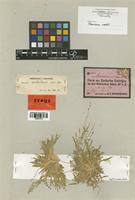
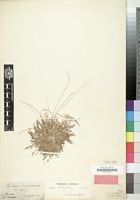
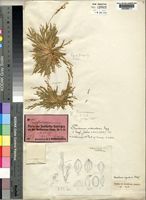
Panicum nidulans

4 Images see all

Filed as Panicum nidulans Mez, C.C. 1904 [family POACEAE]
Type of Panicum nidulans Mez [family GRAMINEAE]
Isosyntype of Panicum nidulans Mez [family POACEAE]
Previous
Next

Name

Identification
Panicum nidulans Mez [family GRAMINEAE ] (stored under name); Verified by Not on sheet.,
Related name
  • Brachiaria ramosa
  • Brachiaria regularis
  • Panicum nidulans
  • Panicum ramosum

Flora

Entry for BRACHIARIA ramosa (L.) Stapf [family POACEAE]
Herbarium
Royal Botanic Gardens, Kew (K)
Collection
Flora of Tropical East Africa
Resource Type
Reference Sources
Entry From
Flora of Tropical East Africa, page 451, (1982) Author: W. D. CLAYTON and S.A. RENVOIZE
Names
BRACHIARIA ramosa (L.) Stapf [family POACEAE], in F.T.A. 9: 542 (1919); F.P.S. 3: 409 (1956); Ann. list Nyasaland grasses: 31 (1958); Clayton in F.W.T.A., ed. 2, 3: 444 (1972). Type: India, cult. at Uppsala (LINN, holo.!)
Panicum ramosum L. [family POACEAE], Mant. Pl. 1: 29 (1767)
Panicum arvense Kunth [family POACEAE], Rév. Gram. 1: 391, fig. 109 (1831). Type: Senegal, Richard Tol, Leliévre (whereabouts uncertain, not P)
Panicum sorghum Steud. [family POACEAE], Syn. Pl. Glum. 1: 58 (1854). Type: Egypt, Despreaux (whereabouts uncertain)
Panicum brachylachnum Steud. [family POACEAE], Syn. Pl. Glum. 1: 62 (1854). Type: Senegal, Leprieur (P, holo.)
Panicum cognatissimum Steud. [family POACEAE], Syn. Pl. Glum. 1: 69 (1854). Type: Senegal, Leprieur (P, holo.)
Panicum breviradiatum Hochst. [family POACEAE], in Flora 38: 195 (1855). Type: Ethiopia, Schimper in Buchinger 1513 (P, iso.!)
Panicum nidulans Mez [family POACEAE], in E.J. 34: 136 (1904). Types: Sudan, Ssoturba Mts., Schweinfurth 1171 (K, isosyn.!) and without locality, Ehrenberg (B, syn.)
Panicum petiveri Chiov. var. puberulum [family POACEAE], in Ann. 1st. Bot. Roma 8: 302 (1907). Types: Ethiopia, Eritrea, Sabarguma, Pappi 4006 (K, isosyn.!) and many other syntypes
Panicum pallidum Peter [family POACEAE], in Abh. K. Ges. Wiss. Gött., Math.-Phys. Kl., n.f., 13(2): 45 (1928) & in F.D.O.-A. 1: Anh. 26, fig. 8/3 (1930). Type: Tanzania, Pare District, Makanya [Makania], Peter 12274 (B, holo.†)
Brachiaria regularis (Mez) Täckholm var. nidulans [family POACEAE], in Egypt Univ. Fac. Sci. Bull. 17: 432(1941)
Echinochloa ramosa (L.) Roberty [family POACEAE], in Bull. I.F.A.N. 17: 64 (1955)
Urochloa ramosa (L.) Nguyen [family POACEAE], in Nov. Sist. Pl. Vasc. Acad. Sci. U.R.S.S. 1966: 13 (1966)
Information
Loosely tufted annual; culms 10–70 cm. high. Leaf-blades broadly linear, 2–25 cm. long, 4–14 mm. wide. Inflorescence of 3–15 racemes borne on an axis 3–10 cm. long; racemes 1–8 cm. long, simple or the longest with branchlets at the base, bearing mostly paired loosely contiguous spikelets appressed to the triquetrous rhachis; pedicels shorter than the spikelets, 1–2 mm. long. Spikelets elliptic to broadly elliptic, 2.5–3.5 mm. long, glabrous or pubescent, acute to cuspidate, with or without a stipe up to 0.5 mm. long; lower glume 1/3–1/2 the length of the spikelet; upper glume and lower lemma membranous, or rarely the latter coricaceous; upper lemma rugose, subacute to acute.
Range
DISTR. K1; T2, 3, 7 Senegal to Yemen; Malawi, Zimbabwe and South Africa (Transvaal); tropical Asia
Altitude range
0–1200 m.
Distribution
KENYA Northern Frontier Province Dandu, 2 May 1952, Gillett 13000!TANZANIA Masai District Manyara Ranch, 20 Feb. 1965, Leippert 5584!TANZANIA Tanga District Sawa, 27 Apr. 1966, Faulkner 3769!TANZANIA Iringa District Msembe, 21 Feb. 1970, Greenway & Kanuri 13915!
Notes
B. ramosa intergrades with B. deflexa (pedicel longer than spikelet), B. xantholeuca (spikelets single) and B. lata (Schumach.) C.E. Hubbard. The latter is distributed from Senegal to Yemen, and distinguished by the densely packed spikelets with pedicels only 0.3–0.8 mm. long.

Related Materials

  • Terms and Conditions
  • Privacy Policy
  • Cookie Policy
  • Cookie Settings
  • Accessibility
  • Help
  • Contact Us
  • Facebook
  • Twitter
ITHAKA

JSTOR is part of ITHAKA, a not-for-profit organization helping the academic community use digital technologies to preserve the scholarly record and to advance research and teaching in sustainable ways.

©2000-2026 ITHAKA. All Rights Reserved. JSTOR®, the JSTOR logo, JPASS®, Aluka®, and ITHAKA® are registered trademarks of ITHAKA.

╳