JSTOR Global Plants Home
  • Home
  • Browse
  • About
  • Access
  • Account
    • Saved Items
    • Profile
  • Log in

Global Plants

Skip to Main Content
  • JSTOR Global Plants Home
  • Global Plants

    • Browse
    • About
    • Access
    • Account
      • Saved Items
      • Profile
Log in
  • Browse
  • About
  • Access
  • Account
    • Saved Items
    • Profile
Advanced Search

Compilation
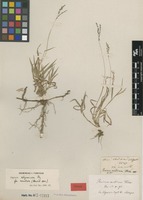
Panicum muticum

17 Images see all

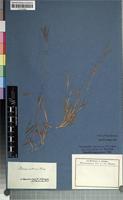
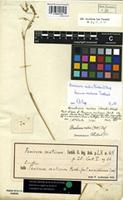
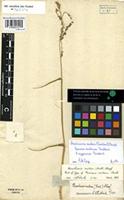
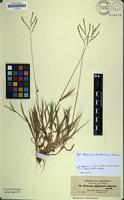
Isoneotype? of Panicum muticum A. Rich. [family GRAMINEAE]
Type of Panicum muticum Forssk. [family GRAMINEAE]
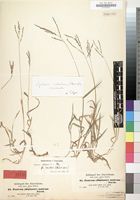
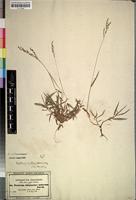
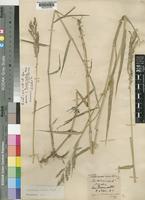
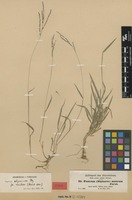
Syntype of Panicum scalarum Schweinf. [family POACEAE]
Isosyntype of Panicum muticum Forssk. [family POACEAE]
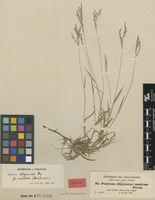
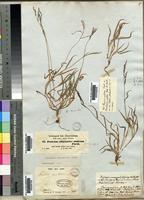
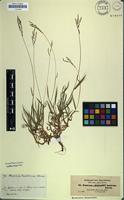
Holotype of Panicum muticum Forssk. [family GRAMINEAE]
Isosyntype of Panicum muticum A. Rich. [family GRAMINEAE]
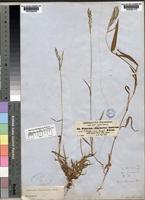
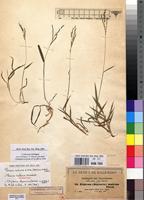
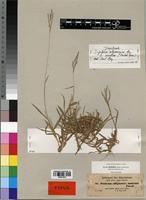
Brachiaria mutica (Forssk.) Stapf [family POACEAE]
Isosyntype of Panicum scalarum Schweinf. [family POACEAE]
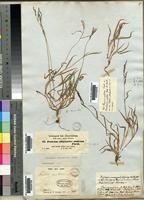
Holotype of Panicum appressum Forssk. [family GRAMINEAE]
Brachiaria mutica (Forssk.) Stapf [family POACEAE]
Isosyntype of Panicum muticum Forssk. [family POACEAE]
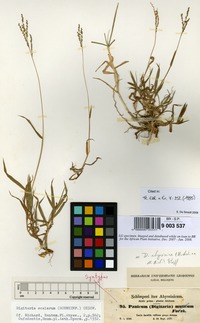
Isosyntype of Panicum scalarum Schweinf. [family GRAMINEAE]
Filed as Panicum muticum Forssk. [family POACEAE]
Syntype of Panicum scalarum Schweinf. [family POACEAE]
Filed as Panicum muticum Forssk. [family POACEAE]
Type of Panicum muticum Forssk. [family GRAMINEAE]
Filed as Panicum scalarum Schweinf. [family POACEAE]
Previous
Next

Name

Identification
Panicum muticum Forssk. [family GRAMINEAE ] (stored under name); Verified by Not on sheet.,
Related name
  • Panicum appressum
  • Brachiaria mutica
  • Panicum muticum
  • Panicum numidianum
  • Panicum scalarum
  • Digitaria abyssinica

Flora

Entry for DIGITARIA abyssinica Stapf [family ]
Herbarium
Royal Botanic Gardens, Kew (K)
Collection
Flora of Tropical Africa
Resource Type
Reference Sources
Entry From
Flora of Tropical Africa, Vol 9, page 1, (1917) Author: (By O. STAPF.)
Names
DIGITARIA abyssinica Stapf [family ], in Kew Bulletin, 1907, 213. —Chiov. in Result. Scient. Miss. Stefanini-Paoli, 225.
DIGITARIA vestita Fig. & De Not. [family ], in Mem. Acc. Tor. ii. xiv. 356, t. 22.
DIGITARIA scalarum Chiov. [family ], l.c.
Panicum abyssinicum Hochst. [family POACEAE], in Flora, 1841, i. Intell. 19; A. Rich. Tent. Fl. Abyss. ii. 360; Durand & Schinz, Consp. Fl. Afr. v. 740; K. Schum. in Engl. Pfl. Ost-Afr. C. 100; Chiov. in Ann. Istit. Bot. Roma, viii. 294.
Panicum muticum Hochst. ex A. Rich. [family POACEAE], l.c. 362; Oliv. in Trans. Linn. Soc. xxix. 171; not of Forsk.
Panicum scalarum Schweinf. [family POACEAE], in Bull. Herb. Boiss. ii. App. ii. 20; Durand & Schinz, l.c. 764; K. Schum. l.c. C. 101; Engl. in Sitzungb. Preuss. Akad. Berlin, 1904, x. 397.
Panicum kafuroënse K. Schum. [family POACEAE], in Engl. Jahrb. xxiv. 334.
Information
Perennial, with a long slender creeping often branching rhizome; cataphylls scarious, strongly striate, early decaying down to the pubescent or villous base; distal innovations extravaginal, subterminal intravaginal growing out into fascicles of barren and flowering shoots. Culms usually more or less geniculate, ascending, or sometimes prostrate at the base, very slender, 1/2–1 ft. high, rarely much higher, glabrous, 2–4-or if the base is prostrate more-noded, lowest internodes short, terete, simple or branched below. Leaf-sheaths rather tight, the lower more or less compressed and keeled, sometimes at length slipping off the culm, glabrous or with a few spreading hairs, subherbaceous; ligules scarious, rounded, up to 2 lin. long, usually much shorter, glabrous; blades linear, tapering to a fine point, 1–4 in. by 1 1/2–3 lin., thin, green or more or less glaucous, glabrous or more or less loosely hairy. Racemes 2–9 (rarely more), sessile or bare at the base with traces of arrested spikelets, subdigitate or racemosely arranged on a very slender angular (at least upwards) smooth common rhachis 1 1/2–3 in. long, usually solitary, sometimes 2–3-nate, erect or more or less spreading, straight, flexuous or arching, very slender, 1–3 in. long, rather loose, green, variously tinged with purple, the lowest sometimes compound at the base; rhachis more or less wavy, very slender, 1/10– 1/8 lin. wide, rarely much wider, triquetrous, angles smooth or more rarely scaberulous, internodes 1–1 1/2 lin. long or here and there much longer and then the spikelets very unevenly distributed; pedicels 2-nate, finely filiform, flexuous, angular to subangular, scaberulous or almost smooth, unequal, the longer up to 1 lin. long. Spikelets loosely appressed, elliptic-oblong, acute or subobtuse, 1 lin. long, glabrous. Lower glume membranous, ovate, acute or obtuse, up to 1 1/4 lin. long; upper elliptic-oblong, acute or subobtuse, as long as the spikelet or slightly shorter, usually 5-rarely 3- or 7-nerved with the submarginal nerves faint. Lower floret: valve very similar in shape and size to the upper glume if not slightly longer, 7-nerved, nerves more or less prominent, equidistant; valvule exceeding the lodicules by their own length or shorter. Upper floret as long as the lower, chartaceous, elliptic-oblong to elliptic, shortly acute to apiculate, 3-nerved, pale to pale olive-green, at maturity shining brown, margins of valve white. Anthers 1/2 lin. long. Grain whitish, ellipsoid, up to 3/4 lin. by 3/8 lin., scutellum half the length of the grain.
Distribution
German East Africa Mozamb. Dist. common in Karagwe, Grant ! Kafuro, Stuhlmann, 1709!Eritrea Nile Land Amasen; near Saganaiti, 7200 ft., Schweinfurth & Riva, 1387! Dongollo; near Ghinda, Pappi, 4213!Abyssinia Nile Land Tigre; a weed in fields near Adowa, Schimper, 95! in scrub at the foot on Mount Scholoda, Schimper, 82! Adeli Dschoa, Schimper, 519! Shire plateau, Schimper, 1827! Samen; near Debri Eski, 10,000 ft., Schimper, 32! Jaja, 6000 ft., Schimper, 384! Jowo Soria, 6200 ft., Schimper, 994! Ankober, Roth ! and without precise locality, Schimper, 910! 944!Sudan Nile Land Sennar, near Fazokl, Figari.Uganda Nile Land in a banana grove on Ruwenzori, 5300 ft., Scott Elliot, 7611! dry bare places, Scott Elliot, 7233! common in marshes, Scott Elliot, 7404! in coffee plantations at Kampala, Dummer !British East Africa Nile Land Kikuyu, and road to Eldama Ravine, 4000–6000 ft., Whyte! Naivasha to Baringo Valley, Gregory ! Nairobi, Linton, 5! 131! Dowson, 224! Dummer, 1576! 1956! Nakuru, 6000 ft., Scott Elliot, 6814!
Distribution (external)
Tropical Arabia
Notes
According to Dummer the worst weed in Coffee plantations. On some spikelets a few short hairs were observed. They were straight with gradually tapering sharply pointed tips. Panicum abyssinicum was based on specimens collected by Schimper in shady scrub at the foot of Mount Scholoda near Adoa, Abyssinia (no. 82). 1 cannot distinguish it from “ Panicum muticum, Hochst. ex A. Rich.” for which Schweinfurth proposed the name P. scalarum, owing to the earlier homonym P. muticum, Forsk., a totally different plant. Schimper, 95, in Herb. Benth. consists of 3 pieces, 2 exactly like Schimper, 95, in Hb. Hooker, and one exactly like Schimper, 82. The latter has long prostrate many-noded culm-bases, more flaccid and hairy leaves and wider rhachises with distinct scaberulous or scabrid green margins or narrow wings. A part of Roth's specimens shows the same peculiarities. These specimens appear to me to be mere shade forms. The number of nerves of the upper glume is in so far variable that the outermost of the usual 5 nerves become sometimes very faint or short or disappear altogether, while in other cases a sixth and seventh faint nerve may be added close within the margin. Chiovenda, l.c., described a var. velutinum, chiefly characterized by spreadingly- and long-villous leaf-sheaths and blades. This seems to be merely an accentuated state of the type of hairiness found in Schimper, no. 82, and in a part of Roth's specimens. He indicates this form from the following regions—Amasen, Pappi, 3664, Michelettii, 138; Assaorta, 8850 ft., Pappi, 2817; Scimezana, 8200 ft., Pappi, 803; Ocule Cusai, 8200–9850 ft., Pappi, 1274, 1591, 1659, 1955; Sarae, 5570 ft., Pappi, 340.

Related Materials

  • Terms and Conditions
  • Privacy Policy
  • Cookie Policy
  • Cookie Settings
  • Accessibility
  • Help
  • Contact Us
  • Facebook
  • Twitter
ITHAKA

JSTOR is part of ITHAKA, a not-for-profit organization helping the academic community use digital technologies to preserve the scholarly record and to advance research and teaching in sustainable ways.

©2000-2026 ITHAKA. All Rights Reserved. JSTOR®, the JSTOR logo, JPASS®, Aluka®, and ITHAKA® are registered trademarks of ITHAKA.

╳