JSTOR Global Plants Home
  • Home
  • Browse
  • About
  • Access
  • Account
    • Saved Items
    • Profile
  • Log in

Global Plants

Skip to Main Content
  • JSTOR Global Plants Home
  • Global Plants

    • Browse
    • About
    • Access
    • Account
      • Saved Items
      • Profile
Log in
  • Browse
  • About
  • Access
  • Account
    • Saved Items
    • Profile
Advanced Search

Compilation
Panicum haplocladum

19 Images see all

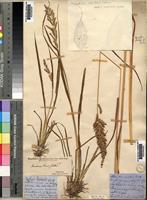
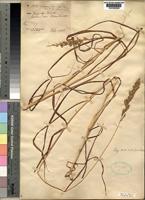
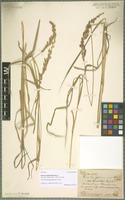
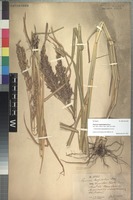
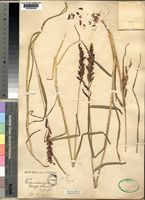
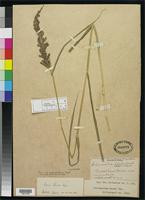
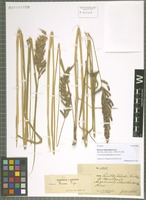
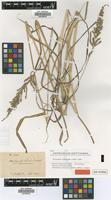
Syntype of Panicum haplocladum Stapf [family POACEAE]
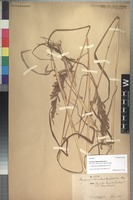
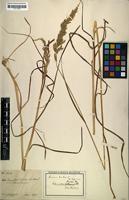
Syntype of Echinochloa haploclada (Stapf) Stapf [family POACEAE]
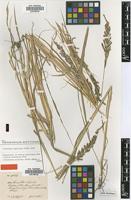
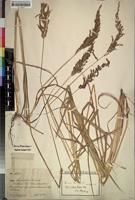
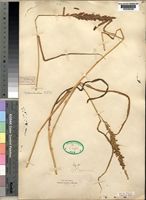
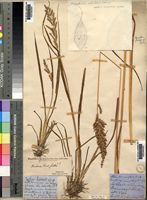
Isosyntype of Echinochloa haploclada (Stapf) Stapf [family POACEAE]
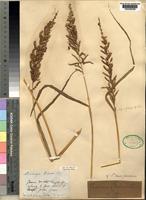
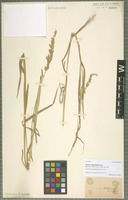
Echinochloa haploclada (Stapf) Stapf [family POACEAE]
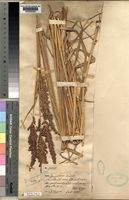
Isosyntype of Panicum haplocladum Stapf [family POACEAE]
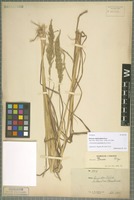
Isosyntype of Panicum haplocladum Stapf [family GRAMINEAE]
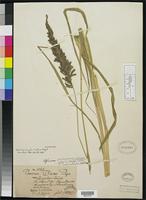
Syntype of Panicum haplocladum Stapf [family POACEAE]
Isosyntype of Panicum haplocladum Stapf, O. 1908 [family POACEAE]
Syntype of Echinochloa haploclada (Stapf) Stapf [family POACEAE]
Echinochloa haploclada (Stapf) Stapf [family POACEAE]
Isosyntype of Panicum haplocladum Stapf, O. 1908 [family POACEAE]
Syntype of Echinochloa haploclada (Stapf) Stapf [family POACEAE]
Isosyntype of Echinochloa haploclada (Stapf) Stapf [family POACEAE]
Syntype of Panicum haplocladum Stapf [family POACEAE]
Syntype of Echinochloa haploclada (Stapf) Stapf [family POACEAE]
Previous
Next

Name

Identification
Echinochloa haploclada (Stapf) Stapf [family POACEAE ] (stored under name); Verified by Not on sheet, Panicum haplocladum Stapf [family POACEAE ] Verified by Not on sheet,
Related name
  • Panicum cruspavonis
  • Panicum haplocladum
  • Panicum aristiferum
  • Echinochloa haploclada
  • Oplismenus crusgalli
  • Panicum colonum
  • Panicum crusgalli
  • Echinochloa colona

Flora

Entry for ECHINOCHLOA haploclada Stapf [family POACEAE]
Herbarium
Royal Botanic Gardens, Kew (K)
Collection
Flora of Tropical Africa
Resource Type
Reference Sources
Entry From
Flora of Tropical Africa, Vol 9, page 1, (1917) Author: (By O. STAPF.)
Names
ECHINOCHLOA haploclada Stapf [family POACEAE]
Panicum haplocladum Stapf [family POACEAE], in Kew Bulletin, 1908, 58.
Oplismenus Crus-Galli Speke [family POACEAE], Nile Journal, 652; not of Linn.
Information
Perennial, up to 8 ft. high, in smaller or larger tufts, from a very short and abundantly rooting rhizome with extra- and intra-vaginal innovations, covered with whitish cataphylls, the lowest of them tomentose. Culms erect or geniculate at the base, often more or less compressed below, terete upwards, glabrous, smooth, up to over 4 lin. thick, about 5-noded, sparingly branched, sheathed all along or the upper at length more or less exserted. Leaf-sheaths rather tight, the lower whitish, more or less compressed and keeled upwards, the upper firmly subherbaceous, terete, all smooth, glabrous and loosely striate; ligules marked by a usually delicately pubescent zone along the junction of blade and sheath, rarely with a few short stiff hairs; blades linear from a slightly rounded and constricted or equally wide base, tapering to a very long and slender point, 1/2 to over 1 ft. long, 2 1/2 to over 5 lin. wide, flat, somewhat firm, but flexuous, glabrous, more or less rough upwards and along the margins, otherwise usually smooth, midrib very slender, whitish upwards. Panicle erect, linear to linear-oblong, 4–9 in. by 1–2 in., usually rather dense; axis somewhat slender, angular and more or less grooved below, triquetrous upwards, or triquetrous all along, scabrid along the angles at least upwards and usually with few to numerous stiff hairs or bristles from the nodes; branches numerous, very much longer than the internodes, the lower and intermediate often fascicled or 2-nate, 2/3–1 1/2 in. long, forming suberect or more or less spreading straight or curved or flexuous secund very dense sessile simple false spikes; rhachis slender, triquetrous, from less than 1/4 to almost 1/2 lin. wide, scaberulous along the angles, more or less finely pubescent and here and there with a long hair; pedicels mostly 2-nate, almost reduced to the small discoid tips, the pairs less than 1/4 lin. distant. Spikelets 3–4-ranked, ovate in outline, cuspidate to caudate-acuminate or those of the outer ranks (rarely most or all) awned, 1–1 1/2 lin. long (excluding the awn), pale or tinged with purple or brown. Glumes thinly membranous, finely and upwards somewhat prominently nerved, nerves scabrid to hispidulous; lower broadly ovate from a clasping base, apiculate or mucronulate, 3–5-nerved, minutely rigidly pubescent or almost glabrous between the nerves, ciliolate along the margin; upper glume ovate, cuspidate-acuminate, very concave, as long as the spikelet (excluding the awn, if any), 5-nerved, more or less pubescent or scaberulous between the nerves at least upwards. Lower floret ♂: valve similar to the upper glume but flat on the back and frequently passing into a fine rigid scabrid awn, 3–4 (rarely 6) lin. long, 5- or upwards 7-nerved; valvule almost as long as the valve, broad-oblong, keels rough upwards; anthers 2/3 lin. long. Upper floret hermaphrodite, ovate to elliptic-ovate in outline, turgid, apiculate, almost as long as the spikelet, greenish or greyish-white, polished; valve and valvule crustaceous; anthers 1 lin. long.
Distribution
German East Africa Mozamb. Dist. Tanga, Holst, 2015! Unyamwezi; Turu, in boggy places, Grant ! without precise locality, Nobbs, 626! (spec. grown at Salisbury, Rhodesia).Portuguese East Africa Mozamb. Dist. Rovuma river, Meller ! in marshland by the Msalu river, Allen, 127! 142! Shupanga, Kirk ! between Shupanga and Sena, Kirk !Nyasaland Mozamb. Dist. in marshy ground above the Morumbala Marsh, Scott ! Elephant Marsh, Kirk !British East Africa Nile Land near Mombasa n temporarily flooded localities, Hildebrandt, 1954! 2022! on the coast, without precise locality, Brand ! Kikumbulio Hills, Scott Elliot, 6291! Maji Chumod, Kässner, 455! Nairobi (?), Powell, 141! Baringa Marsh, Johnston !
Notes
Grant's specimen shows black or dark brown cross-bars on the blades, as found in certain forms of E. colona .

Related Materials

  • Terms and Conditions
  • Privacy Policy
  • Cookie Policy
  • Cookie Settings
  • Accessibility
  • Help
  • Contact Us
  • Facebook
  • Twitter
ITHAKA

JSTOR is part of ITHAKA, a not-for-profit organization helping the academic community use digital technologies to preserve the scholarly record and to advance research and teaching in sustainable ways.

©2000-2026 ITHAKA. All Rights Reserved. JSTOR®, the JSTOR logo, JPASS®, Aluka®, and ITHAKA® are registered trademarks of ITHAKA.

╳