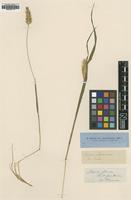
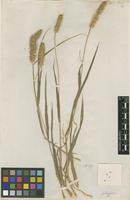
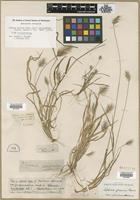
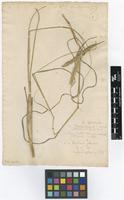
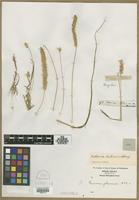
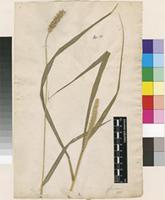
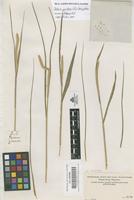
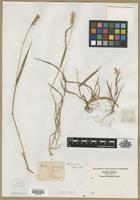
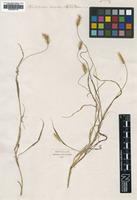
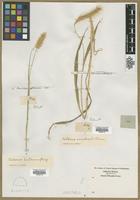
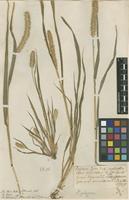
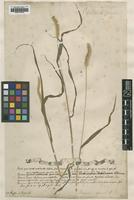
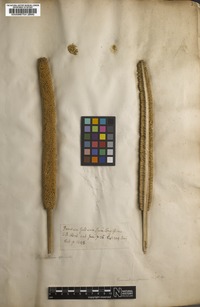
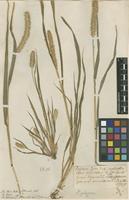
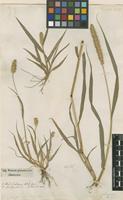
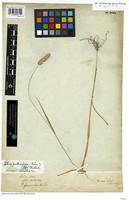
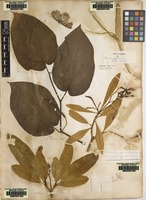
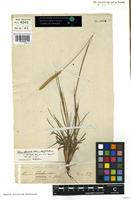
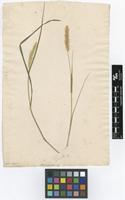
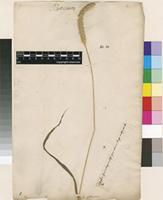
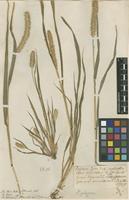
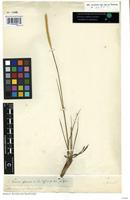
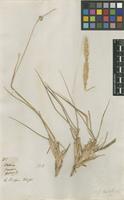
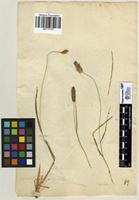
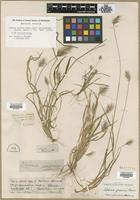
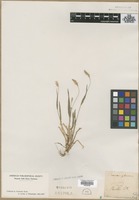
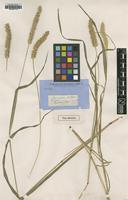
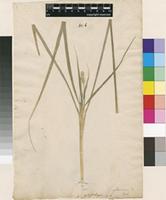
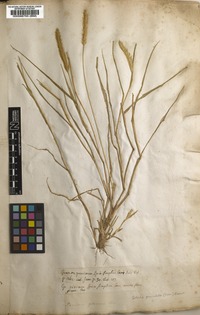
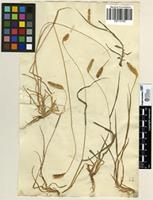
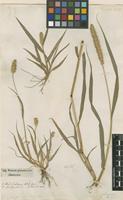
annual; culms often copiously fascicled, ascending from a geniculate base, slender, 1/2–3 ft. long, branched, terete or compressed below, deeply grooved and compressible in the upper part where they are sometimes swollen very finely villous or puberulous and scabrid, otherwise glabrous and smooth, 3–7-noded, internodes slightly exserted or at length slipping out of the sheaths; sheaths striate, glabrous; ligules very short, membranous, truncate, up to 1/2 lin. long, ciliate; blades narrow, linear, long tapering to an acute point, 2–6 in. by 1–3 lin., flat, flaccid, glabrous (in the African specimens), rarely slightly rigid and involute and with long scattered hairs, finely scaberulous; panicle erect, straight or flexuous, cylindric, slender, 1/2–3 in. by about 2 lin., dense; axis slender, minutely villous or puberulous; branches reduced to a subsessile one-sided involucre of 3–8 fine scabrid bristles 1 1/2–4 lin. long, pallid below, fulvous or reddish above, and subtending usually 1 perfect and often 1 arrested spikelet; spikelets elliptic-oblong, minutely apiculate or obtuse, 1–1 1/2 lin. long, pallid, or purplish at the tips, glabrous; glumes very thin, membranous, ovate, acute or subacute, whitish, lower 3-nerved, rather less than 1/2 as long as the spikelet, upper 5-nerved, rather more than 1/2 as long as the spikelet, nerves green; lower florets equal, lower barren or ♂; valve equalling the spikelet, flat, similar to the upper glume; pale subequal to the valve; hermaphrodite floret plano-convex, ovate-elliptic, usually minutely apiculate, pallid or purplish at the tips; valve coriaceous, transversely wrinkled, 5-nerved; anthers 1/4 lin. long. null