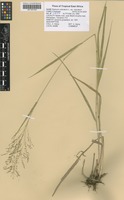
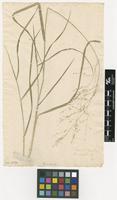
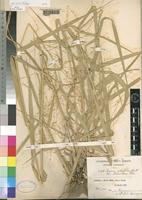
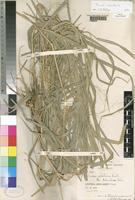
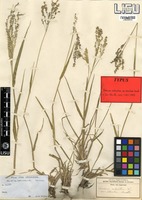
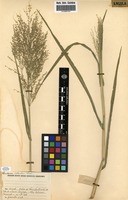
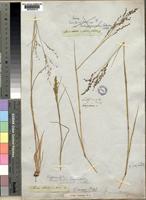
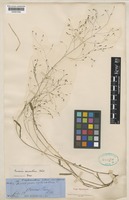
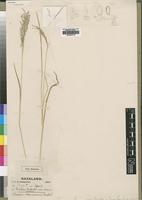
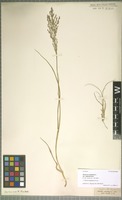
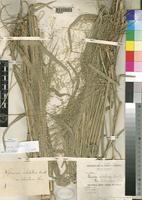
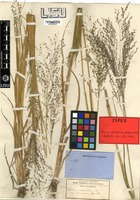
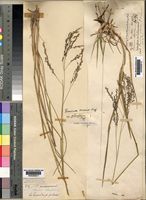
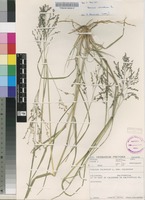
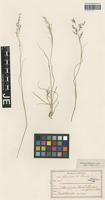
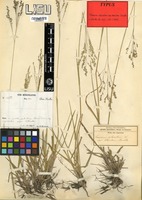
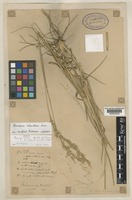
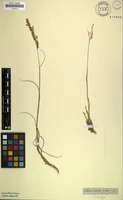
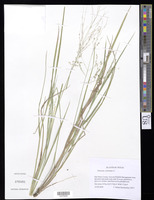
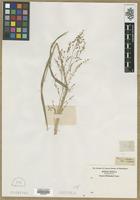
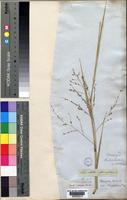
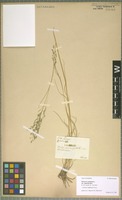
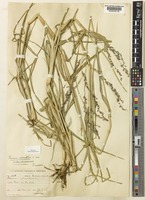
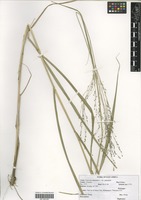
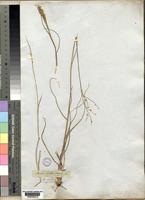
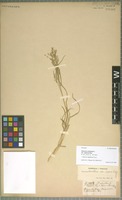
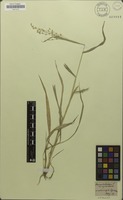
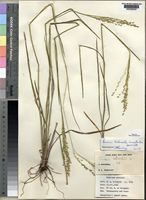
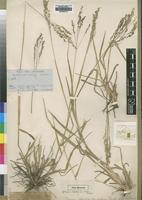
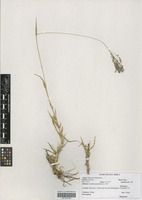
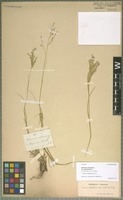
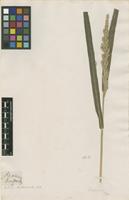
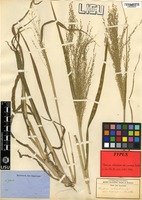
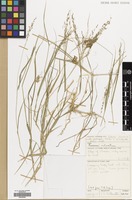
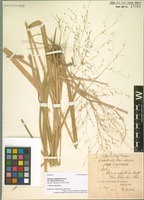
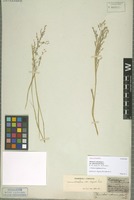
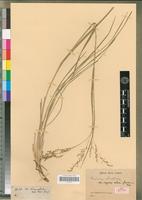
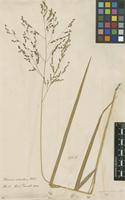
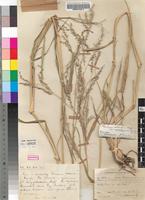
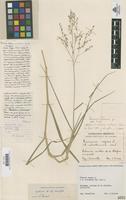
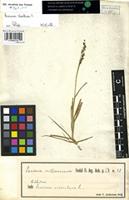
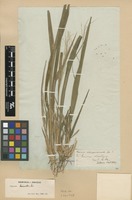
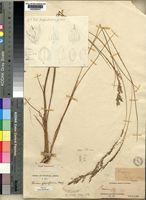
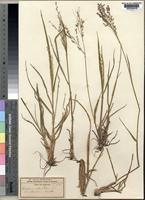
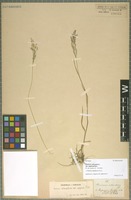
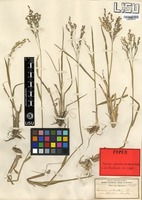
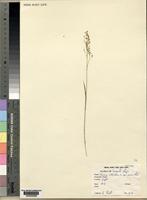
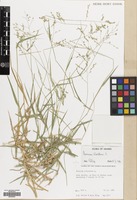
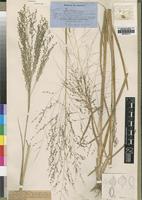
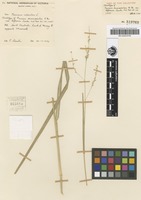
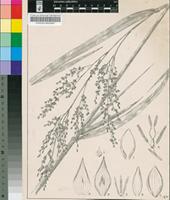
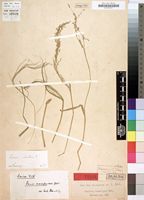
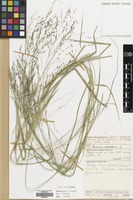
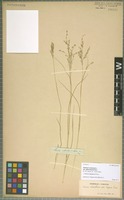
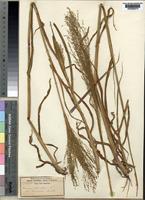
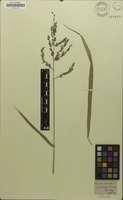
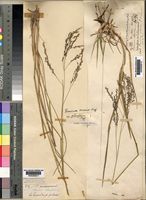
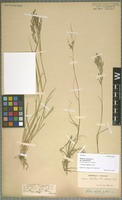
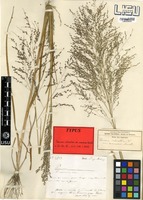
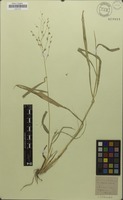
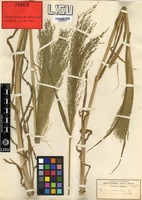
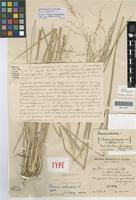
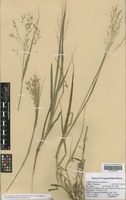
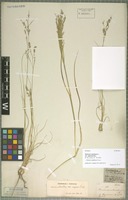
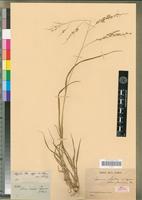
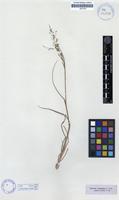
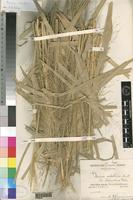
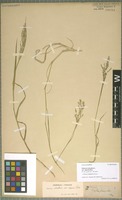
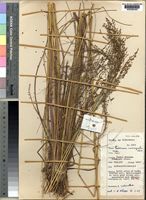
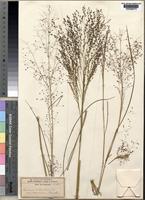
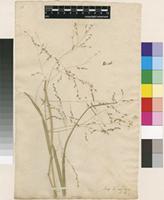
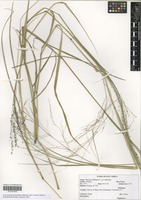
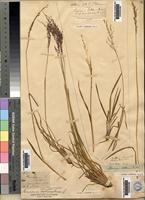
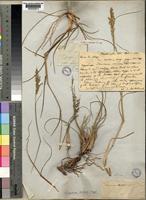
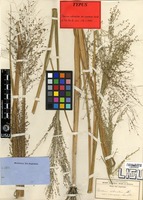
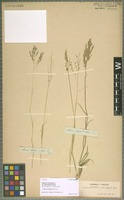
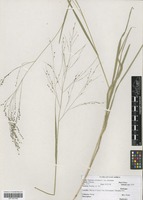
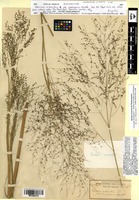
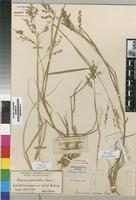
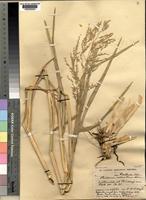
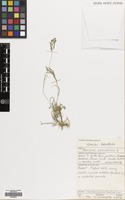
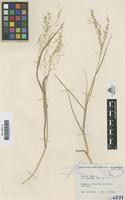
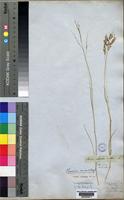
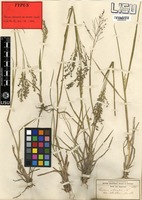
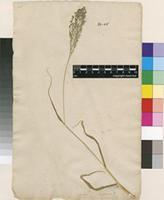
perennial; culms erect or ascending from a geniculate, often decumbent and branched, base, rather stout, 2 ft. or more long, glabrous, 4–8-noded, internodes more or less exserted; sheaths striate, glabrous, or more or less hirsute with tubercle-based hairs, the upper rather tight; ligule a membranous minutely or obscurely ciliate rim; blades linear to lanceolate-linear from a usually widened and rounded base, tapering to an acute point, 5–8 in. by 2 1/2–4 1/2 lin., flat, suberect, slightly rigid or sometimes flaccid, glabrous or sparsely hairy, glaucous or subglaucous, margins smooth or scaberulous, more or less tubercled towards the base; panicle erect or nodding, lax, 4–9 in. long, up to 6 in. broad when fully expanded; axis very slender, smooth, at least below; branches solitary, opposite or 2–4-nate, distant, the lowest 4–7 in. long, filiform to capillary, straight or flexuous, loosely divided from 1/2–2 1/2 in. above the base, scaberulous or smooth below; pedicels solitary or 2-nate, unequal, the longer 1–1 1/2 lin., with cupular tips; spikelets scattered or in scattered clusters or more or less approximate, oblong, acute, 1–1 1/4 lin. long, glabrous, green or purple; lower glume very broadly ovate, acute, up to 1/2 lin. long, 3- to sub-5-nerved; upper glume oblong, subacute, prominently 7-nerved; lower floret ♂; valve like the upper glume, sometimes very slightly longer, 9-nerved; hermaphrodite floret narrow, oblong, subacute, almost 1 lin. long, yellowish, shining, smooth; valve 7-nerved; anthers 3/4– 4/5 lin. long. null