JSTOR Global Plants Home
  • Home
  • Browse
  • About
  • Access
  • Account
    • Saved Items
    • Profile
  • Log in

Global Plants

Skip to Main Content
  • JSTOR Global Plants Home
  • Global Plants

    • Browse
    • About
    • Access
    • Account
      • Saved Items
      • Profile
Log in
  • Browse
  • About
  • Access
  • Account
    • Saved Items
    • Profile
Advanced Search

Compilation
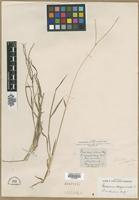
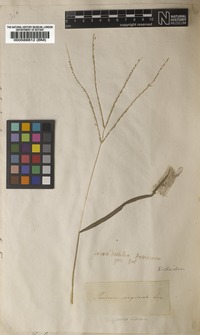
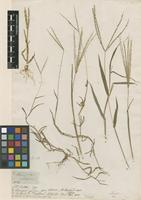
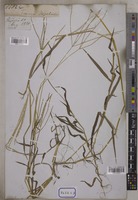
Panicum ciliare

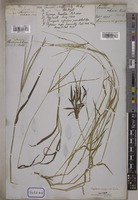
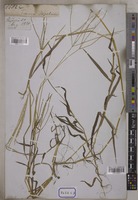
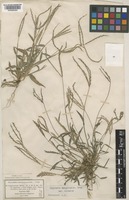
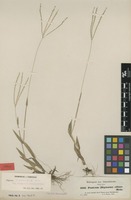
28 Images see all

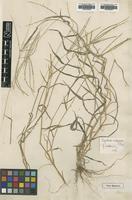
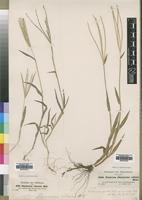
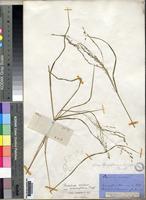
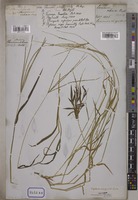
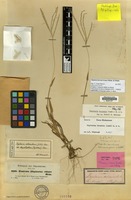
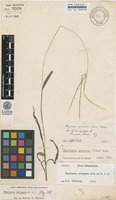
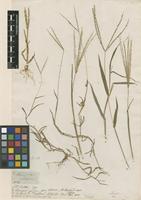
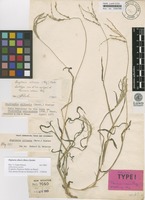
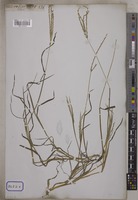
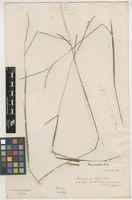
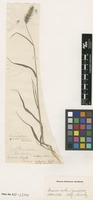
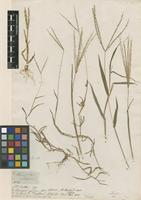
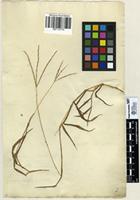
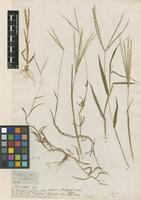
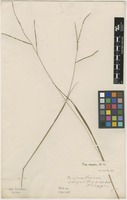
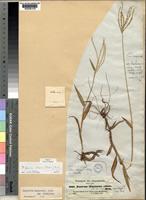
Type of Panicum ciliare Koenig [family POACEAE]
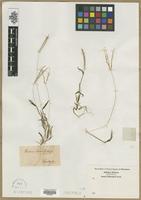
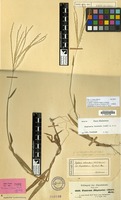
Isotype of Digitaria marginata (Link) Stapf var. fimbriata [family POACEAE]
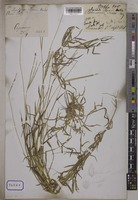
Panicum stapfianum Fourc. [family POACEAE]
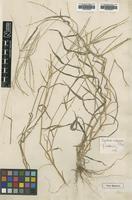
Panicum ciliare Retz. [family POACEAE]
Digitaria sanguinalis (L.) Scop. [family POACEAE]
Type of Panicum sanguinale L. var. blepharanthum Hack. ex T.Durand & Schinz [family POACEAE]
Filed as Panicum ciliare Retz. [family POACEAE]
Panicum ciliare Retz. [family POACEAE]
Filed as Panicum ciliare Retz. [family POACEAE]
Panicum ciliare Retz. [family POACEAE]
Type of Panicum ciliare Koenig [family POACEAE]
Filed as Paspalum caespitosum Flüggé [family POACEAE]
Filed as Pennisetum ciliare (L.) Link [family POACEAE]
Isotype of Panicum ciliare A.Rich. non Retz. [family GRAMINEAE]
Syntype of Panicum ciliare Retz. [family POACEAE]
Filed as Panicum ciliare Retz. [family POACEAE]
Lectotype of Panicum ciliare Retz. [family POACEAE]
Filed as Panicum ciliare Retz. [family POACEAE]
Filed as Digitaria jamaicensis Spreng. [family POACEAE]
Filed as Panicum ciliare Retz. [family POACEAE]
Isotype of Panicum ciliare A.Rich. non Retz. [family GRAMINEAE]
Filed as Paspalum caespitosum Flüggé [family POACEAE]
Type of Panicum ciliare A.Rich. [family POACEAE]
Previous
Next

Name

Identification
Panicum ciliare Retz. [family POACEAE ] (stored under name); Digitaria ciliaris (Retz.) Koeler [family POACEAE ] Panicum sanguinale L. [family POACEAE ] Verified by D. Solander,
Related name
  • Panicum stapfianum
  • Panicum minus
  • Panicum lineare
  • Panicum commutatum
  • Digitaria ciliaris
  • Digitaria marginata
  • Panicum sanguinale
  • Panicum pilosum
  • Digitaria jamaicensis
  • Panicum ciliare

Flora

Entry for DIGITARIA ciliaris (Retz.) Koel. [family ]
Herbarium
Royal Botanic Gardens, Kew (K)
Collection
Flora of Tropical East Africa
Resource Type
Reference Sources
Entry From
Flora of Tropical East Africa, page 451, (1982) Author: W. D. CLAYTON and S.A. RENVOIZE
Names
DIGITARIA ciliaris (Retz.) Koel. [family ], Descr. Gram.: 27 (1802); S.T. Blake in Proc. Roy. Soc. Queensland 81: 10 (1969); Clayton in F.W.T.A., ed. 2, 3: 453 (1972) –but the specimens cited are mostly D. nuda. Type: China, Canton, Wennerberg (LD, lecto., K, photo.!)
Panicum ciliare Retz. [family POACEAE], Obs. Bot. 4: 16 (1786)
Digitaria biformis Willd. [family ], Enum. Hort. Berol.: 92 (1809). Type: Mauritius & Bourbon, Bory de St. Vincent (B, holo.)
Panicum adscendens Kunth [family POACEAE], Nov. Gen. Sp. 1: 97 (1817). Types: Venezuela, Cumanocoa & Peru, Guayaquil & Mexico, Zelaya, Humboldt & Bonpland (whereabouts uncertain)
Digitaria marginata Link [family ], Enum. Hort. Berol. 1: 102 (1812); F.T.A. 9: 439 (1919); Fl. Agrost. Congo Belge 2: 24 (1934). Type: cultivated at Berlin, originally from Brazil (B, holo.)
Digitaria fimbriata Link [family ], Hort. Reg. Bot. Berol. 1: 226 (1827). Type: cultivated at Berlin, originally from Brazil (B, holo.)
Digitaria chrysoblephara Fig. & De Not. [family ], Mem. Accad. Sci. Torino, ser. 2, 14: 364, fig. 27 (1854). Type: Sudan, Fazogli, Figari (whereabouts uncertain, not FI).
Panicum sanguinale (Willd.) Th. Dur. & Schinz var. biforme [family POACEAE], Consp. Fl. Afr. 5: 762 (1895)
Panicum sanguinale Th. Dur. & Schinz var. blepharanthum [family POACEAE], Consp. Fl. Afr. 5: 762 (1895). Type: Ethiopia, Djeladjeranne, Schimper 1616 (K, iso.!)
Panicum sanguinale Th. Dur. & Schinz var. macrostachyum [family POACEAE], Consp. Fl. Afr. 5: 763 (1895), nom. nud. Based on: Ethiopia, Mawerr, Schimper 2162 (K!)
Digitaria marginata (Link) Stapf var. fimbriata [family ], in F.T.A. 9: 440 (1919)
Digitaria marginata Stapf var. linkii [family ], in F.T.A. 9: 440 (1919), nom. superfl. Based on D. marginata Link
Digitaria marginata Stapf var. nubica [family ], in F.T.A. 9: 441 (1919); Henr., Monogr. Digitaria: 432 (1950). Type: Sudan, Khartoum, Kotschy 429 (K, lecto.!)
Digitaria adscendens (Kunth) Henr. [family ], in Blumea 1: 92 (1934); Ann. list grasses Ug.: 13 (1947); F.P.S. 3: 438 (1956); I.G.U.: 25 (1960); G.T.: 76 (1965)
Digitaria adscendens Henr. var. rhachiseta [family ], Monogr. Digitaria: 11 (1950). Type: Colombia, Santa Marta, H.L. Smith 180 (L, holo., K, iso.!)
Digitaria adscendens (Fig. & De Not.) Henr. subsp. chrysoblephara [family ], Monogr. Digitaria: 126 (1950); F.P.S. 3: 439 (1956)
Digitaria adscendens (Stapf) Henr. subsp. nubica [family ], Monogr. Digitaria: 432 (1950); F.P.S. 3: 439 (1956)
Digitaria nuda Henr. subsp. senegalensis [family ], Monogr. Digitaria: 831 (1950). Type: Senegal, Leprieur (W, holo.!)
Digitaria adscendens (Kunth) Henr. subsp. marginata [family ], Monogr. Digitaria: 998 (1950)
Digitaria adscendens Henr. var. criniformis [family ], Monogr. Digitaria: 999 (1950). Based on D. fimbriata Link
Digitaria adscendens (Link) Cuf. var. fimbriata [family ], in B.J.B.B. 39: suppl. 1327 (1969)
Digitaria ciliaris (Fig. & De Not.) Blake subsp. chrysoblephara [family ], in Proc. Roy. Soc. Queensland 81: 12 (1969)
Digitaria ciliaris (Stapf) S.T. Blake subsp. nubica [family ], in Proc. Roy. Soc. Queensland 81: 12(1969)
Digitaria ciliaris (Fig. & De Not.) R.R. Stewart var. chrysoblephara [family ], in K.B. 29: 444 (1974)
Information
Annual; culms 20–100 cm. high, decument at the base and geniculately ascending. Leaf-blades broadly linear, 3–25 cm. long, 3–10 mm. wide. Inflorescence digitate or subdigitate (axis up to 5 cm. long in robust specimens), composed of 2–12 racemes; racemes stiff, 6–22 cm. long, sometimes adorned with sparse long white hairs, the spikelets binate and overlapping by about 2/3 of their length on a winged rhachis with triquetrous midrib. Spikelets narrowly elliptic, (2–)2.5–3.3(–3.7) mm. long, sharply acute; lower glume distinct, typically 0.2–0.4 mm. long and triangular; upper glume (1/2–)2/3–3/4 as long as the spikelet, 3-nerved; lower lemma as long as the spikelet, 7-nerved, the nerves smooth and evenly spaced or with a wide interspace flanking the midrib (sometimes those of the subessile spikelet evenly and of the pedicelled spikelet unevenly spaced), appressed puberulous, silky pubescent or rarely shortly villous, often encompassed by a ciliate frill, sometimes the pedicelled or both spikelets beset with stiff glassy yellowish bristles; fruit ellipsoid, grey to light brown.
Range
DISTR. U3; K7; T3, 4, 6, 8 a few other scattered localities in Africa; common elsewhere in the tropics
Altitude range
0–1200 m.
Distribution
KENYA Mombasa, 1 Dec. 1951, Bogdan 3329! & 3330!KENYA Kilifi District Malindi, 6 Aug. 1949, Bogdan 2528!TANZANIA Pare District Same, Dec. 1968, Wingfield 169!TANZANIA Morogoro District Mgeta R., 21 Feb. 1965, Nicholson 27!TANZANIA Rufiji District Chole I., 20 Sept. 1937, Greenway 5281!UGANDA Mbale District Tororo, 19 Sept. 1929, Hitchcock 24989!UGANDA Busoga District Namasagali, 13 Mar. 1956, Harker 282!
Distribution (external)
Sudan
Notes
Four variable characters are principally responsible for the elaborate varietal nomenclature in D. ciliaris; the hairs on the rhachis, the ciliate frill around the spikelets, the occurrence of glassy bristles and the spacing of the nerves in the lower lemma. Altogether a very large number of different combinations of these characters can be recognized, none of them with a strong geographical bias, and they do not seem to be of any taxonomic significance. D. bicornis (Lam.) Loudon is a closely related Indian species distinguished by the thickened prominent nerves of the lower lemma.

Related Materials

  • Terms and Conditions
  • Privacy Policy
  • Cookie Policy
  • Cookie Settings
  • Accessibility
  • Help
  • Contact Us
  • Facebook
  • Twitter
ITHAKA

JSTOR is part of ITHAKA, a not-for-profit organization helping the academic community use digital technologies to preserve the scholarly record and to advance research and teaching in sustainable ways.

©2000-2026 ITHAKA. All Rights Reserved. JSTOR®, the JSTOR logo, JPASS®, Aluka®, and ITHAKA® are registered trademarks of ITHAKA.

╳