JSTOR Global Plants Home
  • Home
  • Browse
  • About
  • Access
  • Account
    • Saved Items
    • Profile
  • Log in

Global Plants

Skip to Main Content
  • JSTOR Global Plants Home
  • Global Plants

    • Browse
    • About
    • Access
    • Account
      • Saved Items
      • Profile
Log in
  • Browse
  • About
  • Access
  • Account
    • Saved Items
    • Profile
Advanced Search

Compilation
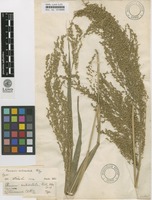
Panicum antidotale

17 Images see all

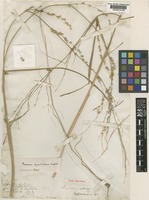
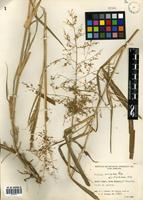
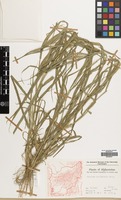
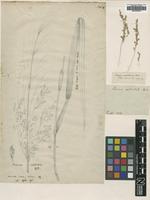
Holotype of Panicum cymbiforme Hughes [family POACEAE]
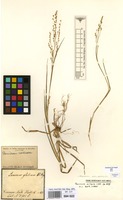
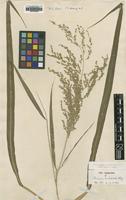
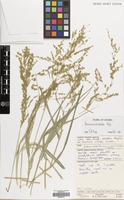
Filed as Panicum antidotale Retz. [family GRAMINEAE]
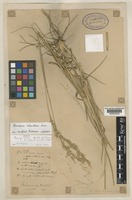
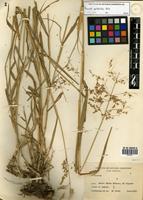
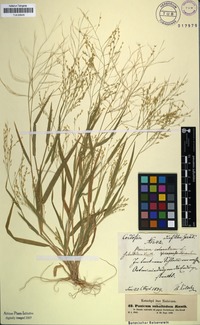
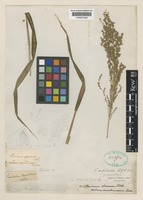
Isotype of Panicum jainii Karthik. et Raghavan [family POACEAE]
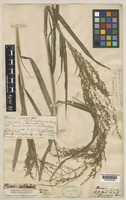
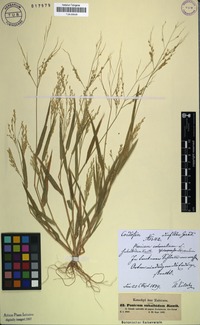
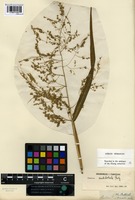
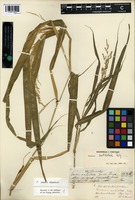
Panicum antidotale Retz. [family POACEAE]
Type of Panicum antidotale Retz. [family POACEAE]
Filed as Panicum antidotale Retz. [family POACEAE]
Type? of Panicum antidotale Retz. [family POACEAE]
Panicum antidotale Retz. [family POACEAE]
Type of Panicum antidotale Retz. [family POACEAE]
Panicum antidotale Retz. [family POACEAE]
Filed as Panicum antidotale Retz. [family POACEAE]
Filed as Panicum antidotale Retz. [family GRAMINEAE]
Filed as Panicum antidotale Retz. [family POACEAE]
Panicum antidotale Retz. [family POACEAE]
Type? of Panicum antidotale Retz. [family POACEAE]
Lectotype of Panicum antidotale Retz. [family POACEAE]
Previous
Next

Name

Identification
Panicum antidotale Retz. [family POACEAE ] (stored under name);
Related name
  • Panicum antidotale
  • Panicum subalbidum
Common name
  • blue panic (India, Deshaprabhu)., Burkill, H.M. 1985. The useful plants of west tropical Africa, Vol. 2

Flora

Entry for PANICUM antidotale Retz. [family POACEAE]
Herbarium
Royal Botanic Gardens, Kew (K)
Collection
Flora of Tropical East Africa
Resource Type
Reference Sources
Entry From
Flora of Tropical East Africa, page 451, (1982) Author: W. D. CLAYTON and S.A. RENVOIZE
Names
PANICUM antidotale Retz. [family POACEAE], Obs. Bot. 4: 17 (1786); G.T.: 63 (1965
Notes
, a native of India, has been introduced as a drought resistant fodder grass at a few localities in Kenya and Tanzania. It may key out with P. subalbidum or P. aequinerve, from which it is distinguished by its stout, knotty, pubescent base; and with P. coloratum, from which it is distinguished by its longer lower glume, which is 1/2–2/3 the length of the spikelet.

Related Materials

  • Terms and Conditions
  • Privacy Policy
  • Cookie Policy
  • Cookie Settings
  • Accessibility
  • Help
  • Contact Us
  • Facebook
  • Twitter
ITHAKA

JSTOR is part of ITHAKA, a not-for-profit organization helping the academic community use digital technologies to preserve the scholarly record and to advance research and teaching in sustainable ways.

©2000-2026 ITHAKA. All Rights Reserved. JSTOR®, the JSTOR logo, JPASS®, Aluka®, and ITHAKA® are registered trademarks of ITHAKA.

╳