JSTOR Global Plants Home
  • Home
  • Browse
  • About
  • Access
  • Account
    • Saved Items
    • Profile
  • Log in

Global Plants

Skip to Main Content
  • JSTOR Global Plants Home
  • Global Plants

    • Browse
    • About
    • Access
    • Account
      • Saved Items
      • Profile
Log in
  • Browse
  • About
  • Access
  • Account
    • Saved Items
    • Profile
Advanced Search

Compilation
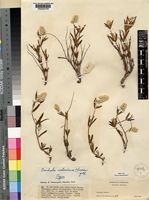
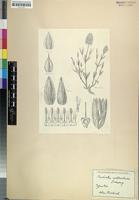
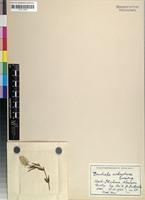
Pandiaka richardsiae

3 Images see all

Type of Pandiaka richardsiae Suess. [family AMARANTHACEAE]
Filed as Pandiaka richardsiae Suess. [family AMARANTHACEAE]
Isotype of Pandiaka richardsiae Suess. [family AMARANTHACEAE]
Previous
Next

Name

Identification
Pandiaka richardsiae Suess. [family AMARANTHACEAE ] (stored under name); Verified by Suessenguth,
Related name
  • Pandiaka richardsiae

Flora

Entry for Pandiaka richardsiae Suesseng. [family AMARANTHACEAE]
Herbarium
Royal Botanic Gardens, Kew (K)
Collection
Flora Zambesiaca
Resource Type
Reference Sources
Entry From
FZ, Vol 9, Part 1, page 28, (1988) Author: C. C. Townsend
Names
Pandiaka richardsiae Suesseng. [family AMARANTHACEAE], in Mitt. Bot. Staatss. München 1: 192 (1953).—Cavaco in Mém. Mus. Hist. Nat. Paris Sér. B, 13: 137 (1962). Type: Zambia, Mbala Distr.. by Old Katwe Rd., above Inono Valley, Escarpment above Chilongowelo., c. 1520 m., Richards 65 (K, holotype).
Information
Short perennial herb, 12–17 cm., considerably branched below with numerous stems arising from a tough rootstock, the stems simple or very sparingly branched, quadrangular upwards but terete below, more or less furnished with whitish, lanate hairs. Leaves thinly to moderately lanate, more so on the lower surface, linear, 12–40 × 1.5–3 mm., sessile, acute to subacute at the apex, dark green (at least in the dry state). Inflorescence subglobose to shortly cylindrical, 2–4 × 1.5 cm.,axis densely white-lanate, shortly but distinctly pedunculate with a 1–2.5 cm. long peduncle which is increasingly lanate upwards. Bracts ovate to ovate-lanceolate, 4.5–6 mm. long, subglabrous to more or less pilose over most of the surface, the green central portion almost as wide as each pale, membranous margin, midrib shortly excurrent in a rather blunt arista. Bracteoles ovate-lanceolate, 4–5 mm. long, almost entirely membranous, glabrous to thinly pilose, the midrib excurrent in a short (c. 1 mm.) sharp arista. Tepals lanceolate-oblong, all similar in form, densely furnished over the entire surface with long, appressed-matted whitish hairs, broadly white-margined, the green centre strongly 3-nerved, midrib not excurrent in an arista, the rather blunt apices very densely pilose; outer 2 tepals 5–7 mm. long, the inner 3 slightly shorter. Stamens 3.5–4 mm. long, filaments pilose near the base; pseudo-staminodes—1–1.25 mm. long, flabellate, shortly pilose all round, the well-developed dorsal scale divided into very long, filiform fimbriae. Ovary squatly turbinate, c. 1 mm. long, with a faint apical keel; style slender, 3.5–4 mm. long. Mature fruit unknown.
Habitat
growing on damp sandy ground in or alongside dambos or amid short grass under Uapaca or Protea trees.
Range
Not known from elsewhere
Distribution
Zambia N Chimbwi, Kawambwa, 20.ix.1963, Mutimushi 427 (K; NDO; SRGH).

Related Materials

  • Terms and Conditions
  • Privacy Policy
  • Cookie Policy
  • Cookie Settings
  • Accessibility
  • Help
  • Contact Us
  • Facebook
  • Twitter
ITHAKA

JSTOR is part of ITHAKA, a not-for-profit organization helping the academic community use digital technologies to preserve the scholarly record and to advance research and teaching in sustainable ways.

©2000-2026 ITHAKA. All Rights Reserved. JSTOR®, the JSTOR logo, JPASS®, Aluka®, and ITHAKA® are registered trademarks of ITHAKA.

╳