JSTOR Global Plants Home
  • Home
  • Browse
  • About
  • Access
  • Account
    • Saved Items
    • Profile
  • Log in

Global Plants

Skip to Main Content
  • JSTOR Global Plants Home
  • Global Plants

    • Browse
    • About
    • Access
    • Account
      • Saved Items
      • Profile
Log in
  • Browse
  • About
  • Access
  • Account
    • Saved Items
    • Profile
Advanced Search

Compilation
Pandanus livingstonianus

11 Images see all

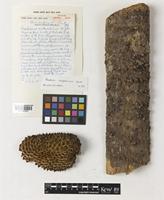
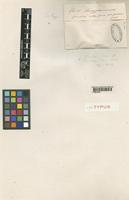
Isotype of Pandanus mosambicius H.St.John ex Huynh [family PANDANACEAE]
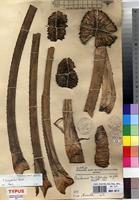
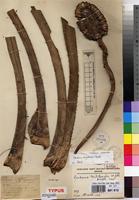
Holotype of Pandanus trilateralis St.John [family PANDANACEAE]
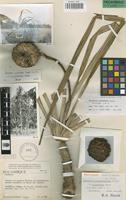
Holotype of Pandanus globulatus Huynh [family PANDANACEAE]
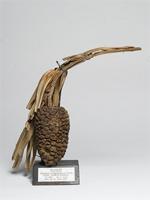
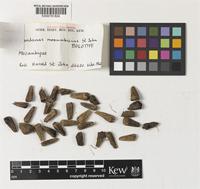
Pandanus livingstonianus Rendle; fruit
Isotype of Pandanus mosambicius H.St.John ex Huynh [family PANDANACEAE]
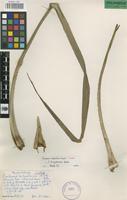
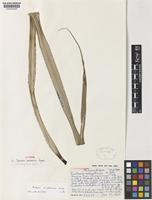
Isotype of Pandanus livingstonianus Rendle [family PANDANACEAE]
Holotype of Pandanus trilateralis St.John [family PANDANACEAE]
Isotype of Pandanus mosambicus St.John [family PANDANACEAE]
Isotype of Pandanus livingstonianus Rendle [family PANDANACEAE]
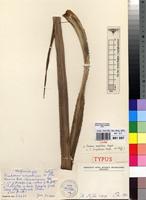
Holotype of Pandanus mosambicius H.St.John ex Huynh [family PANDANACEAE]
Pandanus livingstonianus Rendle [family PANDANACEAE]
Previous
Next

Name

Identification
Pandanus livingstonianus Rendle [family PANDANACEAE ]
Related name
  • Pandanus livingstonianus

Flora

Entry for PANDANUS livingstonianus Rendle [family PANDANACEAE]
Herbarium
Royal Botanic Gardens, Kew (K)
Collection
Flora of Tropical Africa
Resource Type
Reference Sources
Entry From
Flora of Tropical Africa, Vol 8, page 127, (1902) Author: (By C. H. Wright.)
Names
PANDANUS livingstonianus Rendle [family PANDANACEAE], in Journ. Bot. 1894, 326. —Warb. in Engl. Pflanzenr. Pandan. 66.
Information
Upper leaves with upwardly curved teeth on the margins only, the lower ones on the midrib also. Syncarps ovate, 5 in. long, 3 in. in diam. Drupes 5-angled, flat and 6–7 lin. across at the top, with a central subobtuse umbo.
Distribution
Portuguese East Africa Mozamb. Dist. Zambesi Delta; mouth of the Luabo River, Kirk!
Notes
This may be (as suggested by Dr. Rendle, l.c.) the species referred to by Livingstone (The Zambesi and its Tributaries, 19), which from the plate appears to be a tree 40–50 ft. high supported for a height of 8–9 ft. by forking roots.

Related Materials

  • Terms and Conditions
  • Privacy Policy
  • Cookie Policy
  • Cookie Settings
  • Accessibility
  • Help
  • Contact Us
  • Facebook
  • Twitter
ITHAKA

JSTOR is part of ITHAKA, a not-for-profit organization helping the academic community use digital technologies to preserve the scholarly record and to advance research and teaching in sustainable ways.

©2000-2026 ITHAKA. All Rights Reserved. JSTOR®, the JSTOR logo, JPASS®, Aluka®, and ITHAKA® are registered trademarks of ITHAKA.

╳