JSTOR Global Plants Home
  • Home
  • Browse
  • About
  • Access
  • Account
    • Saved Items
    • Profile
  • Log in

Global Plants

Skip to Main Content
  • JSTOR Global Plants Home
  • Global Plants

    • Browse
    • About
    • Access
    • Account
      • Saved Items
      • Profile
Log in
  • Browse
  • About
  • Access
  • Account
    • Saved Items
    • Profile
Advanced Search

Compilation
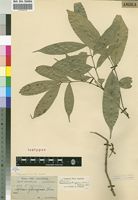
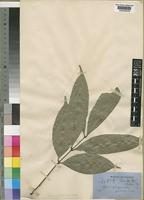
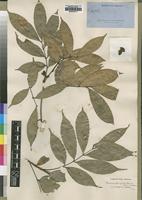
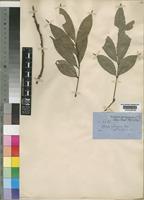
Pancovia golungensis

20 Images see all

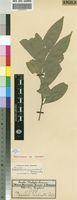
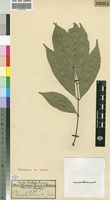
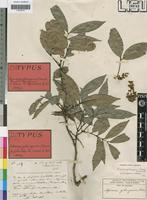
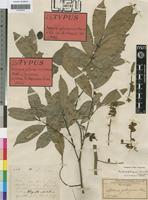
Paratype of Aphania golungensis Hiern [family SAPINDACEAE]
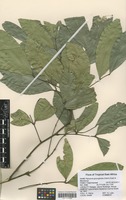
Filed as Pancovia golungensis (Hiern) Exell & Mendonça [family SAPINDACEAE]
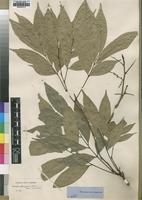
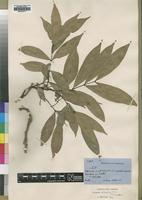
Syntype of Aphania golungensis Hiern [family SAPINDACEAE]
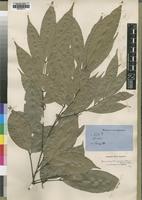
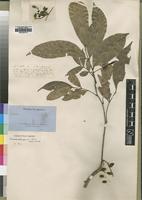
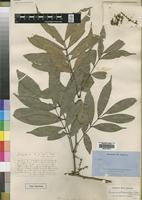
Paratype of Aphania golungensis Hiern [family SAPINDACEAE]
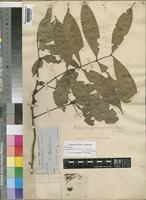
Syntype of Aphania golungensis Hiern [family SAPINDACEAE]
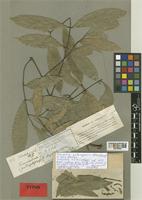
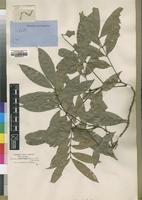
Pancovia golungensis (Hiern) Exell & Mendonça [family SAPINDACEAE]
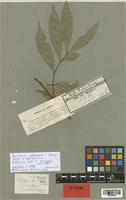
Aphania golungensis Hiern [family SAPINDACEAE]
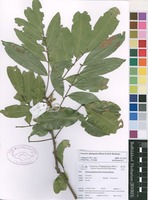
Isotype of Aphania golungensis Hiern [family SAPINDACEAE]
Pancovia golungensis (Hiern) Exell & Mendonça [family SAPINDACEAE]
Syntype of Aphania golungensis Hiern [family SAPINDACEAE]
Pancovia golungensis (Hiern) Exell & Mendonça [family SAPINDACEAE]
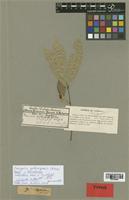
Isotype of Pancovia golungensis (Hiern) Exell & Mendonça [family SAPINDACEAE]
Syntype of Aphania golungensis Hiern [family SAPINDACEAE]
Aphania golungensis Hiern [family SAPINDACEAE]
Isotype of Pancovia golungensis (Hiern) Exell & Mendonça [family SAPINDACEAE]
Type of Aphania golungensis Hiern [family SAPINDACEAE]
Syntype of Aphania golungensis Hiern [family SAPINDACEAE]
Filed as Pancovia golungensis (Hiern) Exell & Mendonça [family SAPINDACEAE]
Previous
Next

Name

Identification
Aphania golungensis Hiern [family SAPINDACEAE ] Pancovia golungensis (Hiern) Exell & Mendonça [family SAPINDACEAE ] (stored under name);
Related name
  • Pancovia golungensis
  • Pancovia turbinata
  • Aphania golungensis

Flora

Entry for PANCOVIA golungensis (Hiern) Exell & Mendonça [family SAPINDACEAE]
Herbarium
Royal Botanic Gardens, Kew (K)
Collection
Flora of Tropical East Africa
Resource Type
Reference Sources
Entry From
Flora of Tropical East Africa, page 1, (1998) Author: DAVIES & B. VERDCOURT
Names
PANCOVIA golungensis (Hiern) Exell & Mendonça [family SAPINDACEAE], C.F.A. 2: 85 (1954); Exell in F.Z. 2: 525, t. 109 (1966) pro parte excl. spec. White 3729; Vollesen in Opera Bot. 59: 58 (1980); Beentje, K.T.S.L.: 422, fig. (1994). Type: Angola, Golungo Alto, Welwitsch 4516 (LISU, holo., BM!, K!, iso.)
Aphania golungensis Hiern [family SAPINDACEAE], Cat. Afr. Pl. Welw. 1: 169 (1896)
Pancovia turbinata [family SAPINDACEAE], [sensu Radlk. in E.P. IV, 165: 804 (1932) pro parte, non Radlk. sensu stricto]
Pancovia hildebrandtii [family SAPINDACEAE], [sensu Beentje, K.T.S.L.: 422 (1994) pro parte, non Gilg]
Pancovia sp. aff. ugandensis [family SAPINDACEAE], sensu F.G. Davies ined.; Beentje, K.T.S.L.: 421 (1994)
Information
Shrub or small tree 1.8–18 m. tall with glabrous branches; bark pale grey-brown, described as rough or smooth; twigs densely lenticellate. Leaves often drying grey-green; petiole slender, 2.5–15 cm. long, thickened at base, glabrous; rhachis 6–12 cm. long; petiolules 5–7 mm. long; leaflets in (2–)3–5 pairs, rarely 2 but probably always some with more (see note), oblanceolate to broadly elliptic-oblong, obovate or elliptic, 5.5–27+ cm. long, 1.7–7(–12) cm. wide, rounded to subacute or distinctly acuminate or rarely emarginate at the apex, cuneate at the base, glabrous. Inflorescences axillary and on the older wood, narrowly thyrsoid with single flowers or subsessile ± 3-flowered cymules spaced at intervals, ferruginous pubescent; male 2–20.5 cm. long, pedicels 0–2.5 mm. long; female mostly shorter, 2.5–5(–7) cm. long, pedicels 2–2.5 mm. long (in Flora area – 5–7 mm. in Natal). Male flowers: calyx-tube 1–2 mm. long, lobes triangular, 2–3 mm. long, velvety brown-pubescent outside; petals white or cream, obovate, the limb 2 mm. long and wide, scale bilobed, with a pair of simple or forked ligulate appendages; disk semicircular; stamens 8 with pilose filaments 7 mm. long. Female flowers: ovary 1.8 mm. long, ferruginous pubescent; style and stigma 3 mm. long. Fruit orange-yellow, with 1–3 mericarps developing, joined for up to 2/3 their length, each ellipsoid, compressed, 1.5–2 cm. long, 1.1–1.5 cm. wide, up to 1.1 cm. thick, sometimes only one developing then other 2 remaining at its base, ± 6 mm. long; pedicels ± 3 mm. long. Seeds pale brown or dark, compressed ellipsoid, 1.2–1.8 cm. long, 0.8–1.3 cm. wide, up to 8 mm. thick.
Range
DISTR. K 7; T 6, 8
Altitude range
0–500(–900) m. (see note)
Distribution
KENYA Kwale District Shimba Hills, Mwele Mdogo Forest, 5 Feb. 1953, Drummond & Hemsley 1130!KENYA Kilifi District Mida, Apr. 1938, Dale in F.D. 3875!KENYA Lamu District Witu Forest, 15 Nov. 1988, S.A. Robertson & Luke 5478!TANZANIA Morogoro District Turiani, Nov. 1954, Semsei 1851!TANZANIA Kilwa District 10 km. NNW. of Kingupira, 3 Dec. 1976, Vollesen in M.R.C. 4181! & 12 km. NNW. of Kingupira, 25 Oct. 1976, Vollesen in M.R.C. 4069!
Distribution (external)
; Angola
Mozambique
South Africa (Kwazulu-Natal)
Notes
A series of specimens from the Kenya coast with leaves having only two pairs of leaflets ( S.A. Robertson & Luke 5964, Kwale District, Gongoni Forest Reserve, 12 Nov. 1989, shrub to 1.5 m. & S.A. Robertson & Luke 6316, same locality, 1 June 1990, shrub to 75 cm. & S.A. Robertson & Luke 2803, Shimba Hills, Mkongani West, 25 Mar. 1991, shrub 1 m.) have been named P. sp. near P. ugandensis F.G. Davies - a manuscript name proposed for the species here treated as P. turbinata Radlk. I have left these specimens as forms of P. golungensis but this is more evidence that the latter might be better treated as a synonym of P. turbinata as indeed was done by Radlkofer. Faden et al. 71/138 (Teita District, Mt. Kasigau, pipeline from Rukanga, 6 Feb. 1971, 1250–1450 m.) is sterile and all the leaves (young) appear to be 2-jugate but it matches otherK7 material in facies. Mwasumbi & B.J. Harris in D.S.M. 2685 (Morogoro District, Kimboza Forest Reserve, 10 Sept. 1972) also appears to have only 2-jugate leaves but more adequate material is needed – leaves from branch tips may not be typical. Drummond & Hemsley 1130 is described as a small shrub to 1.8 m. with spreading branches, some also prostrate.Only the Natal populations are adequately known and these reach into S. Mozambique; the leaves are (2–)3–5-jugate, the leaflets rounded to acuminate at the apex; the male inflorescences are ± 3 cm. long and in one specimen rather similar to those of P. holtzii; the female inflorescences are 5–7 cm. long, with pedicels 3–4.5(–6) mm. long; style and stigma 3 mm. long. The T 6 and 8 populations have leaflets drying paler grey-green, rounded, subacute or emarginate at the apex; male inflorescences up to 18 cm. long, but females inadequately known; fruiting pedicels ± 7 mm. long. The Kenya coast populations have much more acuminate leaflets, female inflorescences with pedicels only 2–2.5 mm. long. Unfortunately even less is known about the population in the type area in Angola but as matters stand there seems no adequate reason to recognise distinct taxa. The occurrence of P. holtzii between the populations of P. golungensis with the females at least being difficult to separate is unsatisfactory. The genus is in great need of field study.

Related Materials

  • Terms and Conditions
  • Privacy Policy
  • Cookie Policy
  • Cookie Settings
  • Accessibility
  • Help
  • Contact Us
  • Facebook
  • Twitter
ITHAKA

JSTOR is part of ITHAKA, a not-for-profit organization helping the academic community use digital technologies to preserve the scholarly record and to advance research and teaching in sustainable ways.

©2000-2026 ITHAKA. All Rights Reserved. JSTOR®, the JSTOR logo, JPASS®, Aluka®, and ITHAKA® are registered trademarks of ITHAKA.

╳