JSTOR Global Plants Home
  • Home
  • Browse
  • About
  • Access
  • Account
    • Saved Items
    • Profile
  • Log in

Global Plants

Skip to Main Content
  • JSTOR Global Plants Home
  • Global Plants

    • Browse
    • About
    • Access
    • Account
      • Saved Items
      • Profile
Log in
  • Browse
  • About
  • Access
  • Account
    • Saved Items
    • Profile
Advanced Search

Compilation
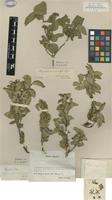
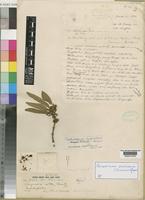
Pachystigma macrocalyx

7 Images see all

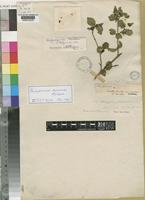
Pachystigma bowkeri Robyns [family RUBIACEAE]
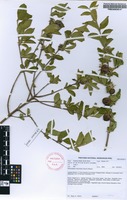
Filed as Pachystigma macrocalyx (Sond.) Robyns [family RUBIACEAE]
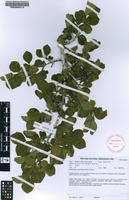
Filed as Vangueria macrocalyx Sond. [family RUBIACEAE]
Type of Vangueria macrocalyx Sond. [family RUBIACEAE]
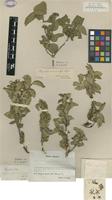
Type of Vangueria setosa Conrath [family RUBIACEAE]
Type of Vangueria macrocalyx Sond. [family RUBIACEAE]
Previous
Next

Name

Identification
Royena not on sheet Not on sheet [family RUBIACEAE ] Verified by Not on sheet, Vangueria macrocalyx Sond. [family RUBIACEAE ] (stored under name); Verified by Not on sheet, Vangueria macrocalyx Sond. [family RUBIACEAE ] Verified by Not on sheet, Pachystigma macrocalyx (Sond.) Robyns [family RUBIACEAE ] Verified by Not on sheet,
Related name
  • Vangueria macrocalyx
  • Royena not on sheet
  • Pachystigma macrocalyx

Flora

Entry for Pachystigma macrocalyx Sond. Robyns [family RUBIACEAE]
Herbarium
Royal Botanic Gardens, Kew (K)
Collection
Flora Zambesiaca
Resource Type
Reference Sources
Entry From
FZ, Vol 5, Part 2, (1998) Author: D. Bridson
Names
Pachystigma macrocalyx Sond. Robyns [family RUBIACEAE], in Bull. Jard. Bot. État 11: 130 (1928). —Palmer & Pitman, Trees Southern Africa 3: 2111 (1973), pro parte excl. P. bowkeri in syn. —K. Coates Palgrave, Trees Southern Africa, ed. 3, rev.: 889 (1988), pro parte excl. P. bowkeri in syn. —Pooley, Trees of Natal, Zululand & Transkei: 478, figs. (1993). Type from South Africa (KwaZulu-Natal).
Vangueria macrocalyx Sond. [family RUBIACEAE], in Linnaea 23: 59 (1850); in F.C. 3: 14 (1865). —Sim, For. Fl. Col. Cape Good Hope: 244 (1907). —Bews, Fl. Natal & Zululand: 198 (1921). —De Wildeman in Bull. Jard. Bot. État 8: 58 (1922).
Canthium macrocalyx Sond. Baill. [family RUBIACEAE], in Adansonia 12: 191 (1878).
Information
Shrub or small tree 0.6–3 m tall, sometimes bearing spine-like remains of axillary branches on the trunk; branchlets mostly densely yellow- or golden-ferruginous pubescent, becoming glabrous or ± entirely glabrous; bark greyish. Leaves paired, 1.5–4.5 × 1–2.5(3) cm, ovate, broadly elliptic or oblong, rounded to obtuse at the apex, rounded to cuneate at the base, densely to very densely yellow-velvety; petiole up to 4 mm long; stipules 2–3 mm long, triangular, with a filiform appendage up to 6 mm long. Inflorescences few- to many-flowered, velvety; peduncle up to 3 mm long; pedicels obsolete up to 2(3) mm long; bracts 2 × 1 mm, oblong. Calyx tube 1.5 mm long, glabrous to densely pubescent; lobes c. 10 × 1–3 mm, much longer than the corolla tube, linear to narrowly oblong or oblanceolate, glabrous to densely pubescent inside and out. Corolla tailed or only acuminate in bud; cream-coloured; tube c. 4 mm long, broadly funnel-shaped; lobes 4.5 × 2 mm, triangular, acuminate with appendages c. 1 mm long. Fruit orange-yellow, about 20 mm long, globose or ovoid, velvety or sparsely so when fully mature, crowned by the calyx lobes; pyrenes 10–20 mm long.
Altitude range
30 m.
30
30
Distribution
Mozambique M Maputo (Lourenço Marques), sterile viii.1918, Rogers 21360 (K).
Distribution (external)
South Africa (Mpumalanga, KwaZulu-Natal and Eastern Cape Province)
Swaziland
Notes
Pachystigma bowkeri Robyns, a ± glabrous species of forests in South Africa, was much confused with P. macrocalyx. The distinction between these two taxa was recently clarified [Kok, Boshoff & van Wyk in S. Afr. J. Bot. 55: 560–563 (1989)]. Only one sterile fragment of P. macrocalyx is known from the Flora Zambesiaca area. In many ways P. macrocalyx resembles Lagynias, especially L. monteiroi.

Related Materials

  • Terms and Conditions
  • Privacy Policy
  • Cookie Policy
  • Cookie Settings
  • Accessibility
  • Help
  • Contact Us
  • Facebook
  • Twitter
ITHAKA

JSTOR is part of ITHAKA, a not-for-profit organization helping the academic community use digital technologies to preserve the scholarly record and to advance research and teaching in sustainable ways.

©2000-2026 ITHAKA. All Rights Reserved. JSTOR®, the JSTOR logo, JPASS®, Aluka®, and ITHAKA® are registered trademarks of ITHAKA.

╳