JSTOR Global Plants Home
  • Home
  • Browse
  • About
  • Access
  • Account
    • Saved Items
    • Profile
  • Log in

Global Plants

Skip to Main Content
  • JSTOR Global Plants Home
  • Global Plants

    • Browse
    • About
    • Access
    • Account
      • Saved Items
      • Profile
Log in
  • Browse
  • About
  • Access
  • Account
    • Saved Items
    • Profile
Advanced Search

Compilation
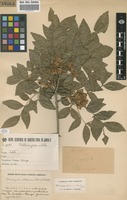
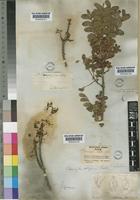
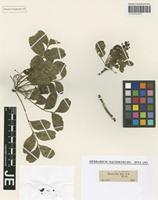
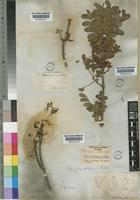
Ptaeroxylon obliquum

12 Images see all

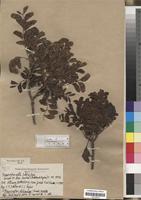
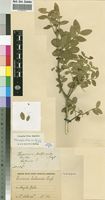
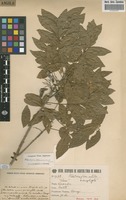
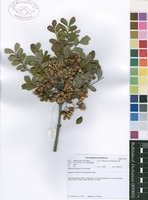
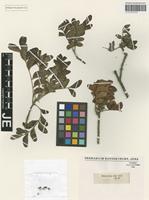
Filed as Ptaeroxylon obliquum (Thunb.) Radlk. [family PTAEROXYLACEAE]
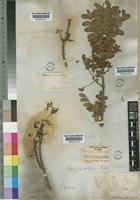
Isotype of Kirkia lentiscoides Engl. [family SIMAROUBACEAE]
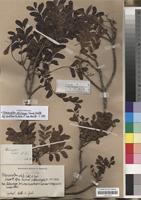
Filed as Ptaeroxylon obliquum (Thunb.) Radlk. [family SAPINDACEAE]
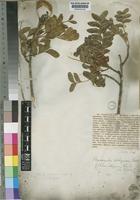
Filed as Ptaeroxylon obliquum (Thunb.) Radlk. [family PTAEROXYLACEAE]
Type? of Ptaeroxylon utile Eckl. & Zeyh. [family PTAEROXYLACEAE]
Ptaeroxylon obliquum (Thunb.) Radlk. [family PTAEROXYLACEAE]
Filed as Ptaeroxylon obliquum (Thunb.) Radlk. [family PTAEROXYLACEAE]
Isotype of Ptaeroxylon utile Eckl. & Zeyh. [family PTAEROXYLACEAE]
Filed as Ptaeroxylon obliquum (Thunb.) Radlk. [family SAPINDACEAE]
Ptaeroxylon obliquum (Thunb.) Radlk. [family PTAEROXYLACEAE]
Type? of Ptaeroxylon utile Eckl. & Zeyh. [family PTAEROXYLACEAE]
Ptaeroxylon obliquum (Thunb.) Radlk. [family PTAEROXYLACEAE]
Previous
Next

Name

Identification
Harrisonia lentiscoides F.Boas [family SIMAROUBACEAE ] Verified by Not on sheet, Ptaeroxylon obliquum (Thunb.) Radlk. [family SAPINDACEAE ] (stored under name); Verified by Exell, A. W. & Mendonça, F. A., Isotype of Kirkia lentiscoides Engl. [family SIMAROUBACEAE ] Verified by Not on sheet,
Related name
  • Kirkia lentiscoides
  • Ptaeroxylon utile
  • Rhus obliquum
  • Ptaeroxylon obliquum
  • Harrisonia lentiscoides

Flora

Entry for Ptaeroxylon obliquum [family PTAEROXYLACEAE]
Herbarium
South African National Biodiversity Institute, Compton Herbarium, Cape Town (SAM)
Collection
Flora of Southern Africa
Resource Type
Reference Sources
Entry From
Flora of South Africa, (2003) Author: Dr J.P. Roux
Names
Ptaeroxylon obliquum [family PTAEROXYLACEAE]
Common names
Rhus obliqua Thunb., F.C. 2: 224 (1818) & edn Schult. 268(1823). Ptaeroxylon utile Eckl. & Zeyh., Enum. 1: 54 (1834); Harv., Thes. Cap. 1: 11, t. 17 ('1859', probably 1860); Sond. in F.C. 1: 243 (1860); Sim, For. Fl. Cape Col. 166, fig. 31 (1907). Type: South Africa, 'In forests by the Bush­man's River and in the districts of Addo and Coega (Uiten-hage)', Ecklon s.n. (K, in Herb. Benth., iso.!). Ptaeroxylon utile forma robustum Szyszyl., Polypet. Disc. Rehm. 48 (1888). Type: South Africa, Transvaal, Houtbosch, Rehmann 6502 (Z, iso.!). Kirkia ? lentiscoides Engl, in Bot. Jb. 32: 124 (1902). Type: Angola, Huila, Antunes 196 (B, holo., presumably destroyed; BM!;COI!). Harrisonia lentiscoides (Engl.) Boas in Beih. bot. Zbl. 29:341(1913).
Information
Shrub or tree ususally less than 15 m tall, occasionally up to 20 m or more, usually decid­uous; bole up to 1 m or more in diameter. Bark whitish grey, smooth at first, later darker and with longitudinal fissures. Leaves up to 120 mm long; rhachis slightly winged, usually ending in a short appendage. Leaflets usually in 3-7 pairs, up to 50x24 mm, very asymmetric, apex obtuse, rounded or emarginate, rarely acute or mucronate; secondary nerves rather close to­gether, prominent on both surfaces. In­florescence up to 50 mm long, axillary or in axils of fallen leaves. Flowers pale yellow, usually appearing before or with the young leaves. Calyx 1 mm long, sparsely puberulous; lobes acute. Petals 5x 1,5 mm, glabrous except for the ciliolate margin. Stamens 3,5 mm long; staminodes 2 mm long; antherodes minute. Ovary 1,75 mm long, style about 1,25 mm long; pistillode minute, embedded in the disc, sometimes with 2 vestigial styles and loculi. Capsule chestnut-brown with conspicuous veins, c. 18x12 mm. Seedc. 16x6 mm. Fig. 9.
Habitat
Ptaeroxylon obliquum is appropriately known as 'Sneezewood' or 'Nieshout' as its fine sawdust provokes violent sneezing. The Zulu name is 'Umatati' and this name may have been bestowed on Tati District in the former Bechuanaland Prot. when invaded by the Matabele impis when, surprisingly, they found the tree so far from then-native Zululand (0. B. Miller, loc. cit.). The wood, which was formerly of great economic importance, is strong and durable. It is harder and smoother than mahogany and of a finer grain, but it does not pick up as mahoganies tend to, and it turns very well. Its durability is its highest quality as it is practically imperishable. It has been greatly used for under-structure piles in house-building, fencing poles and telegraph poles. When used as machine bearings Sneeze-wood wears longer than brass or iron.
Use
Ptaeroxylon obliquum (Thunb.) Radlk. in Sber. bayer. Akad. Wiss. 20: 165 (1890); Burtt Davy, Fl. Transv. 2: 487 (1932); Chalk etal. in Chalk & Burtt Davy, Forest Trees Timb. Br. Emp. 3: 56, fig. 8. 11 (1935); Exell & Men-donga in C.F.A. 1: 306 (1951); O. B. Miller in Jl S. Afr. Bot. 18: 39 (1952); White & Styles in F.Z. 2: 548, fig. 118 (1966); Ross, Fl. Natal 215 (1972); Palmer & Pitman, Trees S. Afr. 2: 1373 & photos (1972). Type: South Africa, Thunberg s.n. (S-THUNB.!).
Range
Also in Mozambique, Zimbabwe, Angola and Tanza­nia. In southern Africa it occurs in S.W.A./Namibia, Botswana, Swaziland and in the Republic of South Africa from the northern Transvaal to the Cape. In various types of forest and bushland. From near sea-level to 1 370 m. Map 34.

Related Materials

  • Terms and Conditions
  • Privacy Policy
  • Cookie Policy
  • Cookie Settings
  • Accessibility
  • Help
  • Contact Us
  • Facebook
  • Twitter
ITHAKA

JSTOR is part of ITHAKA, a not-for-profit organization helping the academic community use digital technologies to preserve the scholarly record and to advance research and teaching in sustainable ways.

©2000-2026 ITHAKA. All Rights Reserved. JSTOR®, the JSTOR logo, JPASS®, Aluka®, and ITHAKA® are registered trademarks of ITHAKA.

╳