JSTOR Global Plants Home
  • Home
  • Browse
  • About
  • Access
  • Account
    • Saved Items
    • Profile
  • Log in

Global Plants

Skip to Main Content
  • JSTOR Global Plants Home
  • Global Plants

    • Browse
    • About
    • Access
    • Account
      • Saved Items
      • Profile
Log in
  • Browse
  • About
  • Access
  • Account
    • Saved Items
    • Profile
Advanced Search

Compilation
Psychotria megalopus

2 Images see all

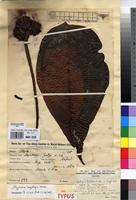
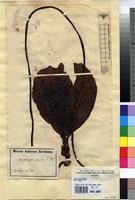
Isotype of Megalopus goetzei K.Schum. [family RUBIACEAE]
Previous
Next

Name

Identification
Isotype of Megalopus goetzei K.Schum. [family RUBIACEAE ] Verified by Not on sheet, Psychotria megalopus Verdc. [family RUBIACEAE ] (stored under name); Verified by Not on sheet,
Related name
  • Megalopus goetzei
  • Psychotria megalopus

Flora

Entry for PSYCHOTRIA megalopus Verdc. [family RUBIACEAE]
Herbarium
Royal Botanic Gardens, Kew (K)
Collection
Flora of Tropical East Africa
Resource Type
Reference Sources
Entry From
Flora of Tropical East Africa, page 1, (1976) Author: B. VERDCOURT
Names
PSYCHOTRIA megalopus Verdc. [family RUBIACEAE], in K.B. 30: 259 (1975). Type: Tanzania, Iringa District, Mufindi, Goetze 750 (B, holo.†, K, iso.!)
Megalopus goetzei K. Schum. [family RUBIACEAE], in E.J. 28: 491 (1900), non Psychotria goetzei (K. Schum.) Petit
Camptopus goetzei (K. Schum.) K. Krause [family RUBIACEAE], in N.B.G.B. 7: 386 (1920)
Cephaelis goetzei (K. Schum.) Hepper [family RUBIACEAE], in K.B. 16: 153 (1962)
Information
Spindly laxly branched shrub or small tree 2.4–10 m. tall; stems glabrous and longitudinally wrinkled save for long hairs at the nodes within the stipules; old petiole scars very evident. Leaf-blades oblong to obovate or obovate-oblanceolate, 28–43 cm. long, 9.6–24 cm. wide, very rounded at the apex, narrowly cuneate at the base, rather thick, glabrous, shining beneath in the living state; midnerve often reddish; lateral nerves numerous, 12–27 pairs, the venation closely but ± obscurely reticulate; a well-marked intramarginal nerve present; petioles often very stout, 1.5–6 cm. long including a portion bordered by the narrowly decurrent base of the lamina; stipules oblong, 2.6 cm. long, 2.4 cm. wide, probably acuminate but often split at the apex, very soon deciduous. Flowers in very condensed heads, 4.5–9 cm. long, 3.5–10 cm. wide, the main enveloping bracts large, forming an entirely closed cup which bears a strong median keel in the direction of the longest dimension, which is decurrent on to the thickened peduncle but absent from the central upper part; the flowers are gathered into 3–10 groups within the cup and become more separate after the main bracts have deteriorated; secondary bracts linear-oblong to almost round, the narrowest next to the flowers, 2–2.5 cm. long, 0.6–2.5 cm. wide, the margins incurved, with long hairs outside at the apex, often in dried material the corollas appearing to emerge from holes in a surface made up of hairy bracts; peduncles attaining 1.8 m. in length, pinky red, eventually resting on the ground but often only 12–60 cm. long, up to 4 cm. wide at the apex and ± 2-angled. Calyx-tube ovoid or ellipsoid, glabrous, 1–2 mm. long, 0.7 mm. wide, ribbed; limb 3–5 mm. long, toothed at the apex, the lobes irregular or triangular, 2–5 mm. long, with long hairs outside at the apex. Corolla white; tube funnel-shaped, 1.2–1.3 cm. long, cylindrical below, 3 mm. wide at the top, 4 mm. at the bottom, glabrous outside, usually with top half hairy inside; lobes 6, green tinged, lanceolate or ovate, 4–6 mm. long, 2–2.3 mm. wide. Disc 2.5 mm. long, wrinkled. Anthers 3.8 mm. long, exserted so that bases are just included in the tube. Ovary 3-locular; style 4.5 mm. long, with 3 stigma-arms. Pyrenes straw-coloured, ellipsoid in section or oblong, 8.5–9.5 mm. long, 3.5–5 mm. wide, 2.5 mm. thick, compressed, trigonous, grooved on both surfaces. Seeds dark red, ellipsoid in section, 6.5–7 mm. long, 2.2–3.6 mm. wide, 1.5–2 mm. thick, grooved on both surfaces, rugulose.
Range
DISTR. T6, 7 not known elsewhere
Altitude range
1140–1850 m.
Distribution
TANZANIA Morogoro District Uluguru Mts., below Hululu Falls, by Mgeta R., 15 Mar. 1953, Drummond & Hemsley 1574!TANZANIA Ulanga District Mahenge, Kwiro Forest remnant, Oct. 1951, Eggeling 6310!TANZANIA Iringa District Mufindi, Kigogo R., 17 Mar. 1962, Polhill & Paulo 1797!
Notes
More information is needed on heterostyly. K. Schumann gives the length of the style as 10–14 mm., of which 3.5–4 is stigma-lobes, and anthers on filaments 1.5–2 mm. long, 11–12 mm. above the base of the tube, presumably a long-styled specimen.

Related Materials

  • Terms and Conditions
  • Privacy Policy
  • Cookie Policy
  • Cookie Settings
  • Accessibility
  • Help
  • Contact Us
  • Facebook
  • Twitter
ITHAKA

JSTOR is part of ITHAKA, a not-for-profit organization helping the academic community use digital technologies to preserve the scholarly record and to advance research and teaching in sustainable ways.

©2000-2026 ITHAKA. All Rights Reserved. JSTOR®, the JSTOR logo, JPASS®, Aluka®, and ITHAKA® are registered trademarks of ITHAKA.

╳