JSTOR Global Plants Home
  • Home
  • Browse
  • About
  • Access
  • Account
    • Saved Items
    • Profile
  • Log in

Global Plants

Skip to Main Content
  • JSTOR Global Plants Home
  • Global Plants

    • Browse
    • About
    • Access
    • Account
      • Saved Items
      • Profile
Log in
  • Browse
  • About
  • Access
  • Account
    • Saved Items
    • Profile
Advanced Search

Compilation
Psychotria holtzii

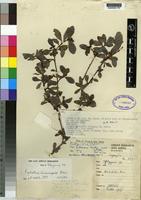
3 Images see all

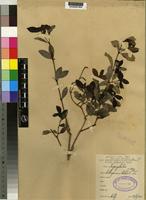
Type of Psychotria holtzii Petit [family RUBIACEAE]
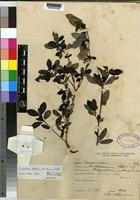
Isotype of Psychotria holtzii (K.Schum.) Petit var. pubescens [family RUBIACEAE]
Previous
Next

Name

Identification
Isotype of Psychotria holtzii (K.Schum.) Petit [family RUBIACEAE ] (stored under name); Verified by T. S, 1974
Related name
  • Psychotria holtzii

Flora

Entry for PSYCHOTRIA holtzii (K. Schum.) Petit [family RUBIACEAE]
Herbarium
Royal Botanic Gardens, Kew (K)
Collection
Flora of Tropical East Africa
Resource Type
Reference Sources
Entry From
Flora of Tropical East Africa, page 1, (1976) Author: B. VERDCOURT
Names
PSYCHOTRIA holtzii (K. Schum.) Petit [family RUBIACEAE], in B.J.B.B. 36: 90 (1966). Types: Tanzania, Dar es Salaam, Mogo Forest [Sachsenwald], Engler 2137, 2161 & 2186 (all B, syn. †); same locality, Holtz 301/02 (EA, neo.!)
Information
Shrub 0.6–3 m. tall, with slender stems, densely pubescent with whitish or ferruginous hairs when young, later glabrescent, the hairs short and spreading, rather stiff on the old shoots. Leaf-blades small, narrowly elliptic to oblong, 1–4 cm. long, 0.5–1.5 cm. wide, acute or subobtuse at the apex, cuneate at the base, discolorous, glabrous above and beneath, or with some hairs bordering domatia in the nerve-axils and at the base of the midrib beneath; nodules mostly 2, situated at the base of the midrib; petiole 1–2.5 mm. long, densely pubescent with hairs similar to those on the stem; stipules prominently bilobed, becoming blackish, rather rigid and brittle but not persistent; the triangular base 1–2 mm. long, pubescent, the lobes filiform-acuminate, 1–4 mm. long. Flowers heterostylous, 5-merous, in sessile few-flowered subumbellate inflorescences ± 0.5 cm. long; pedicels 1–3 mm. long, glabrous or slightly pubescent. Calyx-tube obconic, 0–75 mm. long, ± pubescent; limb very short, 0.5–0.75 mm. long, ± glabrescent; lobes very narrowly triangular or linear, ± unequal, 0.5–2.5(–4) mm. long, glabrous or ± pubescent, occasionally bifid. Disc fleshy. Corolla white; buds hairy at apex; tube 3–3.5 mm. long; lobes oblong-elliptic, 1.7–3 mm. long, ± 1 mm. wide, thickened and with a small appendage at the apex. Stamens with filaments 2 mm. long in short-styled flowers, almost obsolete in long-styled flowers. Styles 2 mm. long in short-styled flowers, 3.5 mm. long in long-styled flowers; stigma-lobes 0.5–0.7 mm. long. Drupes crimson-red, with 2 pyrenes, subglobose, ± 5 mm. in diameter, glabrous, crowned by the persistent calyx; pyrenes with dorsal surface slightly ribbed. Seeds semiglobose, 2.5–3 mm. long and wide, 1.5–2.8 mm. thick, the ventral face with a rather broad fissure; albumen not ruminate.

Related Materials

  • Terms and Conditions
  • Privacy Policy
  • Cookie Policy
  • Cookie Settings
  • Accessibility
  • Help
  • Contact Us
  • Facebook
  • Twitter
ITHAKA

JSTOR is part of ITHAKA, a not-for-profit organization helping the academic community use digital technologies to preserve the scholarly record and to advance research and teaching in sustainable ways.

©2000-2026 ITHAKA. All Rights Reserved. JSTOR®, the JSTOR logo, JPASS®, Aluka®, and ITHAKA® are registered trademarks of ITHAKA.

╳