JSTOR Global Plants Home
  • Home
  • Browse
  • About
  • Access
  • Account
    • Saved Items
    • Profile
  • Log in

Global Plants

Skip to Main Content
  • JSTOR Global Plants Home
  • Global Plants

    • Browse
    • About
    • Access
    • Account
      • Saved Items
      • Profile
Log in
  • Browse
  • About
  • Access
  • Account
    • Saved Items
    • Profile
Advanced Search

Compilation
Pachypodium lealii

15 Images see all

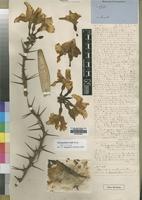
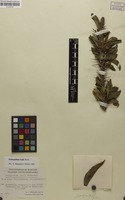
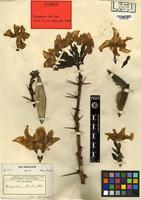
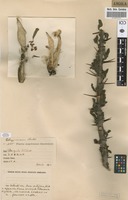
Holotype of Pachypodium lealii Welw. [family APOCYNACEAE]
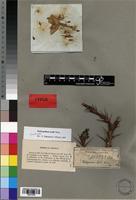
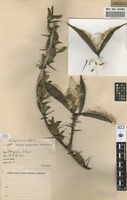
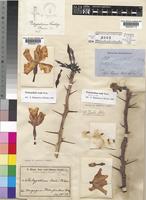
Isotype of Pachypodium lealii Welw. [family APOCYNACEAE]
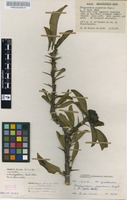
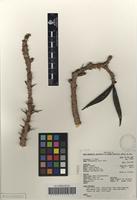
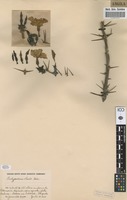
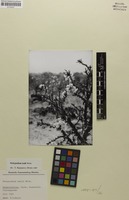
Pachypodium lealii Welw. [family APOCYNACEAE]
Filed as Pachypodium lealii Welw. [family APOCYNACEAE]
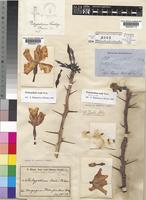
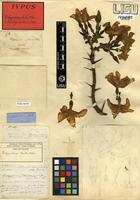
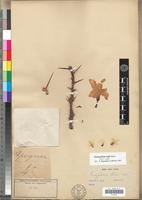
Type of Pachypodium lealii Welw. [family APOCYNACEAE]
Filed as Pachypodium lealii Welw. [family APOCYNACEAE]
Type of Pachypodium lealii Welw. [family APOCYNACEAE]
Isotype of Pachypodium lealii Welw. [family APOCYNACEAE]
Filed as Pachypodium lealii Welw. [family APOCYNACEAE]
Pachypodium lealii Welw.
Filed as Pachypodium lealii Welw. [family APOCYNACEAE]
Isotype of Pachypodium lealii Welw. [family APOCYNACEAE]
Previous
Next

Name

Identification
Pachypodium lealii Welw. [family APOCYNACEAE ]
Related name
  • Pachypodium lealii

Flora

Entry for Pachypodium lealii [family APOCYNACEAE]
Herbarium
South African National Biodiversity Institute, Compton Herbarium, Cape Town (SAM)
Collection
Flora of Southern Africa
Resource Type
Reference Sources
Entry From
Flora of South Africa, (2003) Author: Dr J.P. Roux
Names
Pachypodium lealii [family APOCYNACEAE]
Information
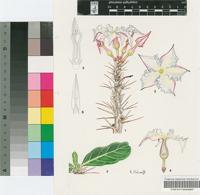
Shrub or small tree up to 6 m high with a soft, succulent trunk up to 40 cm in diameter at the base, tapering gradually towards the apex or somewhat bottle-shaped; trunk at first simple, later forking with a few ascending main stems, occasionally forking near the base; bark grey to pale brown with darker transverse scars; stems sparingly branched towards the apex; branches glabrous, bark dark grey or reddish brown. Leaves few, near the tips of the young branchlets, sessile, scattered on long shoots or in fascicles (abbreviated axillary shoots), obovate-oblong to oblong-lanceolate, 2-5-8 cm long and 1 • 6-3 • 4 cm broad, shortly tomentose on both surfaces, apex obtuse, apiculate, base cuneate, secondary nerves usually visible in mature leaves; stipules spiny arising from a small cushion with a central depression; spines on long shoots in spreading pairs 1 • 5-3 cm long with often a third intrastipular spine arising proximally, those of the short shoots much shorter. Inflorescence terminal, consisting of several-flowered cymes; bracts small, ovate, fringed with minute hairs, early deciduous; pedicels 2 mm long. Flowers large, showy, white, suffused with purple under the corolla lobes and on the tube. Calyx 4 mm long; sepals ovate-deltoid, fringed with minute hairs. Corolla salver-shaped; tube 3-3-5 cm long, 2-5-3 mm in diameter for 1-1 -2 cm, dilated abruptly to 7-8 mm in diameter at the point of insertion of the stamens and then gradually attenuate to 4 mm at the throat, glabrous without, hairy within; lobes spreading, obliquely obovate-rotund, 2-2 • 4 cm long and 1 • 8-2 cm broad, smooth and slightly convex on one margin, very convex and crisped on the other; apex rounded. Stamens 5; anthers linear-lanceolate, shortly sagittate, 10-11 mm long, united in a cone, subsessile. Disc cupular, deeply 5-lobed. Ovary of 2 free carpels; style filiform; stigma cylindrical with a basal rim. Fruit of two follicular mericarps 7-10 cm long and 1 cm in diameter, attenuate at the apex, glabrous. Seeds numerous, ovoid, 9-10 mm long with an apical coma of whitish hairs 2 cm long; cotyledons flat, rotund, larger than the radicle; endosperm scanty.
Habitat
It is possible that there are two varieties of this species but, owing to inadequate material, it is not possible to reach a definite conclusion. In the north, specimens corresponding to true P. lealii are found (e.g. Story 5680 and de Winter 3655) with reddish bark on the young branches and leaves up to 3 cm long. Further south, apparently on the dolomite formation (de Winter 3011 and 3690), the specimens show branches with greyish bark and leaves up to 8 cm long. The latter form probably represents P. giganteum, but unfortunatley the type of this species has been destroyed. There appears to be no floral difference between the two forms and so it is unlikely that they represent distinct species.
Use
5. Pachypodium lealii Welw. in Trans. Linn. Soc. 27: 43, t. 16 (1869); Stapf in F.T.A. 4, 1: 230 (1902); Warb., Kunene-Sambesi Exped. 14 (1903); Markgraf in Notizbl. 15: 457 (1941). Type: Angola, Distr. Bumbo, Welwitsch 1510 (BM, holo.). P. giganteum Engl, in Bot. Jahrb. 19: 147 (1894). Type: South West Africa, Otjitambi, Giirich 15.
Range
Restricted to semi-arid to arid, rocky hillsides in north-western South West Africa and the adjoining south-western territory of Angola.

Related Materials

  • Terms and Conditions
  • Privacy Policy
  • Cookie Policy
  • Cookie Settings
  • Accessibility
  • Help
  • Contact Us
  • Facebook
  • Twitter
ITHAKA

JSTOR is part of ITHAKA, a not-for-profit organization helping the academic community use digital technologies to preserve the scholarly record and to advance research and teaching in sustainable ways.

©2000-2026 ITHAKA. All Rights Reserved. JSTOR®, the JSTOR logo, JPASS®, Aluka®, and ITHAKA® are registered trademarks of ITHAKA.

╳