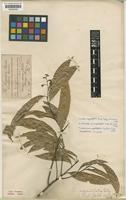
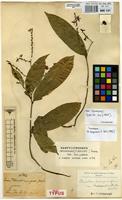
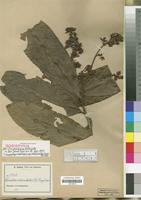
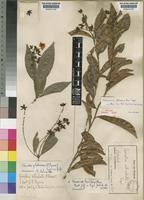
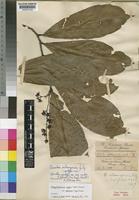
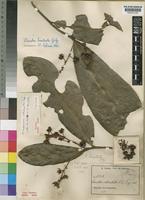
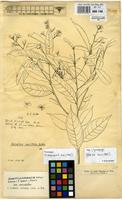
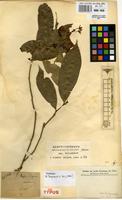
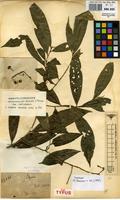
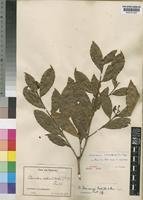
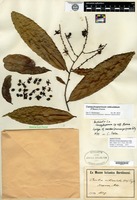
Shrub or small tree 1–12 m tall with fissured bark and rose-coloured wood. Leaves mostly thin and papery but sometimes thicker; lamina narrowly elliptic to elliptic, oblong-elliptic or slightly oblanceolate, (4.2–)7–15(–23.5) cm long, (1.7–)2–5(–6) cm wide, ± acuminate to usually very narrow acute apex, narrowly cuneate at the base, finely and regularly serrate or subentire to quite entire, sometimes crinkled; venation with (6–)8–17 pairs of secondary veins and very numerous close transverse tertiary veins at right angles to the midrib but almost no reticulate tertiaries, prominent on both sides; petioles 2–6 mm long; stipules triangular, 1–6 mm long, acute, usually deciduous or persistent on young growth. Raceme-like inflorescences 2–3, usually with very slender rhachis, grouped in terminal panicles, 5–20(–30) cm long, the cymules 1–7-flowered (1–2 in East Africa) usually with a persistent bract at the base; pedicels 5–12(–20) mm long, jointed at 1–6 mm from the base; bracts linear-triangular, 1–3 mm long, finely pointed, mostly soon deciduous. Sepals ovate, 4–9 mm long, 2–3 mm wide, slightly accrescent and red in fruit. Petals orange-yellow, broadly obovate, 5–12 mm long, 3–10 mm wide, slightly emarginate at the apex, cuneate at the base. Anthers 3–10 mm long. Drupelets black, ellipsoid, 6–9 mm long, 4–5 mm wide. Seeds with embryo heterocotylous, the small cotyledon external, incumbent.