JSTOR Global Plants Home
  • Home
  • Browse
  • About
  • Access
  • Account
    • Saved Items
    • Profile
  • Log in

Global Plants

Skip to Main Content
  • JSTOR Global Plants Home
  • Global Plants

    • Browse
    • About
    • Access
    • Account
      • Saved Items
      • Profile
Log in
  • Browse
  • About
  • Access
  • Account
    • Saved Items
    • Profile
Advanced Search

Compilation
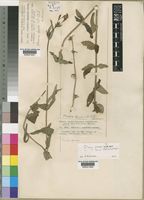
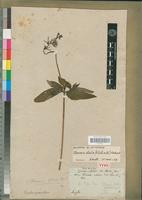
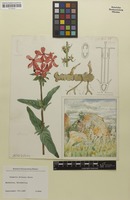
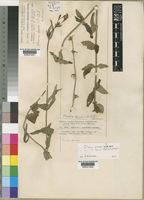
Otomeria elatior

13 Images see all

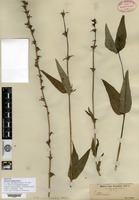
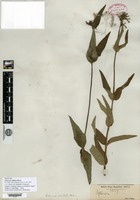
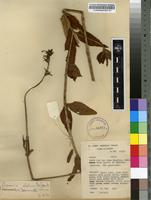
Isotype of Otomeria dilitata Hiern [family RUBIACEAE]
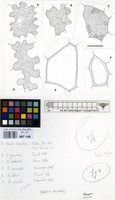
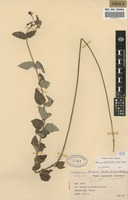
Filed as Otomeria elatior (A.Rich. ex DC.) Verdc. [family RUBIACEAE]
Filed as Otomeria elatior (A.Rich.) Verdc. [family RUBIACEAE]
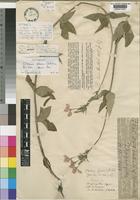
Type of Otomeria dilatata Hiern [family RUBIACEAE]
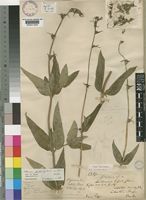
Otomeria elatior (A.Rich.) Verdc. [family RUBIACEAE]
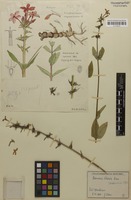
Holotype of Virecta elatior DC. [family RUBIACEAE]
Filed as Otomeria elatior (A.Rich.) Verdc. [family RUBIACEAE]
Otomeria elatior (A.Rich.) Verdc. [family RUBIACEAE]
Isotype of Otomeria dilitata Hiern [family RUBIACEAE]
Filed as Otomeria elatior (A.Rich.) Verdc. [family RUBIACEAE]
Filed as Otomeria elatior (A.Rich. ex DC.) Verdc. [family RUBIACEAE]
Otomeria elatior (A.Rich.) Verdc. [family RUBIACEAE]
Filed as Otomeria elatior (DC.) Verdc. [family RUBIACEAE]
Previous
Next

Name

Identification
Otomeria elatior (A.Rich. ex DC.) Verdc. [family RUBIACEAE ] (stored under name); Verified by Not on sheet,
Related name
  • Otomeria unrecorded
  • Otomeria dilatata
  • Pentas speciosa
  • Virecta elatior
  • Sipanea elatior
  • Otomeria speciosa
  • Otomeria elatior
  • Pentas unrecorded
Common name
  • digunyε (NWT) (SIERRA LEONE, KORANKO), Burkill, H.M. 1985. The useful plants of west tropical Africa, Vol. 4

Flora

Entry for OTOMERIA elatior (DC.) Verdc. [family RUBIACEAE]
Herbarium
Royal Botanic Gardens, Kew (K)
Collection
Flora of Tropical East Africa
Resource Type
Reference Sources
Entry From
Flora of Tropical East Africa, page 1, (1976) Author: B. VERDCOURT
Names
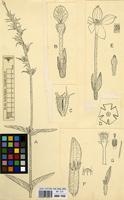
OTOMERIA elatior (DC.) Verdc. [family RUBIACEAE], in B.J.B.B. 23: 18, fig. 3/A–D (1953); Hepper in F.W.T.A., ed. 2, 2: 214 (1963); Hallé, Fl. Gabon, 12. Rubiacées: 117 (1966); F.P.U., ed. 2: 160 (1972); U.K.W.F.: 405 (1974). Type: Angola, da Silva (P, holo.!)
Sipanea elatior DC. [family RUBIACEAE], Prodr. 4: 415 (1830); A. Rich. in Mém. Soc. Hist. Nat. Paris 5: 276 (1834)
Pentas elatior (DC.) Walp. [family RUBIACEAE], Repert. 6: 57 (1846)
Otomeria dilatata Hiern [family RUBIACEAE], in F.T.A. 3: 50 (1877). Type: Nigeria, N. Nupe, Barter 1237 (K, holo.!)
Otomeria madiensis [family RUBIACEAE], [sensu Hiern in F.T.A. 3: 50 (1877), pro parte quoad Schweinfurth 3565, non Oliv.]
Information
Erect or rarely straggling herb 0.35–3 m. tall, with single unbranched or sparsely branched glabrescent pubescent or hairy stem. Leaf-blades ovate-elliptic or rarely linear, 1.5–9.5 cm. long, 0.7–3.2 cm. wide, ± acute at the apex, rounded or cuneate at the base, pubescent to densely hairy on both surfaces, or glabrous above and pubescent beneath on the nerves, or altogether glabrous save for a very minute pubescence near the edges above and on the venation beneath; petiole obsolete or 1–6 mm. long; stipules with 1–3 flat linear setae 1–5 mm. long, 0.2–1 mm. wide, and also 2–6 short setae or sessile colleters from a short base. Flowering inflorescence 1–6.5 cm. long, becoming 4–37 cm. long in fruit, with a peduncle 0–30 cm. long; solitary nodal flower with pedicel up to 2 cm. long. Calyx-tube ± 2 mm. long, glabrous to hirsute; lobes very unequal, 1–3 foliaceous, lanceolate, 0.5–2.4 cm. long, 1.2–4.8 mm. wide, the rest 1–4 mm. long, 0.5–1.5 mm. wide. Corolla-tube 1.7–2.7 cm. long, sparsely hairy or glabrous below, 0.25–2.3 mm. wide below, dilated above to 1.25–3 mm. wide for a distance of 3–5 mm., the dilation urceolate and usually rounded at the base, externally hairy with long multi-cellular crimson or purple hairs; lobes ovate, orbicular or elliptic-spathulate, 0.5–1.8 cm. long, 0.25–1 cm. wide, mucronate from the emarginate tip, connate at the base for 0.5–1.5 mm.; throat orifice 0.5–1.5 mm. in diameter; throat densely hairy, the apical hairs crimson and spreading over the orifice and connate parts of the corolla-lobes. Anthers completely included. Style exserted 0–5 mm.; stigmas elliptic, 0.5–1 mm. long. Fruit oblong, compressed, chestnut or purple-brown, 0.6–1.2 cm. long, 4–6 mm. wide, 2.5–5 mm. thick (rarely smaller, 5 × 3.5 mm.), strongly ribbed, pubescent or hairy; dehiscence apical and accompanied by some longitudinal splitting. Seeds angular, ± 0.7 mm. long.
Range
DISTR. U1–4; K3, 5, 6; T1, 4, 7, 8 W. Africa from Mali to Cameroun and Angola, Central African Republic, Sudan to Mozambique and Rhodesia
Altitude range
1030–1590 m.
Distribution
KENYA Uasin Gishu District Burnt Forest, Webster in E.A.H. 8834!KENYA N. Kavirondo District Mumias, 29 July 1913, Battiscombe 668!KENYA Masai District Lolgorien, Sept. 1933, Napier 2916!TANZANIA Near Bukoba, Aug. 1931, Haarer 2129!TANZANIA Mbeya District Mbosi Circular Road, 12 Jan. 1961, Richards 13881!TANZANIA Songea District Matengo Hills, about 2.5 km. E. of Ndengo, 4 Mar. 1956, Milne-Redhead & Taylor 8971!UGANDA Bunyoro District Budongo Forest, 30 Nov. 1938, Loveridge 151!UGANDA Teso District Serere, Mar. 1932, Chandler 649!UGANDA Masaka District Lake Nabugabo, SW. side, 7 Oct. 1953, Drummond & Hemsley 4671!
Notes
In the SW. of Tanzania and adjoining part of Zambia a variant occurs with a more showy corolla, the lobes being 1.6–1.8 cm. long and 1 cm. wide, narrowed at the base to 2.5 mm. In my revision this was formerly recognized as forma speciosa (Bak.) Verdc. (in B.J.B.B. 23: 23 (1953); Pentas speciosa Bak. in K.B. 1895: 67 (1895); Otomeria speciosa (Bak.) Scott Elliot in J.L.S. 32: 437 (1896); type: Zambia, Fwambo, Carson (K, holo.!)). It seems scarcely worth maintaining despite the distinctiveness of extreme forms, e.g. Ufipa District, Lake Rukwa to Lake Tanganyika, Nutt!

Related Materials

  • Terms and Conditions
  • Privacy Policy
  • Cookie Policy
  • Cookie Settings
  • Accessibility
  • Help
  • Contact Us
  • Facebook
  • Twitter
ITHAKA

JSTOR is part of ITHAKA, a not-for-profit organization helping the academic community use digital technologies to preserve the scholarly record and to advance research and teaching in sustainable ways.

©2000-2026 ITHAKA. All Rights Reserved. JSTOR®, the JSTOR logo, JPASS®, Aluka®, and ITHAKA® are registered trademarks of ITHAKA.

╳