JSTOR Global Plants Home
  • Home
  • Browse
  • About
  • Access
  • Account
    • Saved Items
    • Profile
  • Log in

Global Plants

Skip to Main Content
  • JSTOR Global Plants Home
  • Global Plants

    • Browse
    • About
    • Access
    • Account
      • Saved Items
      • Profile
Log in
  • Browse
  • About
  • Access
  • Account
    • Saved Items
    • Profile
Advanced Search

Compilation
Otiophora pauciflora

12 Images see all

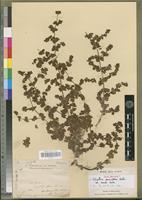
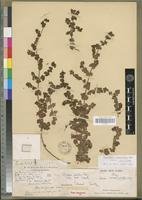
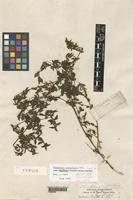
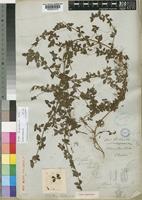
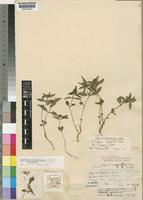
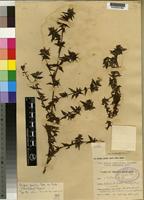
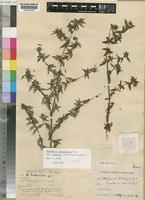
Isotype of Otiophora pauciflora Baker var. ovata [family RUBIACEAE]
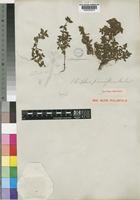
Holotype of Otiophora pauciflora Baker var. ovata [family RUBIACEAE]
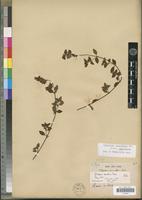
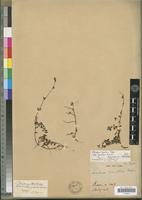
Syntype of Otiophora pauciflora Baker [family RUBIACEAE]
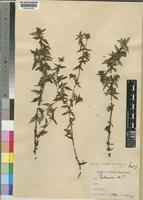
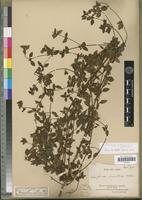
Otiophora pauciflora Baker subsp. burttii (Milne-Redh.) Verdc. [family RUBIACEAE]
Isotype of Otiophora pauciflora Bak. [family RUBIACEAE]
Type of Otiophora pauciflora Baker [family RUBIACEAE]
Syntype of Otiophora pauciflora Baker subsp. parvifolia Verdcourt [family RUBIACEAE]
Syntype of Otiophora pauciflora Baker [family RUBIACEAE]
Otiophora pauciflora Baker subsp. pauciflora [family RUBIACEAE]
Holotype of Otiophora parviflora Verdc. var. iringensis Verdc. [family RUBIACEAE]
Isotype of Otiophora pauciflora Baker ssp. burttii (milne-Redh.) Verdc. [family RUBIACEAE]
Otiophora pauciflora Baker subsp. burttii (Milne-Redh.) Verdc. [family RUBIACEAE]
Previous
Next

Name

Identification
Isotype of Otiophora pauciflora Baker [family RUBIACEAE ] (stored under name); Verified by Not on sheet,
Related name
  • Pentanisia unrecorded
  • Otiophora burttii
  • Otiophora pauciflora
  • Oldenlandia unrecorded
  • Otiophora parviflora
  • Otiophora villicaulis

Flora

Entry for OTIOPHORA pauciflora Bak. [family RUBIACEAE]
Herbarium
Royal Botanic Gardens, Kew (K)
Collection
Flora of Tropical East Africa
Resource Type
Reference Sources
Entry From
Flora of Tropical East Africa, page 1, (1976) Author: B. VERDCOURT
Names
OTIOPHORA pauciflora Bak. [family RUBIACEAE], in J.L.S. 20: 170 (1883); Verdc., in J.L.S. 53: 408, fig. 4/F, 4/0 (1950). Type: Madagascar, Tananarive, Imerina, Lyall 305 (K, holo.!)
Information
Perennial herb with 2–3 usually straggling stems 0.6–1 m. long bearing many axillary branchlets, arising from a woody rootstock; stems hairy when young, the hairs mostly in 2 lines, later glabrescent and the epidermis often flaking off. Leaf-blades ovate to lanceolate, 0.5–3.5 cm. long, 0.3–1.2 cm. wide, acute at the apex, rounded or broadly cuneate at the base, often discolorous, glabrescent or with short hairs above and mostly on the venation beneath, usually somewhat revolute; petiole obsolete or 1–4 mm. long; stipules with 3–5 setiform segments 2–4 mm. long from a short base. Flowers in 2–10-flowered terminal heads which may elongate into short spikes after flowering, usually with a few axillary flowers near the tops of the shoots as well. Calyx-tube oblong, 1 mm. long, glabrous or hairy; lobes 5, either 2 foliaceous and 3 small, 1 foliaceous and 4 small, or 3 small and 1 large and 1 medium foliaceous or all small; foliaceous lobes ovate, 4–5 mm. long, 1.5–2.5 mm. wide, acute at the apex, glabrescent or sparsely hairy and usually ciliate round margins; setiform lobes 2–3 mm. long, hairy. Corolla white, lilac or pale pink; buds with limb expanded into an ovate or subcylindrical head, usually rather hairy particularly at the apex; tube filiform, 0.6–1.2 cm. long, sometimes hairy; lobes 5, lanceolate, 3.5–5 mm. long, 0.5–1 mm. wide, usually with scattered hairs externally. Stamens 5, rather shorter than the lobes. Style and stigma exserted for 3.5–5 mm.; stigma bilobed, lobes filiform, 1–2.5 mm. long. Fruit brown, elongate-oblong, 4 mm. long, 2 mm. wide, 1 mm. thick, hairy. Seeds black, elongate-oblong, truncate at both ends or elongate-tapering, 1.5–3 mm. long, 0.5–1 mm. wide, dorsally with a central keel, reticulate, ventrally with an elongate depression surrounding the hilum.
Range
DISTR. (of species as a whole). As above with the addition of Madagascar

Related Materials

  • Terms and Conditions
  • Privacy Policy
  • Cookie Policy
  • Cookie Settings
  • Accessibility
  • Help
  • Contact Us
  • Facebook
  • Twitter
ITHAKA

JSTOR is part of ITHAKA, a not-for-profit organization helping the academic community use digital technologies to preserve the scholarly record and to advance research and teaching in sustainable ways.

©2000-2026 ITHAKA. All Rights Reserved. JSTOR®, the JSTOR logo, JPASS®, Aluka®, and ITHAKA® are registered trademarks of ITHAKA.

╳