JSTOR Global Plants Home
  • Home
  • Browse
  • About
  • Access
  • Account
    • Saved Items
    • Profile
  • Log in

Global Plants

Skip to Main Content
  • JSTOR Global Plants Home
  • Global Plants

    • Browse
    • About
    • Access
    • Account
      • Saved Items
      • Profile
Log in
  • Browse
  • About
  • Access
  • Account
    • Saved Items
    • Profile
Advanced Search

Compilation
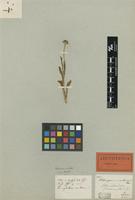
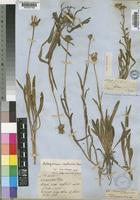
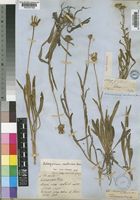
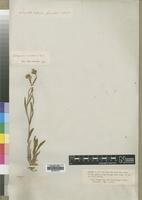
Osteospermum caulescens

4 Images see all

Lectotype of Osteospermum caulescens Harv. [family ASTERACEAE]
Osteospermum caulescens Harv. [family COMPOSITAE]
Type of Osteospermum caulescens Harv. [family ASTERACEAE]
Previous
Next

Name

Identification
Osteospermum caulescens Harv. [family ASTERACEAE ] (stored under name);
Related name
  • Tripteris unrecorded
  • Osteospermum caulescens
  • Dimorphotheca caulescens
  • Dimorphotheca unrecorded

Flora

Entry for OSTEOSPERMUM caulescens Harv. [family COMPOSITAE]
Herbarium
Royal Botanic Gardens, Kew (K)
Collection
Flora Capensis
Resource Type
Reference Sources
Entry From
Flora Capensis, Vol 3, page 44, (1894) Author: (By W. H. HARVEY).
Names
OSTEOSPERMUM caulescens Harv. [family COMPOSITAE]
Information
herbaceous, minutely glandular-pubescent, leafy at the crown; stems several, erect, subsimple, angular, laxly leafy, one-headed; radical and lower leaves tapering at base into a petiole, oblongo-lanceolate, acute or obtuse, remotely denticulate, cauline sessile, half-clasping, linear, entire or denticulate; inv. sc. acuminate, viscoso-puberulous; achenes obovoid, obscurely 6-angled, thickly scaberulous and subglandular, especially on the dorsal facets. Rootstock perennial. Radical leaves 2 1/2–3 in. long, including the petiole, midribbed, 3–4 l. wide; cauline 1–1 1/2 in. long, 1–2 l. wide. All parts minutely glandular. Stems 6–10 inches long, simple, or branched at base. Habit nearly that of Dimorphotheca caulescens.
Distribution
SOUTH AFRICA Rhinoster River, Betchuana Land, Zeyher! 1009. (Herb. Hk. Sd.)

Related Materials

  • Terms and Conditions
  • Privacy Policy
  • Cookie Policy
  • Cookie Settings
  • Accessibility
  • Help
  • Contact Us
  • Facebook
  • Twitter
ITHAKA

JSTOR is part of ITHAKA, a not-for-profit organization helping the academic community use digital technologies to preserve the scholarly record and to advance research and teaching in sustainable ways.

©2000-2026 ITHAKA. All Rights Reserved. JSTOR®, the JSTOR logo, JPASS®, Aluka®, and ITHAKA® are registered trademarks of ITHAKA.

╳