JSTOR Global Plants Home
  • Home
  • Browse
  • About
  • Access
  • Account
    • Saved Items
    • Profile
  • Log in

Global Plants

Skip to Main Content
  • JSTOR Global Plants Home
  • Global Plants

    • Browse
    • About
    • Access
    • Account
      • Saved Items
      • Profile
Log in
  • Browse
  • About
  • Access
  • Account
    • Saved Items
    • Profile
Advanced Search

Compilation
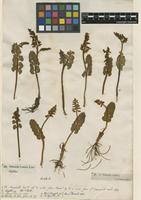
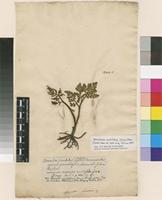
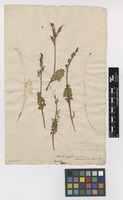
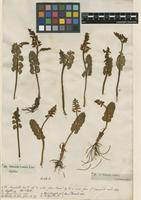
Osmunda lunaria

10 Images see all

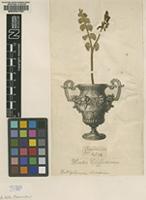
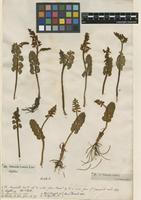
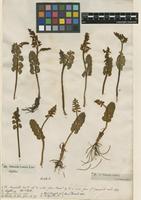
Lectotype of Osmunda lunaria L. [family OPHIOGLOSSACEAE]
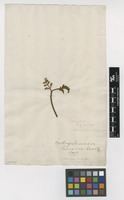
Filed as Osmunda lunaria L. [family OPHIOGLOSSACEAE]
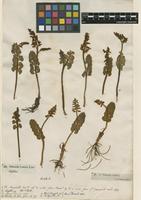
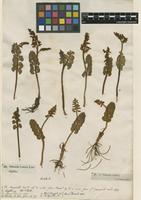
Filed as Botrychium lunaria (L.) Sw. [family OPHIOGLOSSACEAE]
Filed as Osmunda lunaria L. [family OSMUNDACEAE]
Previous
Next

Name

Identification
Osmunda lunaria L. [family OPHIOGLOSSACEAE ] (stored under name);
Related name
  • Botrychium rutaceum
  • Botrychium lunaria
  • Osmunda lunaria
  • Botrychium matricariifolium
Common name
  • botryche lunaire, Flora of North America Vol. 2
  • Common moonwort, Flora of North America Vol. 2

Flora

Entry for Botrychium lunaria (Linnaeus) Swartz [family OPHIOGLOSSACEAE]
Herbarium
Flora of North America (FNA)
Collection
Flora of North America
Resource Type
Reference Sources
Entry From
Flora of North America, Vol 2,
Names
Botrychium lunaria (Linnaeus) Swartz [family OPHIOGLOSSACEAE], J. Bot. (Schrader), 1800(2): 110. 1801
Osmunda lunaria Linnaeus [family OSMUNDACEAE], Sp. Pl., 2: 1064. 1753
Botrychium onondagense L.Underwood [family OPHIOGLOSSACEAE]
Treatment Author(s)
Warren H. Wagner Jr.
Florence S. Wagner
Information
Trophophore stalk 0--1 mm; blade dark green, oblong, 1-pinnate, to 10 × 4 cm, thick, fleshy. Pinnae to 9 pairs, spreading, mostly overlapping except in shaded forest forms, distance between 1st and 2d pinnae not or slightly more than between 2d and 3d pairs, basal pinna pair approximately equal in size and cutting to adjacent pair, broadly fan-shaped, undivided to tip, margins mainly entire or undulate, rarely dentate, apical lobe usually cuneate to spatulate, notched, approximate to adjacent lobes, apex rounded, venation like ribs of fan, midribs absent. Sporophores 1--2-pinnate, 0.8--2 times length of trophophore. 2 n =90.
Phenology
Leaves appearing in spring, dying in latter half of summer
Altitude range
0--3700 m
Distribution
GreenlandSt. Pierre and Miquelons South AmericaEurasiaPacific Islands in New ZealandAustralia.USA AlaskaUSA Ariz.USA Calif.USA Colo.USA IdahoUSA MaineUSA Mass.USA Mich.USA Minn.USA Mont.USA Nev.USA N.H.USA N.Mex.USA N.Y.USA Oreg.USA Pa.USA S.Dak.USA UtahUSA Vt.USA Wash.USA Wis.USA Wyo.Canada Alta.Canada B.C.Canada Man.Canada N.B.Canada Nfld.Canada N.W.T.Canada N.S.Canada Ont.Canada P.E.I.Canada Que.Canada Sask.Canada Yukon
Discussion
Botrychium lunaria grows with many other species of Botrychium , occasionally hybridizing with them. This species, geographically the most widespread of the moonworts, has notably uniform morphology.

Related Materials

  • Terms and Conditions
  • Privacy Policy
  • Cookie Policy
  • Cookie Settings
  • Accessibility
  • Help
  • Contact Us
  • Facebook
  • Twitter
ITHAKA

JSTOR is part of ITHAKA, a not-for-profit organization helping the academic community use digital technologies to preserve the scholarly record and to advance research and teaching in sustainable ways.

©2000-2026 ITHAKA. All Rights Reserved. JSTOR®, the JSTOR logo, JPASS®, Aluka®, and ITHAKA® are registered trademarks of ITHAKA.

╳