JSTOR Global Plants Home
  • Home
  • Browse
  • About
  • Access
  • Account
    • Saved Items
    • Profile
  • Log in

Global Plants

Skip to Main Content
  • JSTOR Global Plants Home
  • Global Plants

    • Browse
    • About
    • Access
    • Account
      • Saved Items
      • Profile
Log in
  • Browse
  • About
  • Access
  • Account
    • Saved Items
    • Profile
Advanced Search

Compilation
Orthosiphon glabratus

6 Images see all

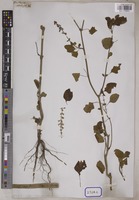
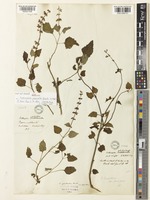
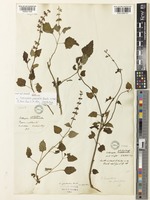
Isotype of Orthosiphon glabratus Benth. var. africanus Benth. [family LAMIACEAE]
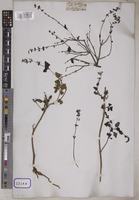
Orthosiphon glabratus Benth. [family LABIATAE]
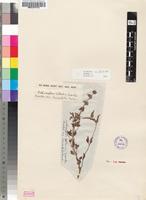
Syntype of Orthosiphon glabratus Benth. [family LAMIACEAE]
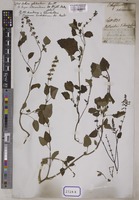
Orthosiphon thymiflorus (Roth) Sleesen [family LAMIACEAE]
Previous
Next

Name

Identification
Isotype of Orthosiphon glabratus Benth. [family LAMIACEAE ] Verified by Not on sheet, Orthosiphon suffrutescens (Thonn.) J.K.Morton [family LAMIACEAE ] (stored under name); Verified by Not on sheet,
Related name
  • Orthosiphon suffrutescens
  • Orthosiphon glabratus

Flora

Entry for ORTHOSIPHON Wilmsii Guerke [family LABIATAE]
Herbarium
Royal Botanic Gardens, Kew (K)
Collection
Flora Capensis
Resource Type
Reference Sources
Entry From
Flora Capensis, Vol 5, page 226, (1912) Author: By N. E. BROWN, T. COOKE and S. A. SKAN.
Names
ORTHOSIPHON Wilmsii Guerke [family LABIATAE], in Engl. Jahrb. xxvi. 81
Orthosiphon glabratus Benth. var. africanus [family LABIATAE], in DC. Prodr. xii. 51.
Orthosiphon neglectus Briq. [family LABIATAE], in Bull. Herb. Boiss. 2 me sér. iii. 988.
Plectranthus Bolusii T. Cooke [family LABIATAE], in Kew Bulletin, 1909, 377, as to Bolus 11011 only.
Information
perennial, 1/2–1 ft. high; stems several branching from a woody rootstock, simple or with erect branches, square, puberulous with minute recurved hairs along the angles only; leaves spreading; petiole 1–3 lin. long; blade 1/2–1 1/3 in. long, 3–7 lin. broad, ovate or lanceolate, acute or obtuse, broadly or narrowly cuneate at the base, subentire to acutely serrate, minutely puberulous on the veins beneath, otherwise glabrous on both sides; racemes simple, 1 1/4–5 in. long; whorls 1/4– 1/2 in. apart, 6-flowered; bracts reflexed, 3/4–1 1/2 lin. long, ovate, acute or apiculate, subpetiolate or sessile, glabrous, ciliate, often bordered with purple; pedicels 1–2 lin. long, pubescent; calyx pubescent or subtomentose outside, glabrous within, purplish-brown; tube 1/8– 1/6 (in fruit 1/5– 1/4) in. long, tubular-campanulate, with distinct nerves, especially in fruit; upper tooth 1/2– 3/4 lin. long, orbicular-ovate, obtuse; lateral and lower teeth bristle-like, the lower 2/3–1 (in fruit up to 1 3/4) lin. long; corolla-tube 2–3 lin. long, slightly exceeding the lower calyx-teeth, straight, puberulous outside; upper lip 1 1/4–2 lin. long, with 4 small rounded lobes; lower lip 1 1/2–2 lin. long, boat-shaped, obtuse; stamens all free, curved, glabrous; upper pair 1 lin. long, inserted in the throat of the tube and just exserted from it or included; lower pair 1 1/4 lin. long, inserted at the base of the lower lip and shorter than it; style very minutely bifid or emarginate at the clavate apex; nutlets 3/4 lin. long, ellipsoid, obtuse, very minutely and faintly tuberculate, brown. null
Distribution
COAST REGION Var. β: Komgha Div.; among stones near the Kei River, Flanagan, 477!EASTERN REGION Natal; Sydenham, near Durban, 500 ft., Wood, 8538! near Pietermaritzburg, Wilms, 2189!KALAHARI REGION Transvaal; Crocodile River, Burke, 162! Zeyher, 1357! Magalies Berg, Burke! Matebe Valley, Holub, 1952! 1953! Linokana, Holub! near Lydenburg, Wilms, 1114, 1115! Krugers Post, Burtt Davy, 7276! Springbok Flats, Burtt Davy, 1744! Wonderboom Poort, Rehmann, 4510! Koude River, Schlechter, 3728! Potgieters Rust, Miss Leendertz, 1439! Bolus, 11011!
Notes
The variety komghensis may prove to be distinct, as the locality is so widely different from that of the type, but the single dried specimen I have seen is so similar in all characters except the calyx-teeth, that I am inclined to think that the plant may have been an accidental introduction from the Transvaal, and the moister maritime climate may have influenced the development of the calyx-teeth. O. Wilmsii is quite distinct from the Indian O. glabratus, Benth., of which Bentham considered it to be a variety.

Related Materials

  • Terms and Conditions
  • Privacy Policy
  • Cookie Policy
  • Cookie Settings
  • Accessibility
  • Help
  • Contact Us
  • Facebook
  • Twitter
ITHAKA

JSTOR is part of ITHAKA, a not-for-profit organization helping the academic community use digital technologies to preserve the scholarly record and to advance research and teaching in sustainable ways.

©2000-2026 ITHAKA. All Rights Reserved. JSTOR®, the JSTOR logo, JPASS®, Aluka®, and ITHAKA® are registered trademarks of ITHAKA.

╳