JSTOR Global Plants Home
  • Home
  • Browse
  • About
  • Access
  • Account
    • Saved Items
    • Profile
  • Log in

Global Plants

Skip to Main Content
  • JSTOR Global Plants Home
  • Global Plants

    • Browse
    • About
    • Access
    • Account
      • Saved Items
      • Profile
Log in
  • Browse
  • About
  • Access
  • Account
    • Saved Items
    • Profile
Advanced Search

Compilation
Ornithoglossum vulgare

5 Images see all

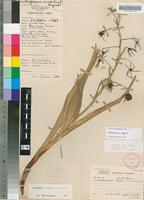
Filed as Ornithoglossum vulgare B.Nord. [family COLCHICACEAE]
Ornithoglossum vulgare B.Nord. [family COLCHICACEAE]
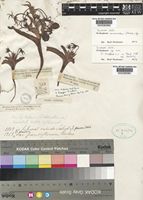
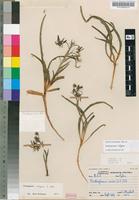
Isotype of Ornithoglossum vulgare B.Nord. [family COLCHICACEAE]
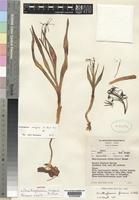
Ornithoglossum vulgare B. Nord., from South Africa
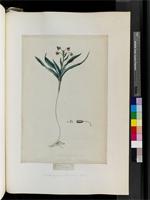
Filed as Ornithoglossum vulgare B.Nord. [family COLCHICACEAE]
Previous
Next

Name

Identification
Ornithoglossum vulgare B. Nord. [family LILIACEAE ]
Related name
  • Ornithoglossum vulgare

Flora

Entry for Ornithoglossum vulgare B.Nord. [family COLCHICACEAE]
Herbarium
Royal Botanic Gardens, Kew (K)
Collection
Flora of Tropical East Africa
Resource Type
Reference Sources
Entry From
Flora of Tropical East Africa, page 1, (2005) Author: KIM HOENSELAAR
Names
Ornithoglossum vulgare B.Nord. [family COLCHICACEAE], in Opera Bot. 64: 37 (1982); Maroyi in Kirkia 18(1): 7 (2002). Type: Zimbabwe, Gweru District, Gweru Teachers’ College, Biegel 1467 (SRGH, holo., K!, iso.)
Ornithoglossum glaucum [family COLCHICACEAE], auctt. mult. e.g. Baker in J.L.S. 17 (103): 449 (1897) & in F.T.A. 7: 561 (1898), non Salisb. (1806)
Ornithoglossum viride [family COLCHICACEAE], sensu auctt. e.g. Baker in J.L.S. 17 (103): 449 (1897), non (L.f.) Aiton
Information
Herb up to 70 cm high; corm oblong-ovoid, up to 4 cm long and 2.5(–4) cm in diameter; stem simple or 2–3, branched, 7–70 cm high; cataphyll up to 7(–14.5) cm long. Leaves glaucous to somewhat greyish green, (2–)4–7(–12), erecto-patent-spreading-recurved, lanceolate, 10–35 cm long, (1–)1.5–5 cm wide near the base, apex acute to subobtuse. Raceme 5–30 cm with up to 25 flowers; bracts linear-lanceolate, 1.9–5.5 cm long, 0.1–0.4 cm wide; pedicels 1.5–7 cm long. Perianth dark brownish, olive-green or sometimes pale lemon-yellow, often with red or purple margins and nectary region; perianth segments lanceolate or linear-lanceolate, (8–)10–23(–25) mm long, 1.5–3.5 mm wide (when expanded), claw (1–)2–3.5(–4) mm long. Filaments upper parts purplish or mahogany red, lower parts white or light greenish, usually curved, 4–13(–16) mm long; anthers 2.5–6 mm long, often curved. Ovary globose or ovoid-oblong, green; styles spreading, 6–15 mm long. Capsule 1–2.5 cm long, 1–1.5 cm in diameter; seeds 2.5–4 mm in diameter. Fig. 6 (page 16).
Range
DISTR. T 5, 7, 8
Altitude range
350–1550 m
Distribution
TANZANIA Kondoa District near Kolo, 5 Jan. 1928, Burtt 1194!;TANZANIA Mbeya District Chimala Scarp, 9 Jan. 1975, Brummitt & Polhill 13667!;TANZANIA Masasi District 57 km W of Maikika and 16 km E of Masasi, 15 Dec. 1955, Milne-Redhead & Taylor 7665!
Distribution (external)
; Zambia
Malawi
Zimbabwe
Botswana
Namibia
South Africa
Notes
CONSERVATION Least concern (LC); widely distributed. Nordenstam (1982) states in his description of O. vulgare that there is a considerable variation within the species, especially in floral details such as tepal size and colour, filament length and anther size. “Some of the extreme forms from the marginal area of the distribution range often give the impression of being distinct taxa, but either intermediates exist connecting them with more typical populations, or the material is too sparse to permit any definite conclusions being made”. Some variation between the specimens of the Flora area can also be observed, it is however not consistent and distinct enough to describe separate species, subspecies or varieties for the area.

Related Materials

  • Terms and Conditions
  • Privacy Policy
  • Cookie Policy
  • Cookie Settings
  • Accessibility
  • Help
  • Contact Us
  • Facebook
  • Twitter
ITHAKA

JSTOR is part of ITHAKA, a not-for-profit organization helping the academic community use digital technologies to preserve the scholarly record and to advance research and teaching in sustainable ways.

©2000-2026 ITHAKA. All Rights Reserved. JSTOR®, the JSTOR logo, JPASS®, Aluka®, and ITHAKA® are registered trademarks of ITHAKA.

╳