JSTOR Global Plants Home
  • Home
  • Browse
  • About
  • Access
  • Account
    • Saved Items
    • Profile
  • Log in

Global Plants

Skip to Main Content
  • JSTOR Global Plants Home
  • Global Plants

    • Browse
    • About
    • Access
    • Account
      • Saved Items
      • Profile
Log in
  • Browse
  • About
  • Access
  • Account
    • Saved Items
    • Profile
Advanced Search

Compilation
Oreodaphne bullata

4 Images see all

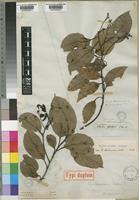
Type of Ocotea bullata E.Mey [family LAURACEAE]
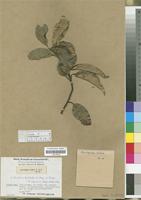
Filed as Ocotea bullata (Burchell) E.Meyer in Drège [family LAURACEAE]
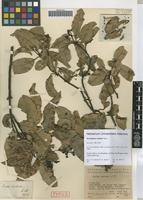
Type of Mespilodaphne bullata Meisn. [family LAURACEAE]
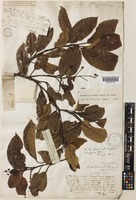
Type of Oreodaphne bullata (Burch.) Nees [family LAURACEAE]
Previous
Next

Name

Identification
Oreodaphne bullata (Burch.) Nees [family LAURACEAE ] (stored under name); Verified by Anonymous,
Related name
  • Oreodaphne bullata
  • Ocotea bullata

Flora

Entry for OCOTEA bullata E. Meyer [family LAURACEAE]
Herbarium
Royal Botanic Gardens, Kew (K)
Collection
Flora Capensis
Resource Type
Reference Sources
Entry From
Flora Capensis, Vol 5, page 493, (1912) Author: By O. STAPF.
Names
OCOTEA bullata E. Meyer [family LAURACEAE], in Drège, Zwei Pfl. Documente, 205, name only;—Sim, For. Fl. Cap. 289, t. 122; Thonn. Blütenpfl. Afr. t. 52; Burtt-Davy in Transv. Agr. Journ. v. 467, t. 172.
Oreodaphne bullata Nees [family LAURACEAE], Syst. Laur. 449; Meisn. in DC. Prodr. xv. i. 118.
Laurus bullata Burch. [family LAURACEAE], Trav. i. 72.
Information
a tree, 60–80 ft. high, with a straight clean trunk, 3–5 ft. in diam.; bark dark brown, rugged and scaly in old trees; young branches very minutely greyish pubescent at their tips, soon glabrous, drying dark brown or blackish; leaves alternate, elliptic to oblong, shortly acuminate, obtuse or subacute at the base, 2–4 in. long, 1–2 in. broad, coriaceous, glabrous; lateral nerves about 6 on each side of the midrib, closely and prominently reticulated on both sides; usually large pits (acarodomitia) with ciliolate orifices on the underside in the axils of the lowest 1–2 pairs of nerves, the pits corresponding to large hollow tubercles on the upper side; petiole 1/2–1 in. long, channelled above; panicles from the axils of some of the uppermost leaves, lax, including the peduncles 2–3 in. long, about 1 in. wide, very finely and scantily pubescent at least in the upper part; peduncles 1/2 to over 1 in. long; bracts ovate, concave, very early deciduous, greyish-silky-pubescent; pedicels 1 (rarely 2) lin. long; flowers polygamous, perianth yellowish-white, finely pubescent without, 2 1/2 lin. across when quite open; receptacle hemispheric, 3/4 lin. high, glabrous within; segments spreading, subequal, ovate-elliptic, obtuse, ciliolate, glabrous within; stamens of the male and hermaphrodite flowers with linear glabrous filaments as long as the anthers; glands sessile, subglobose, on each side of the base of the stamens of the third whorl; staminodes narrow, acute, about 3/8 lin. long; stamens and staminodes of the female very much reduced; ovary immersed, but free, in the receptacle, like the slender style glabrous; stigma discoid; fruit oblong, 3/4 in. long, 1/3 in. in diam. seated in the cup-shaped enlarged receptacle which equals about 1/3 of the fruit. null
Distribution
COAST REGION Swellendam Div.; Grootvaders Bosch, Zeyher, 3629! Knysna Div.; Bosch River, Drège; in the forest at Knysna, Burchell, 5409! 5432! forest near Yzer Nek, Burchell, 5236! Humansdorp Div.; by the Kromme River, Drège!
Notes
This is the “ Stinkwood ,” one of the most valuable timber trees of Cape Colony. According to Sim, l.c. 290, this tree ranges “from Cape Town to the Transvaal eastern forests,” and is at its best in the Knysna and Natal forests. He also mentions it from the Transkeian Mountains and Pondoland. Apart from the specimens enumerated above, all of which are typical Ocotea bullata, there are two sheets of Gerrard's at Kew which are possibly referable to Ocotea. The specimens consist of barren shoots and seem to represent a species distinct from O. bullata. The leaves are broad-elliptic, very obtuse, with only 4 lateral nerves on each side, and they, like the branchlets, are much more pubescent than those of G. bullata. There is also no trace of acarodomitia so commonly found in the latter species. Under the circumstances it is not improbable that the “Stinkwood” of Natal is a species as yet undescribed.

Related Materials

  • Terms and Conditions
  • Privacy Policy
  • Cookie Policy
  • Cookie Settings
  • Accessibility
  • Help
  • Contact Us
  • Facebook
  • Twitter
ITHAKA

JSTOR is part of ITHAKA, a not-for-profit organization helping the academic community use digital technologies to preserve the scholarly record and to advance research and teaching in sustainable ways.

©2000-2026 ITHAKA. All Rights Reserved. JSTOR®, the JSTOR logo, JPASS®, Aluka®, and ITHAKA® are registered trademarks of ITHAKA.

╳