JSTOR Global Plants Home
  • Home
  • Browse
  • About
  • Access
  • Account
    • Saved Items
    • Profile
  • Log in

Global Plants

Skip to Main Content
  • JSTOR Global Plants Home
  • Global Plants

    • Browse
    • About
    • Access
    • Account
      • Saved Items
      • Profile
Log in
  • Browse
  • About
  • Access
  • Account
    • Saved Items
    • Profile
Advanced Search

Compilation
Opuntia imbricata

9 Images see all

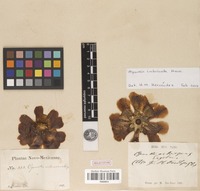
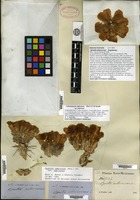
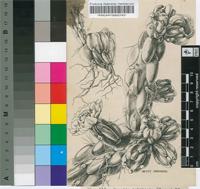
Isolectotype of Opuntia arborescens Engelm. [family CACTACEAE]
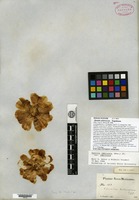
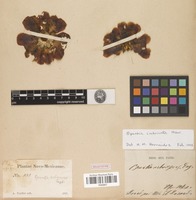
Isolectotype of Opuntia arborescens Engelmann [family CACTACEAE]
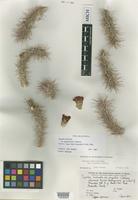
Isolectotype of Opuntia arborescens Engelm. [family CACTACEAE]
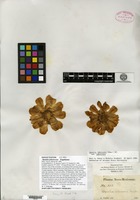
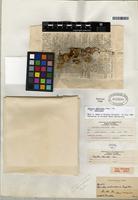
Isolectotype of Opuntia arborescens Engelmann [family CACTACEAE]
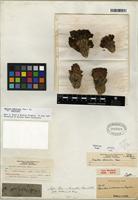
Syntype of Opuntia imbricata var. imbricata [family CACTACEAE]
Isolectotype of Opuntia arborescens Engelmann [family CACTACEAE]
Holotype of Opuntia imbricata Haw. var. argentea M.S.Anthony [family CACTACEAE]
Lectotype of Opuntia imbricata var. imbricata [family CACTACEAE]
Opuntia imbricata (Haw.) DC.
Previous
Next

Name

Identification
Opuntia imbricata (Haw.) DC. [family CACTACEAE ]
Related name
  • Opuntia imbricata
Common name
  • Tree cholla, Flora of North America Vol. 4
  • coyonostyle, Flora of North America Vol. 4

Flora

Entry for Opuntia imbricata [family CACTACEAE]
Herbarium
South African National Biodiversity Institute, Compton Herbarium, Cape Town (SAM)
Collection
Flora of Southern Africa
Resource Type
Reference Sources
Entry From
Flora of South Africa, (2003) Author: Dr J.P. Roux
Names
Opuntia imbricata [family CACTACEAE]
Common names
Cereus imbricatus Haw., Rev. PI. Succ. 70 (1821).
Information
Erect, branched, spreading shrubs often arborescent with age, up to 3 m high. Joints cylindrical, up to 40 cm long, 2-3 cm in diam., dark green with the raised prominent tubercles capped by areoles bearing 8-30 stellately ar­ranged spines, these variable in length, up to 3 cm long, brown, minutely barbed and at first covered with a white papery sheath. Leaves subulate, 1-2 cm, early deciduous. Flowers 4—6 cm long with the hypanthium forming an ab­breviated apical joint; petaloid segments red, rotate; stamens and style purple. Fruit obovoid, up to 5 cm long, yellow, tuberculate, inedible, long persistent; seeds pale yellow, c. 3 mm in diam.
Habitat
Common names: Kabelturksvy; Imbricate cactus.
Use
3. Opuntia imbricata (Haw.) DC. Prodr. 3: 471 (1828); Britton & Rose, The Cactaceae 1: 63 (1919); Phill. in Fmg. S. Afr. 15: 121, t.8 (1940); Henderson & Anderson, Mem. Bot. Surv. S. Afr. 37: 223, f. 110 (1966); Lyman Benson in Fl. Texas 2: 227 (1969). Type: Introduced into cultivation by Loddiges in 1820; origin unknown.
Range
Recorded as a pest from the eastern Cape, Natal, south-western Transvaal and north-western Cape. Distri­buted in the south-western States of North America and Mexico.

Related Materials

  • Terms and Conditions
  • Privacy Policy
  • Cookie Policy
  • Cookie Settings
  • Accessibility
  • Help
  • Contact Us
  • Facebook
  • Twitter
ITHAKA

JSTOR is part of ITHAKA, a not-for-profit organization helping the academic community use digital technologies to preserve the scholarly record and to advance research and teaching in sustainable ways.

©2000-2026 ITHAKA. All Rights Reserved. JSTOR®, the JSTOR logo, JPASS®, Aluka®, and ITHAKA® are registered trademarks of ITHAKA.

╳