JSTOR Global Plants Home
  • Home
  • Browse
  • About
  • Access
  • Account
    • Saved Items
    • Profile
  • Log in

Global Plants

Skip to Main Content
  • JSTOR Global Plants Home
  • Global Plants

    • Browse
    • About
    • Access
    • Account
      • Saved Items
      • Profile
Log in
  • Browse
  • About
  • Access
  • Account
    • Saved Items
    • Profile
Advanced Search

Compilation
Oplismenus africanus

7 Images see all

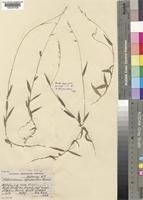
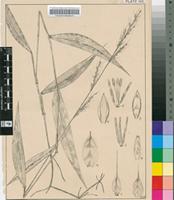
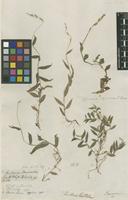
Type of Oplismenus capensis Hochst. [family POACEAE]
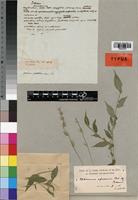
Type of Oplismenus africanus P. Beauv. [family GRAMINEAE]
Syntype of Chloachne secunda Stapf [family POACEAE]
Urochloa trichopodioides (Mez & Schum.) Phillips & Chen [family POACEAE]
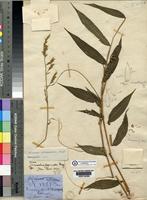
Oplismenus africanus P.Beauv.
Filed as Panicum burmannii Retz. [family POACEAE]
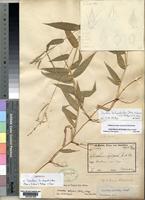
Type of Oplismenus africanus P.Beauv. [family POACEAE]
Previous
Next

Name

Identification
Oplismenus africanus P.Beauv. [family POACEAE ]
Related name
  • Oplismenus africanus

Flora

Entry for OPLISMENUS africanus Beauv. [family POACEAE]
Herbarium
Royal Botanic Gardens, Kew (K)
Collection
Flora Capensis
Resource Type
Reference Sources
Entry From
Flora Capensis, Vol 7, page 310, (1900) Author: (By O. STAPF.)
Names
OPLISMENUS africanus Beauv. [family POACEAE], Fl. Owar. ii. 15, t. 68, fig. 1;—Beauv. Agrost. t. xi. fig. 3; Kunth, Enum. i. 141; Nees, Fl. Afr. Austr. 60; Durand & Schinz, Consp. Fl. Afr. v. 771.
OPLISMENUS loliaceus Beauv. [family POACEAE], Agrost. 168 (O. foliaceus erroneously on p. 54); Humb. & Bonpl. Nov. Gen. et Spec. i. 106, not Lam.
OPLISMENUS hirtellus Roem. & Schult. [family POACEAE], Syst. ii. 481 (excl. syn. Mich.), not Schult. f.
OPLISMENUS brasiliensis Raddi [family POACEAE], Agrost. Bras. 40.
OPLISMENUS velutinus Schult. f. [family POACEAE], Mant. ii. 271; Kunth, Enum. l.c.
OPLISMENUS oahuensis Steud. [family POACEAE], Nomencl. ed. 2, ii. 260.
Panicum hirtellum Linn. [family POACEAE], Amœn. Acad. v. 391; Sw. Obs. 35; Steud. Syn. Pl. Glum. i. 44 (the West Indian plant).
Panicum loliaceum Lam. [family POACEAE], Encycl. iv. 743 (the West Indian plant, not illustr.).
Panicum africanum Poir. [family POACEAE], Encycl. Suppl. iv. 275.
Panicum velutinum E. Mey. [family POACEAE], Prim. Fl. Esseq. 51; Steud. l.c.
Panicum compositum Trin. var. 1 [family POACEAE], Spec. Gram. Ic. t. 188.
Panicum sylvaticum Trin. var. γ [family POACEAE], Gen. Pan. 124, and in Mém. Acad. Pétersb. sér. vi. iii. 212.
Panicum sylvaticum Steud. [family POACEAE], l.c. 45 (in part), not Lam.
Panicum compositum Doell [family POACEAE], in Mart. Fl. Bras. ii. ii. 146 (at least in part).
Orthopogon sp. R. Br. [family POACEAE], Prodr. 194, in obs.
Orthopogon hirtellus Spreng. [family POACEAE], Syst. i. 306, not Nutt.
Orthopogon loliaceus Spreng. [family POACEAE], l.c.
Orthopogon velutinus Spreng. [family POACEAE], l.c.
Orthopogon africanus Sweet [family POACEAE], Hort. Brit. ed. i. 448.
Information
perennial; culms ascending from an often long decumbent rooting base, 1–1 1/2 ft. high, slightly compressed below; sheaths rather tight, strongly striate, finely villous or ciliate along the outer margin, otherwise glabrous except a transverse villous line at the junction with the blade (in the African specimens), rarely more or less hirsute; ligules up to 1/2 lin. long; blades lanceolate from a slightly rounded base, acuminate, 2–5 in. by 4–7 lin. (those of the lower leaves and barren shoots often much smaller and ovate-anceolate), flat, thin, dull green, soft, scantily and minutely hairy to almost velvety below, scaberulous above, at least upwards, margins scabrid; racemes 3–8 on an erect straight or flexuous more or less 3-winged glabrous or finely hairy axis, the lower distant, erect or obliquely spreading, 3–9 lin. long, rarely longer, the upper closer, much shorter or reduced to 2–3-spiculate clusters, the axis usually terminated by a solitary spikelet; rhachis of racemes straight, triangular, dorsally flat, greyish from very minute adpressed hairs, usually fringed with tubercle-based bristles (in the African specimens), tomentose of hispid at the base; pedicels 2-nate or solitary, very short and stout, usually with a few bristles; spikelets ovate-oblong, about 1 1/3 lin. long, greyish-green or green, minutely bearded at the base; glumes subequal, 1–1 1/2 lin. long, thinly herbaceous, ovate to elliptic, produced into filiform subobtuse smooth more or less viscous often purplish awns, hairy at least near the margins, rarely quite glabrous, lower 5-nerved, awn 3–6 lin. long, upper 7–5-nerved, awn 1–2 lin. long; lower floret barren, rarely ♂, equalling the spikelet; valve 9–7-nerved obscurely or shortly mucronate; hermaphrodite floret lanceolate-oblong, acute or obscurely cuspidate, 1–1 1/2 lin. long, whitish, smooth, shining; valve coriaceous, 7-nerved; anthers 3/4– 7/8 lin. long; grain 1 lin. long. null
Range
The typical form also in tropical Africa and America and in the Sandwich Islands; var. γ also in tropical Africa and the Mascarene Islands.
Distribution
CENTRAL REGION Var. β: Somerset Div.; Bosch Berg, in very shady woods, Burchell, 3159!COAST REGION Var. β: Albany Div.; in damp woods near Grahamstown, MacOwan, 1508! Berg Plaats near Grahamstown, under forest trees, Flanagan, 781! Knysna Div.; by streamlets in woods near Knysna, Krauss, 91. Var. γ: King Williamstown Div.; Dohne Mountain, in a wooded kloof, 4400 ft., Galpin, 2449!EASTERN REGION Natal; between the Umzimkulu and Umkomanzi Rivers, Drège, 4336! between Mapumulo and Riet Vlei, 2000–5000 ft., Buchanan, 219! and without precise locality, Cooper, 3378! Var. γ: Inanda, Wood, 1306!KALAHARI REGION Var. β: Transvaal; Houtbosch, Rehmann, 5735!
Notes
The European O. undulatifolius, Beauv., very much resembles the var. capensis, and differs only in the absence of tubercle-based hairs on the sheaths and the axis of the inflorescence, and in the more numerous nerves of the glumes which are also, on the whole, shorter than in the African form.

Related Materials

  • Terms and Conditions
  • Privacy Policy
  • Cookie Policy
  • Cookie Settings
  • Accessibility
  • Help
  • Contact Us
  • Facebook
  • Twitter
ITHAKA

JSTOR is part of ITHAKA, a not-for-profit organization helping the academic community use digital technologies to preserve the scholarly record and to advance research and teaching in sustainable ways.

©2000-2026 ITHAKA. All Rights Reserved. JSTOR®, the JSTOR logo, JPASS®, Aluka®, and ITHAKA® are registered trademarks of ITHAKA.

╳