JSTOR Global Plants Home
  • Home
  • Browse
  • About
  • Access
  • Account
    • Saved Items
    • Profile
  • Log in

Global Plants

Skip to Main Content
  • JSTOR Global Plants Home
  • Global Plants

    • Browse
    • About
    • Access
    • Account
      • Saved Items
      • Profile
Log in
  • Browse
  • About
  • Access
  • Account
    • Saved Items
    • Profile
Advanced Search

Compilation
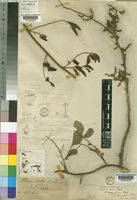
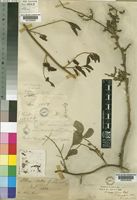
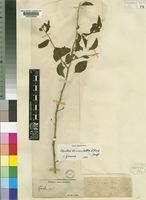
Opilia tomentella

3 Images see all

Opilia tomentella (Oliv.) Engl. [family OPILIACEAE]
Previous
Next

Name

Identification
Opilia tomentella (Oliv.) Engl. [family OPILIACEAE ] (stored under name); Verified by Garcia, Opilia unrecorded unrecorded [family OPILIACEAE ]
Related name
  • Opilia tomentella
  • Opilia unrecorded
  • Opilia amentacea

Flora

Entry for OPILIA celtidifolia (Oliv.) Lucas var. tomentella [family OPILIACEAE]
Herbarium
Royal Botanic Gardens, Kew (K)
Collection
Flora of Tropical East Africa
Resource Type
Reference Sources
Entry From
Flora of Tropical East Africa, page 1, (1968) Author: G. Ll. Lucas
Names
OPILIA celtidifolia (Oliv.) Lucas var. tomentella [family OPILIACEAE], in K.B. 21: 242 (1967). Type: Mozambique, above Zambezi delta, Kirk (K, holo.!)
OPILIA amentacea Oliv. var. tomentella [family OPILIACEAE], in F.T.A. 1: 352 (1868)
OPILIA tomentella (Oliv.) Engl. [family OPILIACEAE], in P.O.A. C: 168 (1895) & in E.J. 43: 173, fig. 1/G–J (1909); Sleumer in E. & P. Pf., ed. 2., 16B: 38, fig. 21/G–J (1935); T.T.C.L.: 396 (1949); Garcia in F.Z. 2: 338, t. 68 (1963)
Information
Young branches tomentellous; leaf-apex tending to be more rounded than acute.Due mainly to the large ecological range of this species, the general habit, leaf shape and texture varies considerably. There are indications that a number of ecotypes exist, but insufficient information is to be found on the labels of specimens so far collected to really clarify the situation. Below are cited some specimens which are rather atypical, but at present do not merit formal taxonomic status. Further gatherings and field studies would be most helpful in the clarification of this group. The specimens are characterized by a reddish bark, the indumentum of the pedicel being rusty brown and the leaf-blade tending to be more constantly lanceolate than in the two previous varieties.
Range
DISTR. K5; T1, 4, 6, 7
Distribution
KENYA S. Kavirondo District Suna, Sept. 1933, Napier 5247 !TANGANYIKA Tabora, C. H. N. Jackson 12 !TANGANYIKA Mbeya District “Nyika Plateau”(near Sante), Nov. 1899, Goetze 1408!TANGANYIKA Iringa District Lofia [Losio] R., Jan. 1899, Goetze 446!
Distribution (external)
Zambia
Rhodesia
Mozambique
Notes
The difference between these two varieties tends to become less distinct as one moves northwards into Tanganyika. Whereas in the Flora Zambesiaca it has been thought possible to separate these two groups at the specific level, I feel that the differences are so slight that they do not merit this treatment. Field studies may well show that even varietal status is not justified.

Related Materials

  • Terms and Conditions
  • Privacy Policy
  • Cookie Policy
  • Cookie Settings
  • Accessibility
  • Help
  • Contact Us
  • Facebook
  • Twitter
ITHAKA

JSTOR is part of ITHAKA, a not-for-profit organization helping the academic community use digital technologies to preserve the scholarly record and to advance research and teaching in sustainable ways.

©2000-2026 ITHAKA. All Rights Reserved. JSTOR®, the JSTOR logo, JPASS®, Aluka®, and ITHAKA® are registered trademarks of ITHAKA.

╳