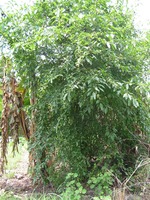
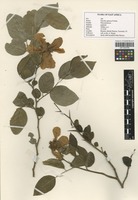
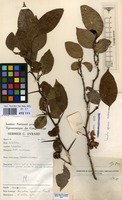
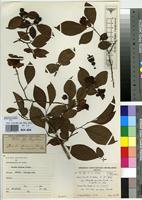
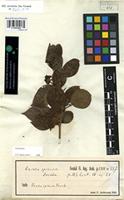
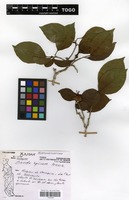
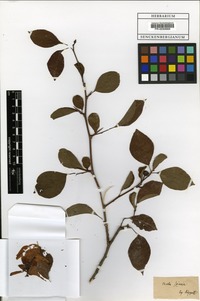
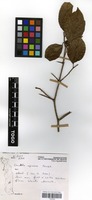
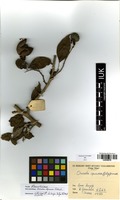
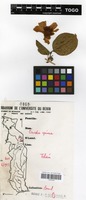
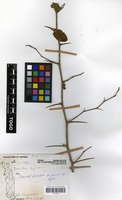
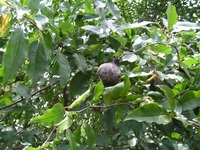
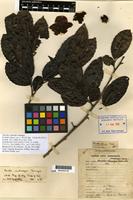
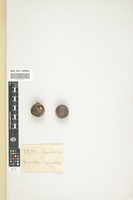
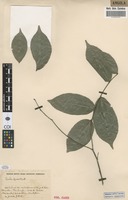
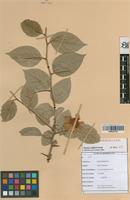
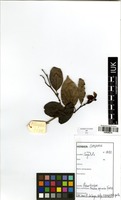
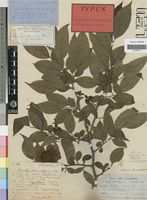
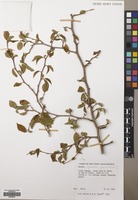
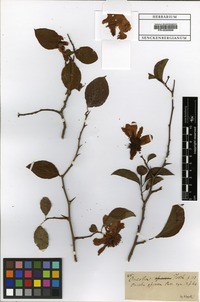
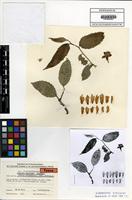
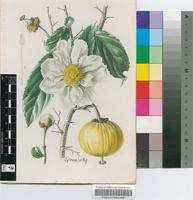
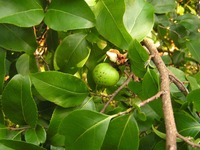
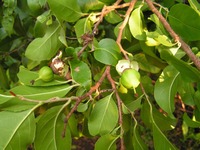
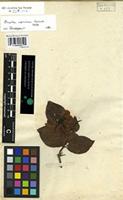
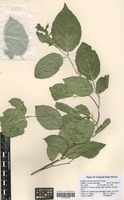
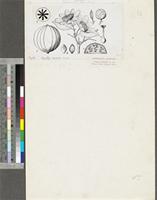
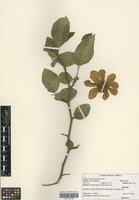
armed with axillary spines, glabrous; leaves on short petioles, ovate-acuminate, membranaceous, reticulate, denticulate; peduncles terminal, 1-flowered; petals varying from 5 to 12, denticulate; anthers mucronate. A shrub, 6 feet high and more. Stems thick, with whitish, tuberculated bark. Leaves 3–4 inches long, 1 1/2–2 1/2 inches wide, gradually or suddenly acuminated, finely and bluntly toothed, acute or obtuse, in our specimens rounded at base. Spines 1/2–1 1/2 inch long. Flowers white, 2 inches across, resembling wild roses. Anthers tipped by a fleshy point, sometimes obsolete. Fruit “gourd-like, one-celled, with a solid shell, internally pulpy and many-seeded; well known to the Natal and Zulu Kaffirs, who wear it hung round the neck, and use it as a snuffbox, calling it “Thunga!” Dr. Kirk's specimens from the Shiré (in Hb. Hook.) are precisely similar to Mr. Gerrard's. Those of O. monacantha, from the Niger and Sierra Leone (Hb. Hook.), have rather more coriaceous leaves, less evidently denticulate, and more acute, or even tapering at base, with more evident points to the anthers; the petals are 10.