JSTOR Global Plants Home
  • Home
  • Browse
  • About
  • Access
  • Account
    • Saved Items
    • Profile
  • Log in

Global Plants

Skip to Main Content
  • JSTOR Global Plants Home
  • Global Plants

    • Browse
    • About
    • Access
    • Account
      • Saved Items
      • Profile
Log in
  • Browse
  • About
  • Access
  • Account
    • Saved Items
    • Profile
Advanced Search

Compilation
Omalotheca sylvatica

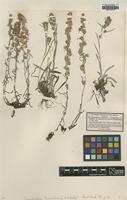
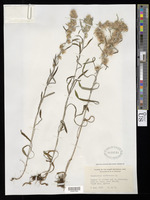
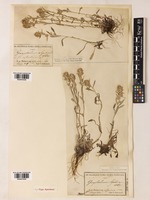
4 Images see all

Omalotheca sylvatica (L.) Sch. Bip. & F.W. Schultz [family ASTERACEAE]
Omalotheca sylvatica (L.) Sch. Bip. & F.W. Schultz [family COMPOSITAE]
Type of Omalotheca einseleana (F.W.Schultz) F.W.Schultz [family ASTERACEAE]
Syntype of Gnaphalium sophiae Heldr. ex Boiss. [family COMPOSITAE]
Previous
Next

Name

Identification
Omalotheca einseleana (F.W.Schultz) F.W.Schultz [family ASTERACEAE ] Omalotheca sylvatica (L.) Sch.Bip. & F.W.Schultz [family ASTERACEAE ] (stored under name);
Related name
  • Omalotheca einseleana
  • Omalotheca sylvatica
Common name
  • Woodland Arctic-cudweed, Flora of North America Vol. 19
  • gnaphale des bois, Flora of North America Vol. 19

Flora

Entry for Omalotheca sylvatica (Linnaeus) Schultz-Bipontinus & F. W. Schultz [family COMPOSITAE]
Herbarium
Flora of North America (FNA)
Collection
Flora of North America
Resource Type
Reference Sources
Entry From
Flora of North America, Vol 19,
Names
Omalotheca sylvatica (Linnaeus) Schultz-Bipontinus & F. W. Schultz [family COMPOSITAE], in F. W. Schultz, Arch. Fl., 311. 1861
Gnaphalium sylvaticum Linnaeus [family COMPOSITAE], Sp. Pl., 2: 856. 1753
Treatment Author(s)
Guy L. Nesom
Information
Plants 10–70 cm. Leaves basal and cauline; blades 1-nerved, linear to narrowly oblanceolate or lanceolate, 2–8 cm × 2–10 mm, distal cauline smaller, linear, faces bicolor, abaxial gray, silvery sericeous, adaxial green, glabrescent. Heads (20–90) in loose, spiciform (leafy-bracteate, interrupted) arrays (4–35 cm, occupying 1/3–5/6 plant heights, simple or branched at bases, primary axes mostly visible). Involucres campanulo-turbinate, 5–6.5 mm. Phyllaries some or all with conspicuous dark brown spot distal to middle. Cypselae cylindric to fusiform, minutely strigose; pappus bristles basally connate, falling together. 2n = 56.
Phenology
jul-aug (summer), sep-oct (fall)
Altitude range
10–500 m;
Distribution
St. Pierre and MiquelonEuropeAsia (Caucasus).Asia (Iran).Asia (Siberia).USA MaineUSA Mich.USA N.H.USA N.Y.USA Pa.USA Vt.USA Wis.Canada B.C.Canada N.B.Canada Nfld. and Labr. (Nfld.)Canada N.S.Canada Ont.Canada P.E.I.Canada Que.
Discussion
The circumboreal Omalotheca sylvatica may have been introduced from Eurasia (Frére Marie-Victorin 1995). Omalotheca alpigena (K. Koch) Holub and O. caucasica (Sommier & Levier) S. K. Cherepanov were treated as synonyms of O. sylvatica by A. J. C. Grierson (1975); they have been recognized as distinct species in other treatments.

Related Materials

  • Terms and Conditions
  • Privacy Policy
  • Cookie Policy
  • Cookie Settings
  • Accessibility
  • Help
  • Contact Us
  • Facebook
  • Twitter
ITHAKA

JSTOR is part of ITHAKA, a not-for-profit organization helping the academic community use digital technologies to preserve the scholarly record and to advance research and teaching in sustainable ways.

©2000-2026 ITHAKA. All Rights Reserved. JSTOR®, the JSTOR logo, JPASS®, Aluka®, and ITHAKA® are registered trademarks of ITHAKA.

╳