JSTOR Global Plants Home
  • Home
  • Browse
  • About
  • Access
  • Account
    • Saved Items
    • Profile
  • Log in

Global Plants

Skip to Main Content
  • JSTOR Global Plants Home
  • Global Plants

    • Browse
    • About
    • Access
    • Account
      • Saved Items
      • Profile
Log in
  • Browse
  • About
  • Access
  • Account
    • Saved Items
    • Profile
Advanced Search

Compilation
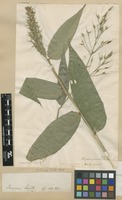
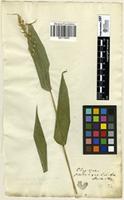
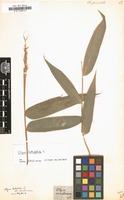
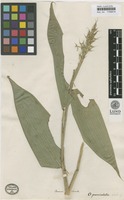
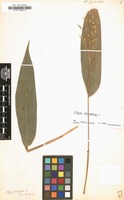
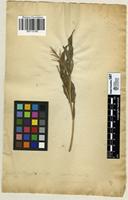
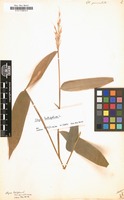
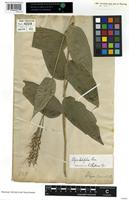
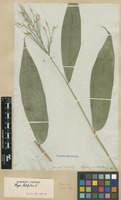
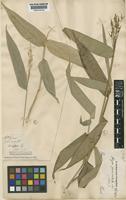
Olyra paniculata

10 Images see all

Filed as Olyra latifolia L. [family POACEAE]
Filed as Olyra paniculata Sw. [family POACEAE]
Filed as Olyra paniculata [family GRAMINEAE]
Filed as Olyra paniculata Sw. [family POACEAE]
Filed as Olyra paniculata [family GRAMINEAE]
Filed as Olyra paniculata Sw. [family POACEAE]
Filed as Olyra paniculata [family GRAMINEAE]
Syntype of Olyra brevifolia Schumach. [family POACEAE]
Filed as Olyra latifolia L. [family POACEAE]
Olyra latifolia L. [family POACEAE]
Previous
Next

Name

Identification
Olyra latifolia L. [family POACEAE ] (stored under name); Verified by C.E. Hubbard, 1931 Olyra brevifolia Schumach. [family POACEAE ] Verified by Not on Sheet, Olyra paniculata Sw. [family POACEAE ] Verified by Not on Sheet,
Related name
  • Olyra brevifolia
  • Olyra paniculata
  • Olyra latifolia

Flora

Entry for OLYRA latifolia Linn. [family POACEAE]
Herbarium
Royal Botanic Gardens, Kew (K)
Collection
Flora Capensis
Resource Type
Reference Sources
Entry From
Flora Capensis, Vol 7, page 310, (1900) Author: (By O. STAPF.)
Names
OLYRA latifolia Linn. [family POACEAE], Amœn. Acad. v. 408;—Linn. Sp. Plant. ed. ii. 1379; Doell in Mart. Fl. Bras. ii. ii. 316.
OLYRA paniculata Sw. [family POACEAE], Prodr. 21; Obs. 347; Trin. Panic. Gen. 23, and in Mém. Acad. Pétersb. sér. 6, iii. (1835) 111; Ic. Gram. t. 346; Kunth, Enum. i. 69; Steud. Syn. Pl. Glum. i. 35.
OLYRA brevifolia Schum. [family POACEAE], in Schum. & Thonn. Beskr. Guin. Pl. 402.
OLYRA guineensis Steud. [family POACEAE], l.c. 37; Durand & Schinz, Consp. Fl. Afr. v. 788.
Information
perennial; culms erect, branched 3–8 ft. high, glabrous, very smooth, rarely more or less hairy near the nodes, many-noded, sheathed all along or the upper internodes shortly exserted; sheaths tight, firm, striate, keeled in the upper part, glabrous except at the ciliate upper margins, or hairy; ligules very short, truncate, broader than the short hairy petioles; blades lanceolate-oblong or ovate-oblong, asymmetric, particularly at the rounded base, conspicuously acuminate, 4–7 in. by 1–2 3/4 in., flat, glaucous, glabrous except quite at the base, rarely sparingly hairy, slightly rough with about 11–19 primary nerves and a prominent whitish midrib; panicle erect, terminal or with a lateral one from the uppermost leaf axil, 3–6 in. long, rather contracted or subpyramidal; axis slender, angular, pubescent; branches solitary or sometimes fascicled, subflexuous or straight, angular, pubescent; pedicels adpressed, of the ♂ spikelets filiform, of the ♀ clavate; ♂ spikelets lateral, linear-lanceolate, acuminate, awned from the valve, glabrous; glumes quite rudimentary forming an inconspicuous slightly 2-lobed puberulous rim at the tip of the pedicels; valve herbaceous-membranous, gradually passing into an awn of about equal length, 1 3/4–2 lin. long, 3-nerved; lodicules 3, cuneate, thin; anthers over 1 lin. long; ♀ spikelets solitary and terminal on the tips of the branches, or 2–3, rarely more, below the terminal spikelet, oblong-ovoid, turgid, awned from the lower glume; glumes ovate, elliptic, membranous, strongly nerved and veined, lower acuminate or shortly caudate-acuminate, about 4 lin. long, 5–7-nerved, upper produced into a flexuous scabrid awn of equal or greater length, 7–9-nerved; valve ovate-elliptic, obtuse, 2–3 lin. long, white or greyish, cartilaginous, very hard, shining; styles connate beyond the middle; grain oblong. null
Range
Tropical America and Africa and in the Mascarene Islands.
Distribution
EASTERN REGION Zululand; in Ungoya Forest, Wood, 3856! Ongor, Gerrard & McKen, 2014!

Related Materials

  • Terms and Conditions
  • Privacy Policy
  • Cookie Policy
  • Cookie Settings
  • Accessibility
  • Help
  • Contact Us
  • Facebook
  • Twitter
ITHAKA

JSTOR is part of ITHAKA, a not-for-profit organization helping the academic community use digital technologies to preserve the scholarly record and to advance research and teaching in sustainable ways.

©2000-2026 ITHAKA. All Rights Reserved. JSTOR®, the JSTOR logo, JPASS®, Aluka®, and ITHAKA® are registered trademarks of ITHAKA.

╳