JSTOR Global Plants Home
  • Home
  • Browse
  • About
  • Access
  • Account
    • Saved Items
    • Profile
  • Log in

Global Plants

Skip to Main Content
  • JSTOR Global Plants Home
  • Global Plants

    • Browse
    • About
    • Access
    • Account
      • Saved Items
      • Profile
Log in
  • Browse
  • About
  • Access
  • Account
    • Saved Items
    • Profile
Advanced Search

Compilation
Olea urophylla

4 Images see all

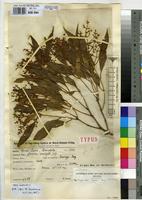
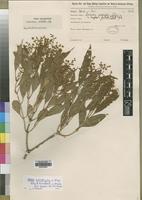
Isotype of Linociera urophylla Gilg [family OLEACEAE]
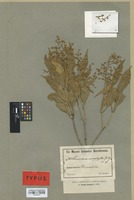
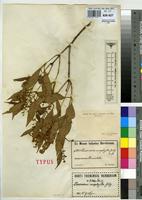
Type of Linociera urophylla Gilg [family OLEACEAE]
Previous
Next

Name

Identification
Olea urophylla (Gilg) Gilg&Schellenb. [family OLEACEAE ] (stored under name); Linociera urophylla Gilg [family OLEACEAE ]
Related name
  • Linociera urophylla
  • Olea urophylla

Flora

Entry for Olea capensis L. [family OLEACEAE]
Herbarium
Royal Botanic Gardens, Kew (K)
Collection
Flora Zambesiaca
Resource Type
Reference Sources
Entry From
FZ, Vol 7, Part 1, page 300, (1983) Author: F. K. Kupicha
Names
Mayepea welwitschii Knobl. [family OLEACEAE], in Engl., Bot. Jahrb. 17: 530 (1893). Type from Angola.
Linociera welwitschii Knobl. Knobl. [family OLEACEAE], in Bot. Centralbl. 61: 129 (1895). Type as above.
Linociera urophylla Gilg [family OLEACEAE], in Engl., Bot. Jahrb. 30: 373 (1901). Type from Tanzania.
Olea hochstetteri Baker [family OLEACEAE], in F.T.A. 4 17 (1902). — Turrill in F.T.E.A., Oleaceae: 10 (1952). — P. S. Green in F.W.T.A. ed. 2, 2: 49 (1963). — Liben in Fl. d’Afr. Centr., Oleaceae: 23 (1973). Type from Ethiopia.
Olea enervis Harvey ex C. H. Wright [family OLEACEAE], op. cit.: 488 (1907). Type from S. Africa (Natal).
Olea macrocarpa C. H. Wright [family OLEACEAE], in F.C. 4 1129 (1909); in Kew Bull. 1909: 186 (1909). Lectotype from S. Africa (Transvaal).
Olea urophylla Gilg Gilg & Schellenb. [family OLEACEAE], in Engl., Bot. Jahrb. 51: 75 (1913). Type as for Linociera urophylla.
Olea welwitschii Knobl. Gilg & Schellenb. [family OLEACEAE], in Engl., tom. cit.: 76 (1913). — Turrill, tom. cit.: 12, fig. 3 (1952). — Liben, tom. cit.: 24, t. 6 (1973). Type as for Mayepea welwitschii.
Olea schliebenii Knobl. [family OLEACEAE], in Notizbl. Bot. Gart. Berl. 12: 199(1934). — Turrill, tom. cit.: 10 (1952). Type from Tanzania.
Olea guineensis Hutch. & C. A. Smith [family OLEACEAE], in Kew Bull. 1937: 336 (1937). Type from Ivory Coast.
Olea mussolinii Chiov. [family OLEACEAE], in Atti R. Accad. Ital., Mem. Clas. Sci. 11: 48 (1940). Syntypes from Ethiopia.
Olea capensis subsp. macrocarpa C. H. Wright Verdoorn [family OLEACEAE], tom. cit.: 590, fig. 10, t. 20 (1956); in tom. cit.: 119, fig. 12, 2 (1963). — R. B. Drumm. in Kirkia 10: 267 (1975). Type as for Olea macrocarpa.
Olea capensis subsp. enervis Harvey ex C. H. Wright Verdoorn [family OLEACEAE], tom. cit.: 588, fig. 9, t. 19 (1956); in op. cit. 7:15 (1958); in tom. cit.: 117, fig. 12, 3 (1963). Type as for Olea enervis.
Olea capensis L. [family OLEACEAE], Sp. Pl. 1: 8 (1753). — Harvey ex C. H. Wright in F.C. 4 487 (1907). — Verdoorn in Bothalia 6: 582, fig. 6–10,1 .16–20 (1956); in Fl. Southern Afr. 26:116, fig. 12 (1963). — F. White, F.F.N.R.: 337 (1962); in Chapman and White, Evergr. For. Malawi: 44 (1970). — Fanshawe, Check–list Woody Pl. Zamb.: 31 (1973), Type from S. Africa (Cape Prov.).
Olea laurifolia Lam. [family OLEACEAE], Tabl. Encycl. Méth. Bot. 1: 29 (1791). — Harvey ex C. H. Wright, loc. cit. Type from S. Africa (Cape Prov.).
Olea concolor E. Meyer [family OLEACEAE], Comm. Pl. Afr. Austr.: 176 (1837). Type from S. Africa (Cape Prov.).
Information
Tree 10–40 m. high; bark pale grey, longitudinally fissured; slash reportedly of various colours: orange–brown, cream or rich green; wood exceedingly hard and durable. Young sterns glabrous, ± terete, bark grey, fairly smooth. Leaves coriaceous; petiole 8–15 mm. long, pale to conspicuously dark brown; lamina 4·5–9 (11) x 1·2–4 cm., elliptic, ovate–elliptic or oblong–elliptic, with apex acute to acuminate and tipped with a small hard point, and base cuspidate to acuminate; upper surface glossy, with midrib impressed or level and the 5–6 pairs of lateral nerves faintly raised, joining inconspicuously in loops; lower surface mat, and paler, with prominent midrib and faintly raised lateral nerves; both surfaces punctate with scattered circular scales just visible with hand lens, these sometimes difficult to see on upper surface, lower surface never with metallic sheen; margin slightly revolute, often somewhat undulate. Inflorescence a many–flowered paniculate cyme, terminal and in axils of upper two leaf–pairs; bracts 0·3–1 mm. long, subulate. Calyx c. 1 mm. long, cup–shaped, subentire with 4–toothed rim. Corolla c. 3 mm. long, white, globose in bud and remaining thus for a prolonged period, ultimately opening, the elliptic–acute lobes then reflexed; tube c. 1/3 as long as lobes. Anthers c. 2 mm. long. Gynoecium c. 1·5 mm. long. Fruit up to 1·7 cm. long (dry), ellipsoid, with very thick woody endocarp. Seed not seen.
Habitat
In evergreen or mixed evergreen forest.
Range
Widely distributed in tropical and southern Africa
Distribution
Mozambique MS Tsetsera area, near road to Mavita, c. 1900 m., st. 29.xi.1966, Müller 506 (K; LISC; SRGH).Mozambique Z Gúruè, near source of R. Malema, c. 1700 m., fl. 5.i.1968, Torre & Correia 16958 (LISC).Malawi S Mangoche Mt., fl. buds 1935, Clements 537 (FHO; MAL).Malawi C Ntchisi Forest, immat. fr. 8.v.1961, Chapman 1292 (BM; K; LISC; MAL; PRE; SRGH).Zimbabwe E Inyanga Distr., gorge ofPungwe tributary on S. slopes of Inyangani, c. 1800 m., fl. buds 10.xi.1967, Müller 718 (K; PRE; SRGH).Zambia W Mwinilunga, fl. buds 26.x.1955, Holmes 1289 (K).Mozambique N areaofCaiaia, R. Neoce, st. 5.vii.1967, Macedo 4479 (LMA).Malawi N Nyika Plateau, immat. fr. xi.1965, Cottrell 52 (K; SRGH).Zimbabwe C Wedza Distr., Wedza Mt., fl. buds 14.v.1964, Wild6559 (FHO; SRGH).Zambia N Lake Young, Shiwa Ngandu, fl. buds 20.ix.1938, Greenway 5752 (FHO; K; SRGH).
Notes
Fanshawe (loc. cit.) records O. capensis also from the Central Prov. of Zambia. Apart from the differences given in the key, O. capensis can be distinguished from 0. europaea subsp. africana by the larger fruits of the former. Moreover, in leaves of O. capensis the lateral nerves join in a series of loops some distance from the leaf margin, whereas in O.europaea subsp. africana there is an almost straight submarginal vein formed from these lateral nerves. O.capensis ‘in–southern Africa has been treated in great detail by Verdoorn, loc. cit., who identified three subspecies in her area. I agree that these taxa can be recognised, and find that the F.Z. material belongs to subsp. macrocarpa. I have not used this infraspecific group because the situation becomes more complex in tropical Africa to the north and west of the F.Z. area. Here authors have mainly recognised two species within what should be called O. capensis: O. hochstetteri and O.welwitschii. They are distinguished by leaf shape, viz. absolute length of lamina and petiole and length: breadth ratio of lamina; O.hochstetteri has relatively short, broad leaves and O.welwitschii long, narrow ones. A survey of many specimens throughout the entire species range shows that while plants with very different leaf shape have sometimes been collected from the same locality (e.g. Mt. Meru in Tanzania), leading obSérvers to be convinced of their specific distinctness, the range of variation is continuous when leaves from many places are considered together.When leaf length was plotted against length/breadth, scoring specimens from the whole species range, the type specimens of O. hochstetteri and O. welwitschii fell near together, both within the main cluster of specimens. It was found that in general leaf length tends to increase from south to north in O. capensis, and that the longest leaves tend to be proportionately narrowest and to have the longest petioles. Within the F.Z. area, O. capensis is not widespread but occurs in isolated patches. Specimens from each locality have a characteristic leaf shape. Collections from the Gúruè (Z) and Tsetsera area of Mozambique (MS) have conspicuously narrow leaves, like those of the type specimen of O.urophylla from southern Tanzania. These specimens, being from the southern half of the species’ range, have leaves rather too small to fit the concept of O.welsoitschii, although their proportions are correct. The F.Z. specimens, in general, agree with Tanzanian “0. hochstetteri”.These notes are given to justify my broad treatment of O.capensis. The species still needs to be thoroughly investigated. Wood anatomy and fruit shape should be taken into account, since collectors have suggested that significant differences exist in these features too.

Related Materials

  • Terms and Conditions
  • Privacy Policy
  • Cookie Policy
  • Cookie Settings
  • Accessibility
  • Help
  • Contact Us
  • Facebook
  • Twitter
ITHAKA

JSTOR is part of ITHAKA, a not-for-profit organization helping the academic community use digital technologies to preserve the scholarly record and to advance research and teaching in sustainable ways.

©2000-2026 ITHAKA. All Rights Reserved. JSTOR®, the JSTOR logo, JPASS®, Aluka®, and ITHAKA® are registered trademarks of ITHAKA.

╳