JSTOR Global Plants Home
  • Home
  • Browse
  • About
  • Access
  • Account
    • Saved Items
    • Profile
  • Log in

Global Plants

Skip to Main Content
  • JSTOR Global Plants Home
  • Global Plants

    • Browse
    • About
    • Access
    • Account
      • Saved Items
      • Profile
Log in
  • Browse
  • About
  • Access
  • Account
    • Saved Items
    • Profile
Advanced Search

Compilation
Oldenlandia wiedemannii

5 Images see all

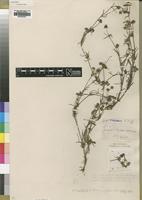
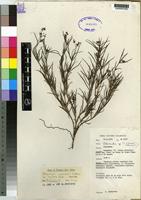
Neotype of Oldenlandia kaessneri [family RUBIACEAE]
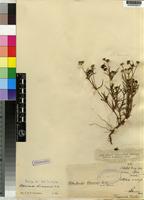
Isotype of Oldenlandia uhligii [family RUBIACEAE]
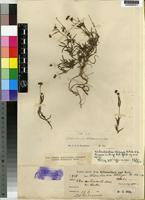
Filed as Oldenlandia wiedemannii K. Schum. variety wiedemannii [family RUBIACEAE]
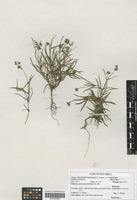
Isotype of Oldenlandia wiedemannii K.Schum. var. laxiflora [family RUBIACEAE]
Type of Oldenlandia wiedemannii K.Schum. [family RUBIACEAE]
Previous
Next

Name

Identification
Oldenlandia wiedemannii K.Schum. [family RUBIACEAE ] (stored under name);
Related name
  • Oldenlandia kaessneri
  • Oldenlandia wiedemannii
  • Oldenlandia uhligii

Flora

Entry for OLDENLANDIA wiedemannii K. Schum. [family RUBIACEAE]
Herbarium
Royal Botanic Gardens, Kew (K)
Collection
Flora of Tropical East Africa
Resource Type
Reference Sources
Entry From
Flora of Tropical East Africa, page 1, (1976) Author: B. VERDCOURT
Names
OLDENLANDIA wiedemannii K. Schum. [family RUBIACEAE], in E.J. 28: 57 (1899), as wiedenmannii; Bremek. in Verh. K, Nederl. Akad. Wet., Afd. Natuurk., ser. 2, 48 (2): 240 (1952); U.K.W.F.: 400 (1974). Types: Tanzania, near Moshi, Wiedemann (B, holo. †); Moshi, Haarer 474 (K, neo.!, EA, isoneo.!)
Information
Perennial (or ? sometimes annual) erect herb (5–)7.5–30(–60) cm. tall, with several to many stems from a slender often woody taproot, frequently forming tussocks; stems mostly with dense short spreading pubescence, rarely glabrous. Leaf-blades linear to linear-lanceolate, 1–6.5 cm. long, 0.8–4.5(–7) mm. wide, acute at the apex, narrowly cuneate at the base, the margins often revolute, puberulous above and on the midvein beneath save in “var. glabricaulis”; petiole not developed; stipule-sheath 2–4 mm. long, divided into up to 4 filiform fimbriae 2–4(–7) mm. long. Flowers heterostylous, in dense heads 0.8–1.2 cm. wide; true peduncle 0–5 mm. long but the leaves of the nodes containing the head are sometimes so reduced or hidden that the previous internode simulates a peduncle 2–3.5(–6) cm. long; pedicels usually scarcely 0.5 mm. long or not developed, rarely up to 3(–8) mm. long. Calyx-tube subglobose, 1 mm. long, 1.5 mm. wide, hairy or glabrous; lobes triangular to triangular-lanceolate, 1.5–2.5(–3) mm. long, puberulous or at least ciliate on the margins and the midvein. Corolla white, pale lilac, pale pink or bluish; tube (1.5–)2–2.8(–4) mm. long, hairy at the throat; lobes oblong-elliptic, 1.6–2.2 mm. long, 0.8–1 mm. wide, papillate inside and with a few scattered long hairs outside. Style 1.8 mm. long in short-styled flowers, 3 mm. long in long-styled flowers, hairy at the base; stigma-lobes linear, 0.4–1.2 mm. long, densely covered with rather long capitate hairs. Capsule subglobose, 1–1.8 mm. tall, 1.5–2 mm. wide, usually hairy, rarely ± glabrous, the beak slightly raised. Seeds yellow-brown, irregularly ellipsoid, 0.4 mm. long, usually raised on hilar side, flattened on opposite side.

Related Materials

  • Terms and Conditions
  • Privacy Policy
  • Cookie Policy
  • Cookie Settings
  • Accessibility
  • Help
  • Contact Us
  • Facebook
  • Twitter
ITHAKA

JSTOR is part of ITHAKA, a not-for-profit organization helping the academic community use digital technologies to preserve the scholarly record and to advance research and teaching in sustainable ways.

©2000-2026 ITHAKA. All Rights Reserved. JSTOR®, the JSTOR logo, JPASS®, Aluka®, and ITHAKA® are registered trademarks of ITHAKA.

╳