JSTOR Global Plants Home
  • Home
  • Browse
  • About
  • Access
  • Account
    • Saved Items
    • Profile
  • Log in

Global Plants

Skip to Main Content
  • JSTOR Global Plants Home
  • Global Plants

    • Browse
    • About
    • Access
    • Account
      • Saved Items
      • Profile
Log in
  • Browse
  • About
  • Access
  • Account
    • Saved Items
    • Profile
Advanced Search

Compilation
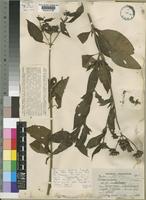
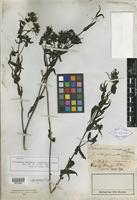
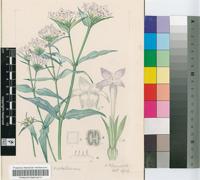
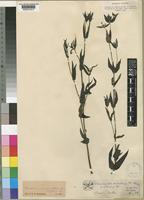
Oldenlandia natalensis

8 Images see all

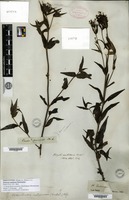
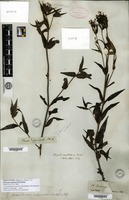
Isosyntype of Hedyotis natalensis Hochstetter [family RUBIACEAE]
Conostomium natalense (Hochst.) Bremek. [family RUBIACEAE]
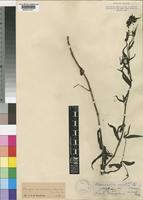
Type of Oldenlandia natalensis f. lilacina Kuntze [family RUBIACEAE]
Isosyntype of Hedyotis natalensis Hochstetter [family RUBIACEAE]
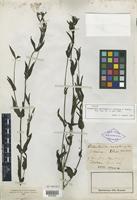
Type of Pentas wyliei N.E.Br. [family RUBIACEAE]
Type of Oldenlandia natalensis f. albiflora Kuntze [family RUBIACEAE]
Oldenlandia natalensis (Hochst.) Kuntze
Conostomium natalense (Hochst.) Bremek. [family RUBIACEAE]
Previous
Next

Name

Identification
Oldenlandia natalensis (Hochst.) Kuntze [family RUBIACEAE ]
Related name
  • Oldenlandia natalensis

Flora

Entry for Conostomium natalense Hochst. Bremek. [family RUBIACEAE]
Herbarium
Royal Botanic Gardens, Kew (K)
Collection
Flora Zambesiaca
Resource Type
Reference Sources
Entry From
FZ, Vol 5, Part 1, (1989) Author: B. Verdcourt
Names
Conostomium natalense var. glabrum Bremek. [family RUBIACEAE], in Verh. K. Nederl. Akad. Wet. Afd. Natuurk., ser. 2, 48(2): 137 (1952). Type from S. Africa (Natal).
Conostomium natalense Hochst. Bremek. [family RUBIACEAE], in Verh. K. Nederl. Akad. Wet. Afd. Natuurk., ser. 2, 48(2): 136 (1952). TAB.22. Type from S. Africa (Natal).
Hedyotis natalensis Hochst. [family RUBIACEAE], in Flora 27: 552 (1844). —Sond. in Harv. & Sond., F.C. 3: 12 (1865).
Oldenlandia natalensis Hochst. Kuntze [family RUBIACEAE], Rev. Gen. Pl. 1: 292 (1891). —Phillips in Fl. Pl. S. Afr. 10, t. 364 (1930).
Oldenlandia natalensis var. hirsuta Bär [family RUBIACEAE], in Viert. Nat. Ges. Zürich 68: 430 (1923). Type from S. Africa (Natal).
Information
Herb 0.2–1.2 m. tall, the stems quadrangular and woody at the base, pubescent or ± glabrous save at nodes. Leaves 3.5–7 x 1–2.3 cm., lanceolate, narrowly tapering acute at the apex, ± rounded at the base, ± pubescent or glabrous save for midrib beneath; petiole up to 3 mm. long; stipule sheath ± 2 mm. long with 2 short fimbriae 0.5–2 mm. long. Flowers in condensed terminal inflorescences on most upper branches, 2–4 cm. wide, closely surrounded by leafy bracts; pedicels up to 2 mm. long in fruit; occasionally an isolated axillary flower at lower node with pedicels to 5 mm., perhaps a reduced axillary branch. Calyx tube subglobose, 1.5–2 mm. wide, glabrous to sparsely pubescent; lobes 2–5.5 x 0.8–1.5 mm., lanceolate, acute, ciliate. Corolla pale blue, lilac or purplish pink; tube 1–1.7 cm. long, slightly widened at the apex for 4 mm., sparsely pilose-pubescent or ± glabrous, glabrous inside but with a ring of hairs at throat rim; lobes 2.5–4.5 x 1.5–2 mm., elliptic. Anthers included but stigmatic branches 1–2 mm. long, just included or shortly exserted. Fruit 5.5–7 x 4.5–6 mm. including the hemispherical beak, ovoid-globose; calyx-lobes ± persistent.
Habitat
Open grassland to dense scrub, often on granite soils
Altitude range
960–2100 m.
2100
960
Distribution
Mozambique Z Serra do Gúruè ao km. 3 a seguir à cascata picada para o pico Namúli, fl. 23.ii.1966, Torre & Correia 14798 (C; LISC; LMA).Mozambique MS Mossurizi, Mafusi, fl. 23.ii.1907, W.H. Johnson 156 (K).Zimbabwe E Inyanga, Pungwe View, fl. 13.ii.1961, Rutherford-Smith 523 (K; SRGH).
Distribution (external)
S. Africa
Swaziland
Notes
Bremekamp recognises four varieties, three based on indumentum and one on leaf shape but the variation is such as to suggest they are unnecessary. All the Flora Zambesiaca material comes under var. glabrum.

Related Materials

  • Terms and Conditions
  • Privacy Policy
  • Cookie Policy
  • Cookie Settings
  • Accessibility
  • Help
  • Contact Us
  • Facebook
  • Twitter
ITHAKA

JSTOR is part of ITHAKA, a not-for-profit organization helping the academic community use digital technologies to preserve the scholarly record and to advance research and teaching in sustainable ways.

©2000-2026 ITHAKA. All Rights Reserved. JSTOR®, the JSTOR logo, JPASS®, Aluka®, and ITHAKA® are registered trademarks of ITHAKA.

╳