JSTOR Global Plants Home
  • Home
  • Browse
  • About
  • Access
  • Account
    • Saved Items
    • Profile
  • Log in

Global Plants

Skip to Main Content
  • JSTOR Global Plants Home
  • Global Plants

    • Browse
    • About
    • Access
    • Account
      • Saved Items
      • Profile
Log in
  • Browse
  • About
  • Access
  • Account
    • Saved Items
    • Profile
Advanced Search

Compilation
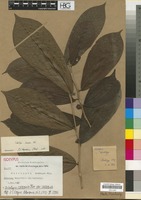
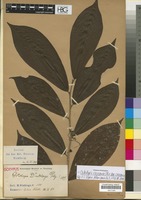
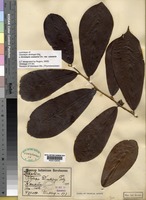
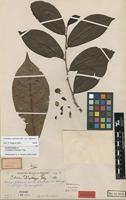
Octolepis dinklagei

8 Images see all

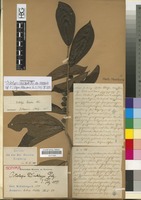
Isotype of Octolepis dinklagei Gilg [family THYMELAEACEAE]
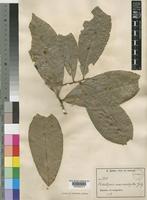
Octolepis casearia Oliver [family THYMELAEACEAE]
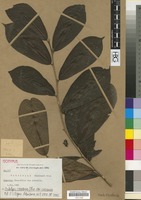
Isotype of Octolepis dinklagei Gilg [family THYMELAEACEAE]
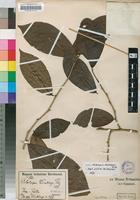
Holotype of Octolepis dinklagei Gilg [family THYMELAEACEAE]
Isotype of Octolepis dinklagei Gilg [family THYMELAEACEAE]
Lectotype of Octolepis dinklagei Gilg [family THYMELAEACEAE]
Isolectotype of Octolepis dinklagei Gilg [family THYMELAEACEAE]
Previous
Next

Name

Identification
Octolepis macrophylla Gilg [family THYMELAEACEAE ] Octolepis casearia Oliver [family THYMELAEACEAE ] (stored under name); Octolepis dinklagei Gilg [family THYMELAEACEAE ]
Related name
  • Octolepis dinklagei
  • Octolepis casearia
  • Octolepis macrophylla

Flora

Entry for OCTOLEPIS Dinklagei Gilg [family THYMELAEACEAE]
Herbarium
Royal Botanic Gardens, Kew (K)
Collection
Flora of Tropical Africa
Resource Type
Reference Sources
Entry From
Flora of Tropical Africa, Vol 6, Part 1, page 211, (1913) Author: (By J. G. Baker, with additions by C. H. Wright.)
Names
OCTOLEPIS Dinklagei Gilg [family THYMELAEACEAE], in Engl. Jahrb. xxviii. 143.
Information
A shrub 6 ft. high, with grey branches, glabrous when young, with very numerous lenticels. Leaves obovate-oblong or obovate, sparingly pilose beneath when young, later glabrous, papery, long and abruptly acuminate-acute, usually rounded at the base, entire, paler beneath, with venation more prominent beneath, 4–7 1/2 in. long, 1 1/2–3 1/2 in. broad; petiole thick, densely silky-villous when young, at length calvescent, 2–4 lin. long. Flowers dimorphic, 4-merous, few, white, in axillary fascicles at the densely yellow-silky-hairy nodes; bracteoles very small, silky; pedicels as long as the flowers, shortly pilose. Sepals free to the base, triangular-ovate, broadly imbricate, densely and shortly pilose on both sides, very shortly fimbriate, expanded during flowering, persistent. Petals bifid to the base; lobes linear, 1/2 as long as the sepals, with margins fimbriate and closely approximating to form a white urceolate or subglobose tube. Filaments a little exceeding or twice as long as the petals, filiform above, at the base somewhat flattened and pilose. Style very short or twice as long as the densely silky-villous 4-celled ovary; stigma subcapitate. Fruit dehiscing by 4 spreading valves united at the base, not deciduous. Testa dark brown, horny, loosely reddish-pilose. Cotyledons thick.
Distribution
Cameroons Upper Guinea Ebea, Dinklage, 177! Bipinde, Zenker, 3546!

Related Materials

  • Terms and Conditions
  • Privacy Policy
  • Cookie Policy
  • Cookie Settings
  • Accessibility
  • Help
  • Contact Us
  • Facebook
  • Twitter
ITHAKA

JSTOR is part of ITHAKA, a not-for-profit organization helping the academic community use digital technologies to preserve the scholarly record and to advance research and teaching in sustainable ways.

©2000-2026 ITHAKA. All Rights Reserved. JSTOR®, the JSTOR logo, JPASS®, Aluka®, and ITHAKA® are registered trademarks of ITHAKA.

╳